How to Thicken Slow Cooker Beef Stew
Thicken slow cooker stew with cornstarch, flour, mashed potatoes, or reduction without making the gravy lumpy or overly heavy.
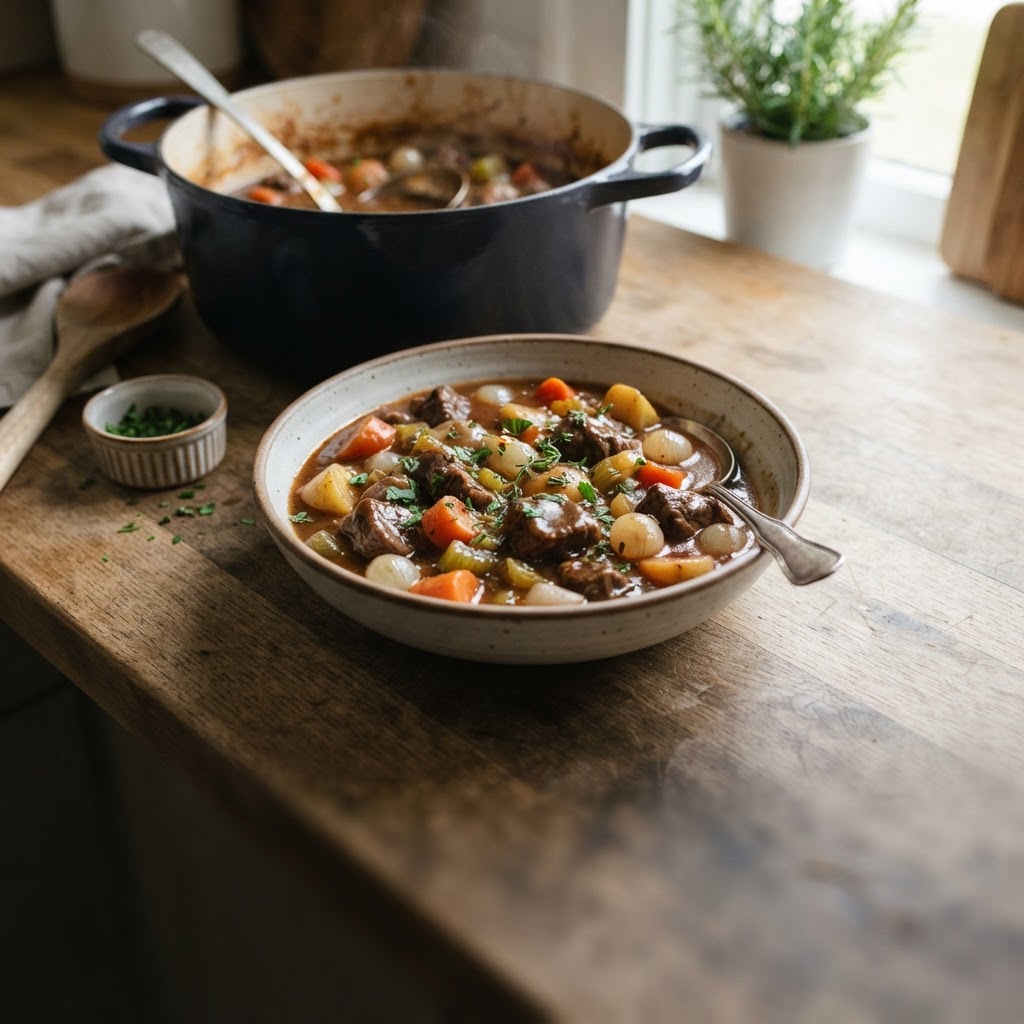
Quick reference
- Method: Best use Timing
- Cornstarch slurry: Glossy, quick thickening Near the end
- Flour slurry: Heartier gravy Simmer to cook flour
- Mashed potatoes: Rustic, naturally thick Stir in gradually
- Reduce uncovered: Concentrated flavor Only if cooker allows
Start with a cornstarch slurry
For the fastest way to thicken slow cooker stew, mix cornstarch with an equal amount of cold water until smooth. Start with about 1 tablespoon of each for a standard batch, then whisk the slurry into the hot stew near the end of cooking. Add it gradually rather than all at once. Turn the cooker to high, if appropriate, and let the stew simmer until the liquid visibly thickens, usually after several minutes. Add another small batch only if needed.
Use a flour slurry for a fuller gravy
A flour slurry gives beef stew a more traditional, opaque gravy. Stir all-purpose flour with cold water until lump-free, using roughly 1 tablespoon flour to 2 tablespoons water as a starting point. Whisk it into the stew in small additions near the end, then allow the stew to simmer so the flour cooks and its raw taste fades. Avoid sprinkling dry flour directly into the cooker; it tends to clump on the surface.
Mash potatoes into the liquid
For a rustic thickener, remove a few cooked potato pieces, mash them thoroughly, and stir them back into the stew. You can also mash some vegetables against the side of the cooker with a spoon. Add the mash gradually, tasting as you go, because potatoes will make the broth thicker and cloudier while adding body. This method works especially well when the stew already contains potatoes or other soft root vegetables.
Reduce the stew uncovered
If your slow cooker permits safe uncovered cooking, remove the lid and let excess liquid evaporate on the high setting. Stir occasionally and watch the consistency closely; reduction can concentrate both flavor and salt. This method takes longer than a starch slurry and depends on the cooker’s heat and design. If the cooker does not heat effectively without its lid, transfer the stew to a wide saucepan and reduce it gently on the stovetop instead.
Fix the texture without over-thickening
Let the stew stand for a few minutes after adding any thickener; the sauce may continue to tighten as it cools slightly. If it becomes too thick, loosen it with a little hot beef stock or water. If it remains thin, choose one method and add more in small increments rather than combining large amounts of several thickeners. Taste after each adjustment, especially after reducing, since concentrated liquid can become saltier.