How to Thicken Apple Pie Filling
Thicken apple pie filling with cornstarch, flour, or tapioca starch, plus tips for juicy apples, cooling, and venting.
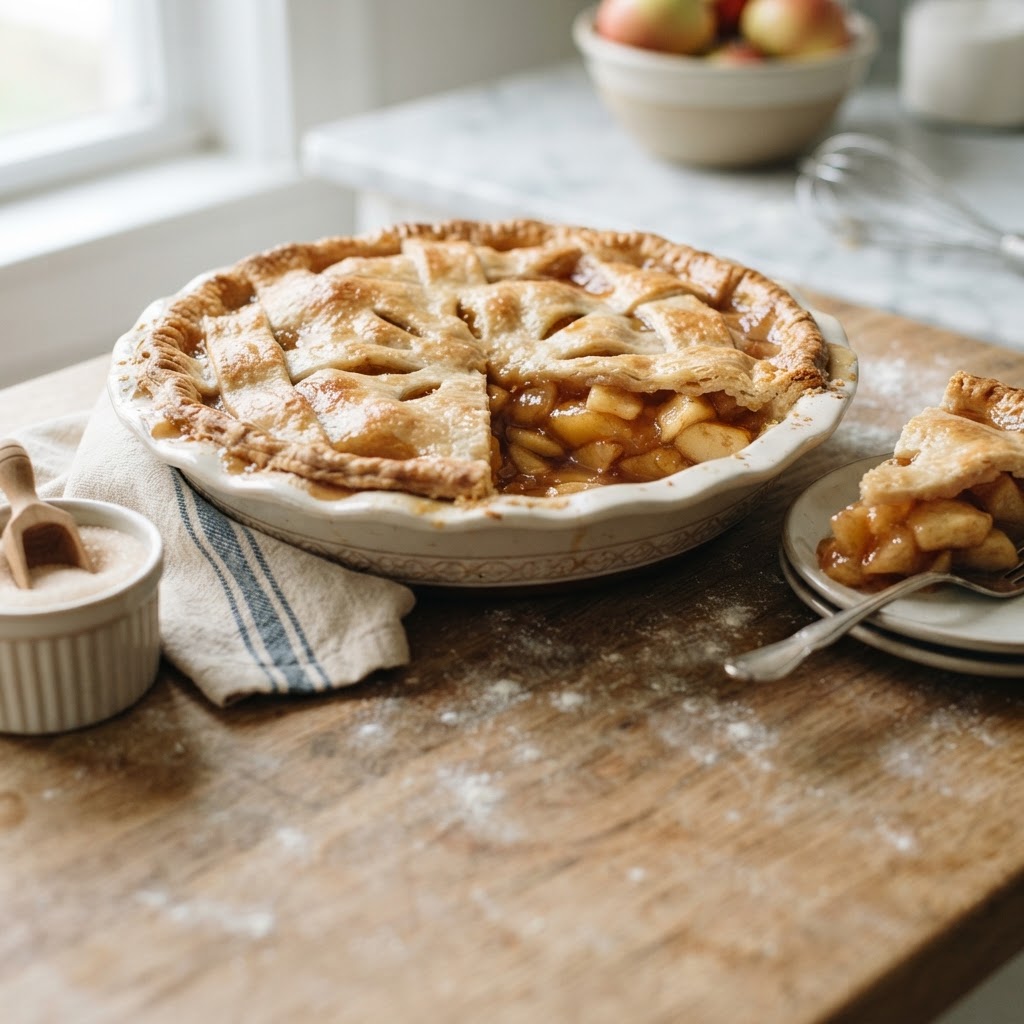
Quick reference
- Thickener: Starting amount For about 6 cups sliced apples
- Cornstarch: 3 tablespoons Smooth, clear finish
- All-purpose flour: 1/4 cup Softer, slightly cloudy filling
- Tapioca starch: 2 tablespoons Firm, glossy set
Choose the right thickener
To thicken apple pie filling, use a starch that matches the apples and the texture you want. Cornstarch gives a smooth, relatively clear sauce; flour makes a softer, more opaque filling; and tapioca starch creates a firm, glossy set. The amounts in the table are starting points for roughly 6 cups of sliced apples, not fixed rules. Very juicy apples may need a little more, while dry apples need less.
How to use cornstarch, flour, or tapioca
Toss the thickener evenly with the sugar and spices before mixing it with the apples. This helps prevent lumps and distributes the starch throughout the fruit. Cornstarch should be fully cooked, so the pie needs enough time in the oven for the juices to bubble. Flour is forgiving but can taste pasty if used heavily. Tapioca starch works well when you want slices that hold together, but too much can make the filling gelled.
- Use cornstarch for a clean, smooth filling.
- Choose flour for a traditional, softer texture.
- Use tapioca starch when firm slices matter most.
Control the liquid before baking
Excess liquid is a common reason apple pie turns runny. Use firm apples, avoid adding juice unless the recipe calls for it, and drain unusually watery fruit after it sits with sugar. If the apples release a large puddle, spoon off some liquid rather than adding a lot of extra starch. Keep the filling level below the crust edge, since overflowing juices can prevent the bottom crust from crisping.
Cool the filling before slicing
A thickener does not finish its work the moment the pie leaves the oven. Let the baked pie cool until the juices set—at least 2 hours for clean slices, and longer if the filling is especially deep or juicy. Cutting while hot releases the liquid trapped between the apples and can make a properly thickened pie seem runny. If preparing a cooked filling separately, cool it until warm or room temperature before assembling.
Vent the pie and check the bake
Cut several vents in the top crust so steam can escape and the filling can reduce instead of collecting excess moisture beneath the pastry. Bake until the juices visibly bubble through the vents; a lightly browned crust alone is not a reliable sign that the starch has cooked. If the crust darkens early, cover the edges loosely with foil and continue baking until the center is bubbling.
- Make 4–6 vents in a double-crust pie.
- Look for bubbling juices in the center.
- Cool fully before serving for the firmest filling.