How to Thicken a Sauce Without Lumps
Thicken sauce smoothly with reduction, a cornstarch slurry, flour roux, or beurre manié—and when to use each method.
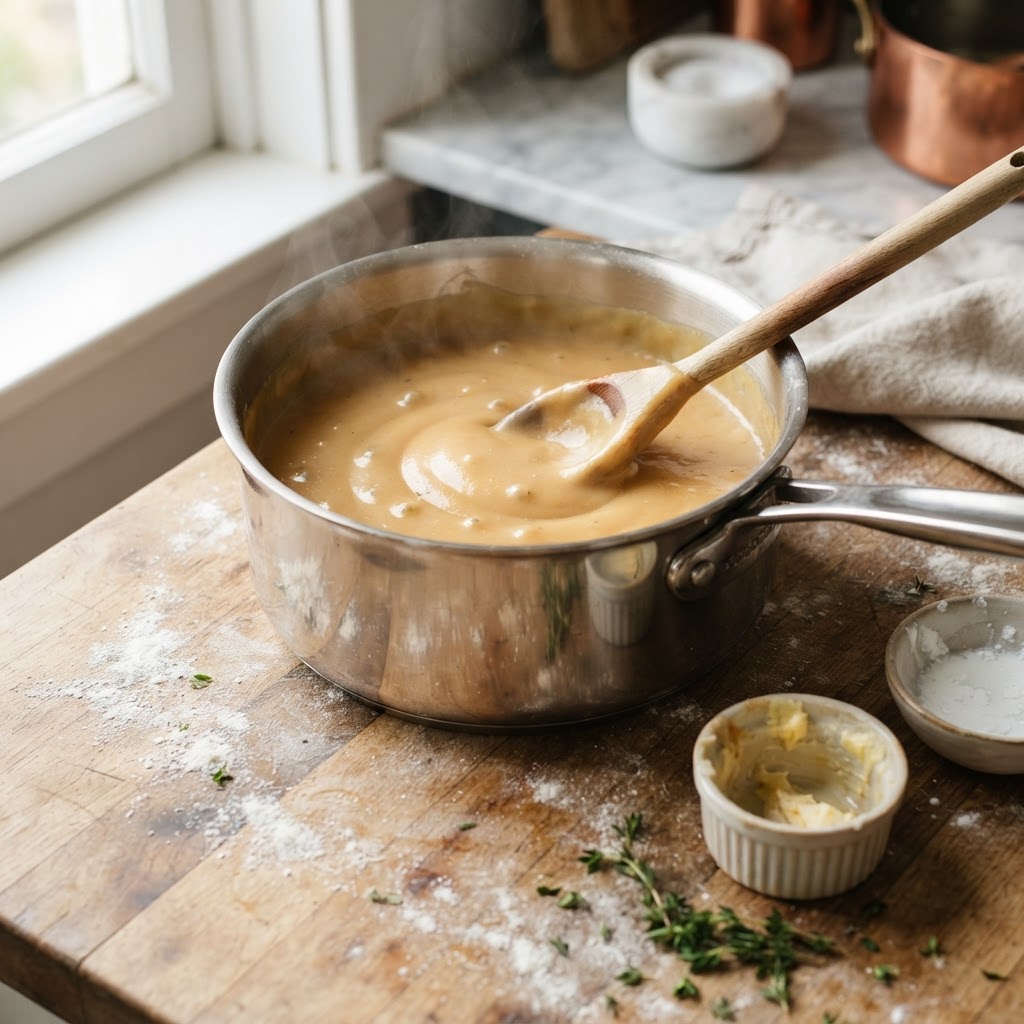
Quick reference
- Reduction: Simmer uncovered Best for flavorful sauces
- Cornstarch slurry: Cornstarch + cold liquid Fast, glossy thickening
- Flour roux: Flour + butter Start of cream or gravy sauces
- Beurre manié: Soft butter + flour Finish and adjust a sauce
Choose the method first
The best way to thicken sauce depends on its flavor, temperature, and how much time you have. For a concentrated pan sauce, reduce it. For a quick, glossy finish, use a cornstarch slurry. A flour roux builds body from the beginning, while beurre manié is useful when a nearly finished sauce needs a small adjustment. Whichever method you choose, add thickener gradually and simmer before deciding it needs more.
Reduction: the simplest option
Set the sauce in a wide pan and simmer it uncovered so excess water can evaporate. Stir occasionally and scrape the bottom if needed. Reduction works especially well for stock-based sauces, wine sauces, tomato sauces, and pan juices because it intensifies their existing flavor. Stop when the sauce lightly coats a spoon; it will continue to thicken slightly as it cools. Taste before adding salt, since concentration also increases seasoning.
Cornstarch slurry for fast thickening
Mix cornstarch with an equal or slightly larger amount of cold water until completely smooth. Whisk the slurry into a gently simmering sauce in a thin stream, then cook for about a minute before judging the texture. Add another small portion only if needed. Never dump dry cornstarch directly into hot sauce: it clumps on contact and is difficult to whisk smooth. A slurry is ideal for stir-fry sauces, gravies, and clear sauces.
Flour roux for built-in body
A roux combines flour and fat before liquid is added, making it a reliable base for gravy, béchamel, cheese sauce, and other creamy preparations. Cook the flour with butter or another fat until smooth, then whisk in warm or room-temperature liquid a little at a time. Keep whisking as the sauce comes to a simmer; flour needs cooking time to lose its raw taste. Use a pale roux for delicate sauces and a darker one for deeper flavor.
Beurre manié for final adjustments
Beurre manié is equal parts softened butter and flour kneaded into a paste. Whisk a small piece into a simmering sauce, let it cook for several minutes, and assess the result before adding more. It is handy for finishing a gravy or pan sauce when making a separate roux would be inconvenient. Because it adds butter, use it when a richer finish suits the dish. If the sauce becomes too thick, loosen it with a splash of stock, water, milk, or cream.
Prevent lumps and fix mistakes
Keep the sauce moving with a whisk as you add any thickener. Cold liquid is essential for cornstarch; softened butter is essential for beurre manié. Most importantly, give each addition time to activate: bring the sauce back to a gentle simmer before making another adjustment. If lumps remain, pass the sauce through a fine strainer or blend it carefully, then return it to the heat briefly. Do not boil cream-based sauces aggressively, as they can separate.