How to Tell When Shrimp Is Done
Check shrimp for opaque flesh, a firm C-shape, and 145°F in the thickest part; overcooked shrimp often curl tightly and turn rubbery.
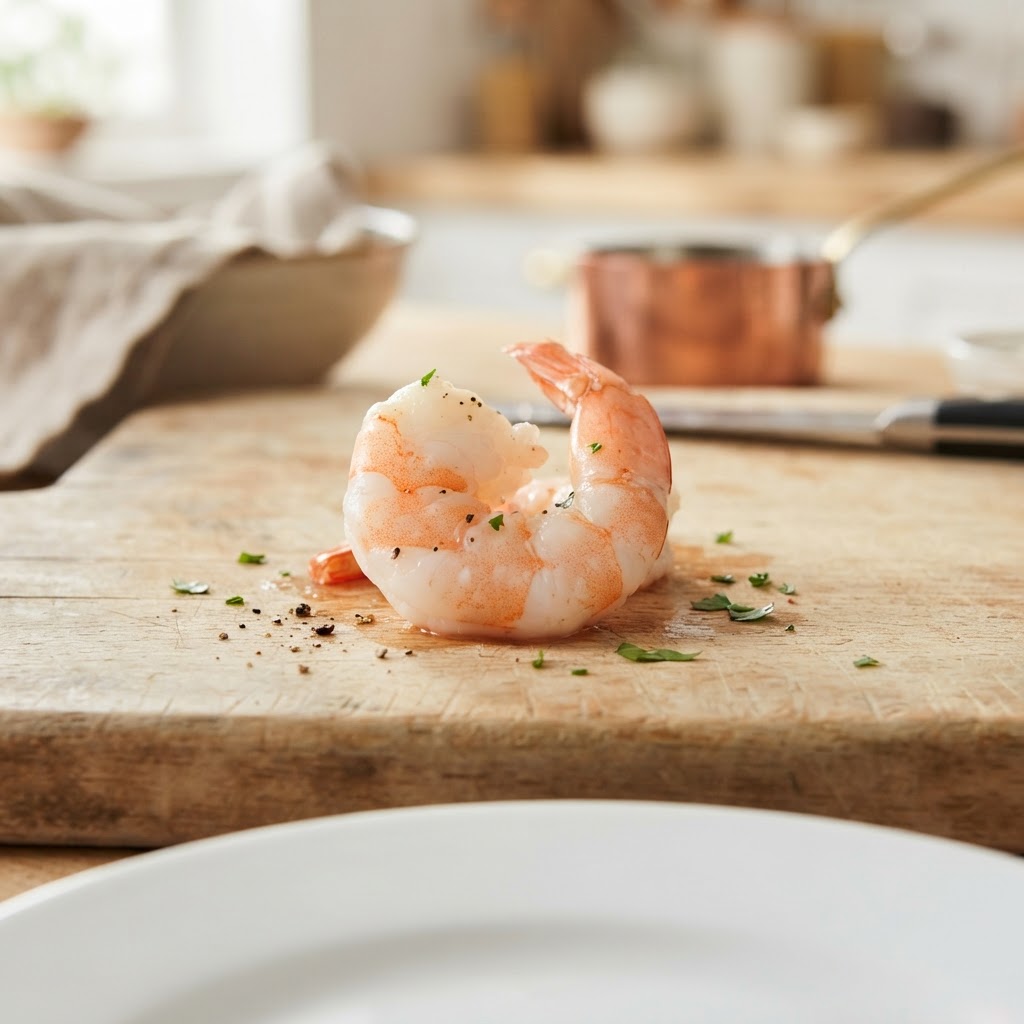
Quick reference
- Visual cue: Opaque center No gray, translucent core
- Shape: Loose C Avoid a tight O
- Texture: Firm and springy Not rubbery
- Temperature: 145°F / 63°C Check the thickest shrimp
The fastest answer
To know how to tell shrimp is done, look for flesh that has changed from translucent gray to opaque pink or white, depending on the variety. The shrimp should feel firm with a little spring when pressed, and it should curl into a loose C-shape. A tight O-shape usually signals that it has cooked too long and may be rubbery. For the most reliable check, shrimp should reach 145°F (63°C) at the thickest point.
Use color, shape, and texture together
No single visual cue is perfect, especially with large shrimp or strongly seasoned dishes. Slice into one of the thickest pieces if needed: the center should be opaque rather than glassy or gray. The curve should look relaxed, not tightly coiled. When gently pressed with tongs, properly cooked shrimp feels firm and springy; undercooked shrimp feels soft and slippery, while overcooked shrimp is notably tough.
Timing depends on size and heat
Cooking time varies with shrimp size, starting temperature, cooking method, and pan heat, so use timing as a guide rather than a guarantee. Small shrimp may finish in just a few minutes, while jumbo shrimp need longer. Arrange them in a single layer so they cook evenly, and begin checking the thickest pieces early. Shrimp continue cooking briefly from residual heat, so remove them as soon as they reach the target temperature.
- Sauté or grill: turn when the first side is mostly opaque.
- Boil or poach: check soon after the shrimp float or curl.
- Bake: start checking before the recipe’s stated finish time.
How to check shrimp by method
For sautéed or grilled shrimp, watch the side facing the pan: opacity should move toward the center before you turn or remove them. In boiling or poaching liquid, lift one of the largest shrimp and check its center. For baked shrimp, use a thermometer or cut into one piece near the middle of the tray. If you are cooking frozen shrimp, thaw them safely first or allow extra time according to the recipe.
Prevent overcooking
Heat shrimp only until they meet the visual, texture, or temperature cues, then transfer them to a plate instead of leaving them in a hot pan. Crowded cookware can release moisture and slow browning, while very high heat can cook the outside before the center is ready. If shrimp have formed tight rings, become dry, or feel hard to bite, they have likely gone past their ideal point.