How to Store Sourdough Starter
Store sourdough starter at room temperature or in the refrigerator, with simple feeding routines and clear signs it should be discarded.
Quick reference
- Storage: Room temperature Feed about every 12–24 hours
- Storage: Refrigerator Feed about every 1–2 weeks
- Container: Clean jar Cover loosely; leave room to expand
- Discard: Mold or pink/orange color Do not scrape or feed; throw it out
Choose a storage routine
For frequent baking, keep your starter at room temperature. It stays ready to use but needs regular feeding, typically every 12 to 24 hours depending on your kitchen’s temperature and how active it is. If you bake only occasionally, refrigerator storage is easier. A cold starter generally needs feeding about every one to two weeks, though timing varies with the starter and refrigerator temperature.
Use the right container
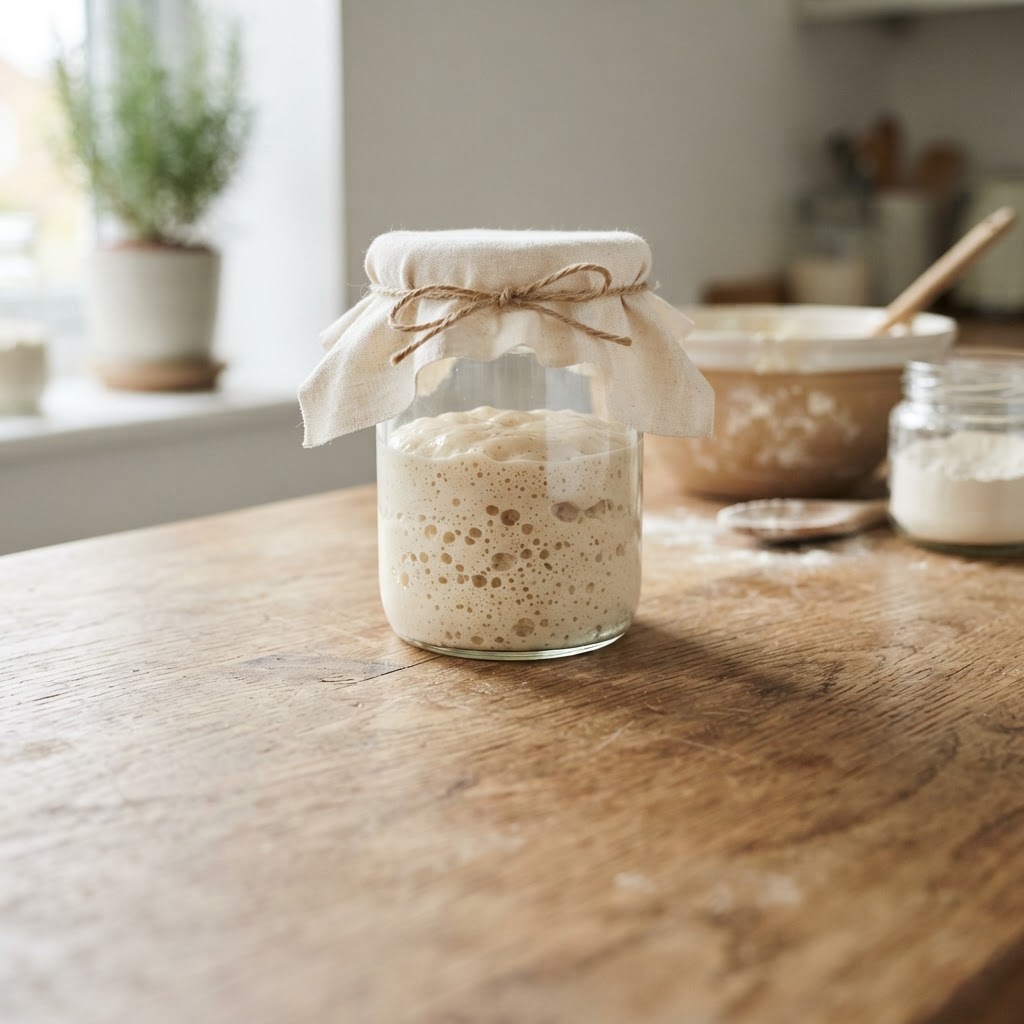
Keep the starter in a clean glass or food-safe plastic jar with plenty of empty space above it. Cover the jar loosely with a lid, not tightly sealed, so gas can escape as the starter ferments. Marking the starter’s level with a rubber band makes it easy to see when it has risen and fallen. Wipe the rim after feeding to keep dried starter from building up.
- Use a clean jar for each refresh.
- Leave at least half the jar empty.
- Avoid airtight sealing during active fermentation.
Room-temperature maintenance
When storing starter on the counter, discard a portion before each feeding, then add fresh flour and water according to your established recipe or ratio. Feed when the starter has risen and begun to settle, or on a consistent daily schedule. A warm room may require more frequent feeding, while a cool room may slow activity. Keep it away from direct sun and heat sources.
Refrigerator maintenance
For longer breaks, feed the starter, let it begin to show activity at room temperature, then place it in the refrigerator with the jar loosely covered. Before baking, bring it out and feed it until it rises predictably again; this may take one or several feedings. If a dark liquid forms on top, pour it off or stir it in before feeding, depending on your usual method and aroma preferences.
When to discard it
Discard the entire starter if you see fuzzy mold or pink, orange, or otherwise unusual discoloration. Do not scrape off the affected area or try to revive it with extra feedings. A grayish or brownish liquid can occur when a starter is hungry, but any clearly moldy or vividly colored growth means the jar should be washed thoroughly and restarted with a fresh culture.