How to Store Mushrooms and Keep Them From Turning Slimy
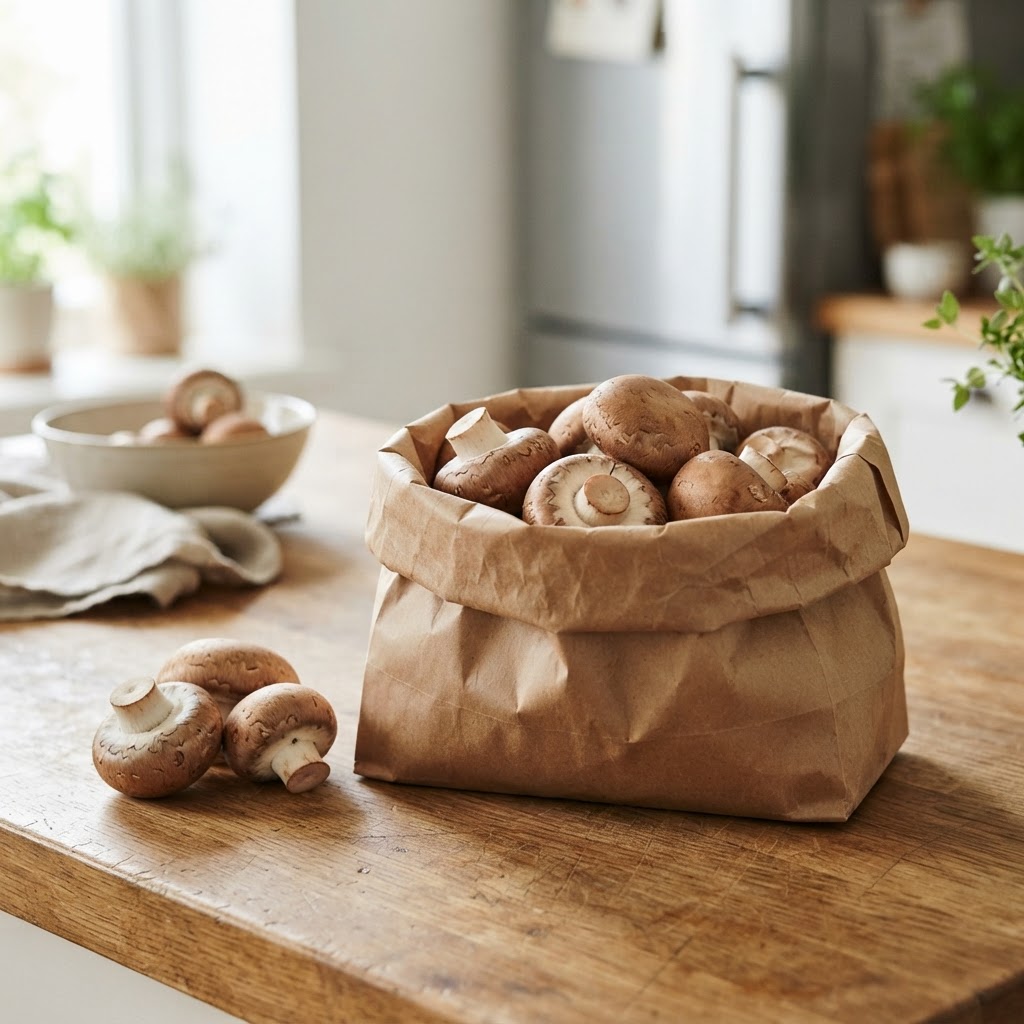
Keep fresh mushrooms dry and airy: use a paper bag, delay washing, refrigerate them, and discard pieces that smell sour or feel persistently slimy.
Quick reference
- Best container: Paper bag Allows airflow
- Fridge location: Main refrigerator shelf Keep chilled and dry
- Wash timing: Just before cooking Dry thoroughly
- Quality window: Use within several days Check condition daily
The best way to store fresh mushrooms
Put unwashed mushrooms in a plain paper bag and fold the top loosely. Refrigerate the bag on a shelf rather than in the crisper drawer, where trapped humidity can make them damp. The paper absorbs a little surface moisture while still allowing air to circulate. If mushrooms came in a vented carton or breathable package, you can leave them there unless the package is wet or tightly sealed.
Why mushrooms turn slimy
Mushrooms contain plenty of water, and condensation is their main storage problem. A sealed plastic bag traps that moisture against the surface, while washing before storage adds even more. Crowding also limits airflow and lets damp spots spread. Keep mushrooms cold, dry, and loosely packed; do not stack them under heavy produce or press them against a wet refrigerator wall.
- Avoid airtight containers.
- Remove visibly wet packaging.
- Separate bruised pieces from firm ones.
When to wash mushrooms
Wait until shortly before cooking. Brush off loose soil with a soft brush or wipe the caps and stems with a barely damp towel. If they need a thorough rinse, use cool water briefly, then dry them immediately with clean towels. Do not soak mushrooms or return them to the refrigerator wet. Clean only the amount you plan to use, leaving the rest dry in its container.
A simple storage routine
When you bring mushrooms home, inspect the package and remove any damaged pieces. Transfer them to a paper bag if the original container is sealed or damp. Refrigerate promptly, leaving space around the bag for airflow. Use the oldest mushrooms first and check them before cooking; storage time varies with freshness, variety, and refrigerator humidity, so condition matters more than a rigid deadline.
- Keep whole mushrooms intact until needed.
- Do not store them beside wet produce.
- Wipe condensation from the bag if it appears.
How to recognize deterioration
A little surface moisture or slight wrinkling does not always mean mushrooms are unusable, but persistent slipperiness is a warning. Discard mushrooms that feel very soft, have a sour or unpleasant odor, show fuzzy mold, or develop dark, wet patches that are spreading. Do not try to rescue moldy mushrooms by trimming around the spot. Firm, clean-smelling mushrooms with minor dryness can usually be trimmed and cooked promptly.
Ready to cook
Dry mushrooms brown better than wet ones, so give them space in the pan and avoid adding a large pile at once. For weeknight ideas, browse QuickDinner’s approximately 41 mushroom-titled recipes for soups, pasta, sides, and main dishes. Choose a recipe after checking the mushrooms, then wash or wipe only what it calls for.