How to Store Leafy Greens So They Stay Crisp Longer
Store leafy greens dry, loosely packed, and with controlled moisture so lettuce, spinach, and kale stay crisp for salads, wraps, and meal prep.
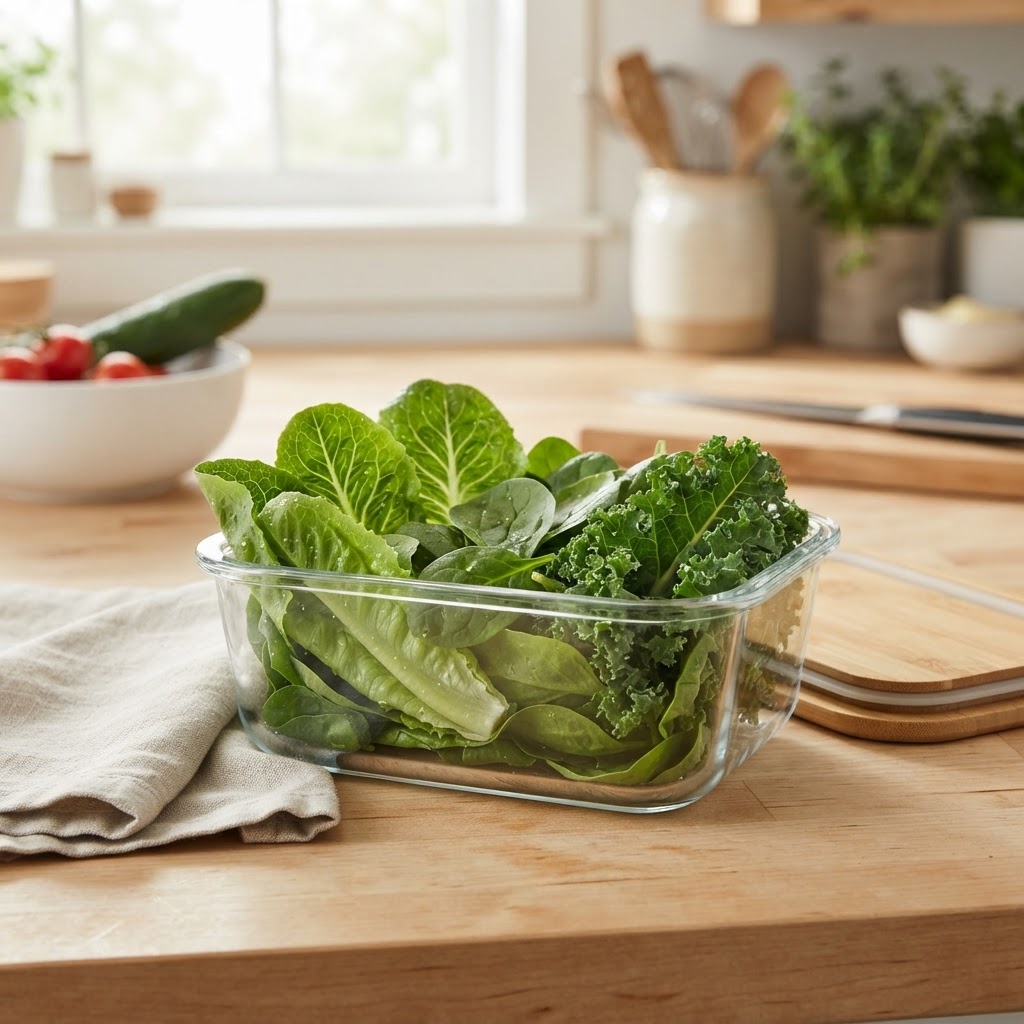
Quick reference
- Green: Best approach Typical quality
- Lettuce: Dry; container with towel About 5–7 days
- Spinach: Dry; shallow container About 3–5 days
- Kale: Dry; towel-lined bag About 7–10 days
- Herbs: Slightly damp towel Avoid sealed wetness
Wash now or later?
For the longest storage, wait to wash greens until you need them. Extra surface water speeds softening, especially on delicate lettuce and spinach. If washing ahead will make meals easier, rinse thoroughly, then dry completely before refrigerating. Greens should feel dry rather than cool and wet. Remove any slimy or damaged leaves before packing so they do not affect the rest.
- Wash only what you can dry well.
- Separate visibly damaged leaves.
- Keep ready-to-eat portions convenient for salads and wraps.
Dry them thoroughly
A salad spinner is the quickest option: spin in batches, drain the bowl, and spin again. For small amounts, spread leaves on clean kitchen towels and gently blot or air-dry them. Pay attention to folds, ribs, and the base of whole lettuce heads, where water collects. Do not pack greens while droplets are still visible.
- Spin delicate leaves gently to prevent bruising.
- Pat kale and sturdy leaves dry after spinning.
- Replace damp towels before storing.
Use towels to manage moisture
Line the bottom of a container or reusable bag with a clean paper or cloth towel, add the dry greens, then place another towel on top. The towel catches condensation without pressing the leaves. Change it if it becomes saturated. This approach works especially well for spinach, mixed greens, chopped lettuce, and washed kale.
- Use a shallow container for fragile leaves.
- Avoid packing greens tightly.
- Do not store them sitting in pooled water.
Give greens some airflow
Greens need protection from drying out, but a completely sealed, wet container can trap condensation. Use a container with a lid that closes securely but is not packed full, or leave a small amount of room around the leaves. For bags, remove excess air without compressing the greens. Keep them in the refrigerator’s crisper drawer when possible.
- Keep greens away from warm refrigerator doors.
- Store whole heads until needed for the best texture.
- Keep cut greens separate from wet dressings.
Delicate versus sturdy greens
Delicate greens—baby spinach, spring mix, butter lettuce, and tender herbs—bruise easily and lose texture quickly. Store them dry in a shallow, towel-lined container and use them first. Sturdy greens such as kale, collards, and cabbage tolerate washing and longer storage. Remove tough stems from kale if desired, but leave leaves whole until cooking or assembling meals.
- Delicate greens: shallow container, gentle handling.
- Sturdy greens: towel-lined bag or container.
- For meal prep, pack greens separately from sauces and juicy toppings.
A simple freshness check
Inspect stored greens every day or two. Pull out wilted or damaged leaves, replace a damp towel, and move usable greens into a smaller container as the supply shrinks. Slightly wilted lettuce or spinach can often perk up after a brief soak in very cold water, followed by thorough drying. For salads, wraps, bowls, and meal-prep recipes, keeping the greens dry until serving makes the biggest difference.
- Use delicate greens first.
- Refresh only before use, not before re-storage.
- Add dressing at the table or just before eating.