How to Store Homemade Dressings and Sauces Safely
Refrigerate homemade sauces promptly, use clean containers, and set storage times by ingredients such as dairy, eggs, herbs, and cooked foods.
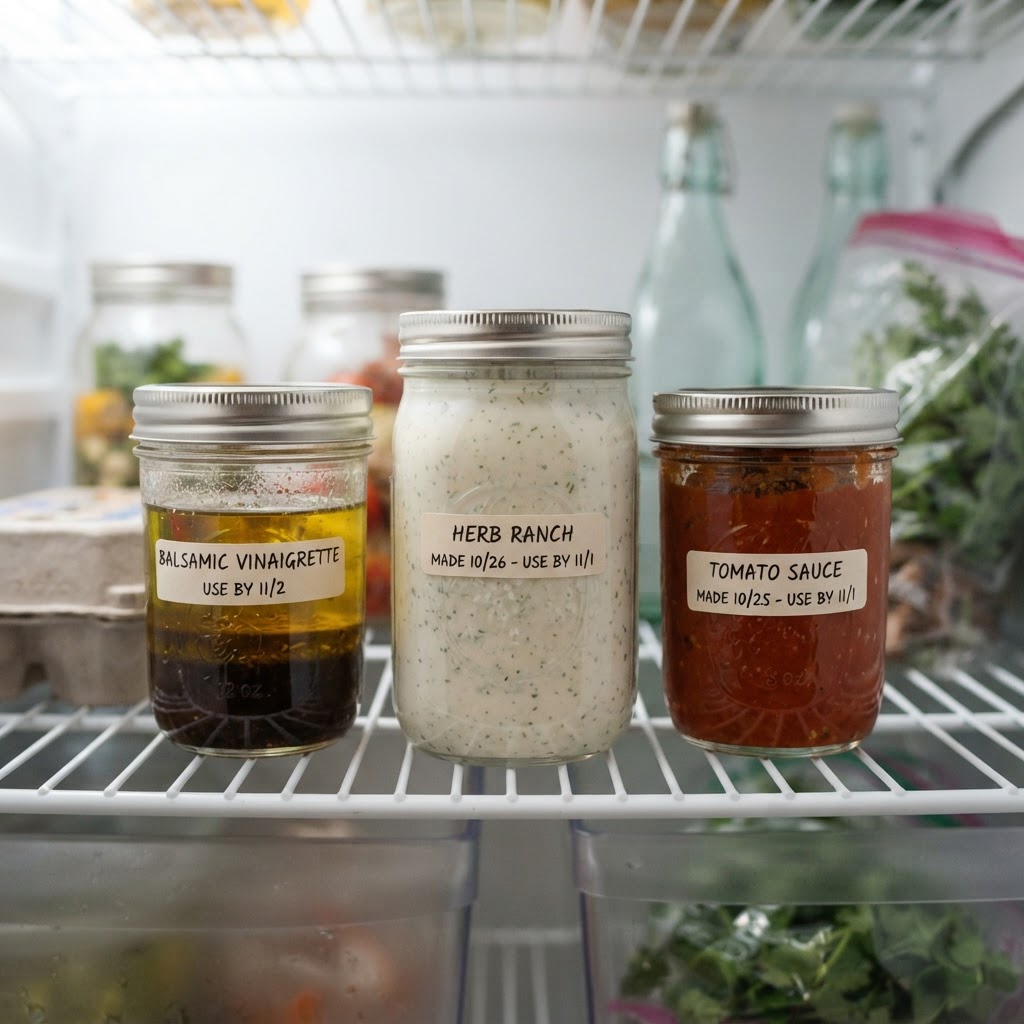
Quick reference
- Type: Storage approach Use ingredient-based judgment
- Oil-and-vinegar dressing: Refrigerate for best quality Shake before serving
- Dairy- or egg-based: Keep chilled continuously Use promptly
- Fresh-herb dressing: Refrigerate in a sealed jar Watch for wilting or odor
- Cooked sauce: Cool quickly, then chill Use within 3–4 days
Start with the most perishable ingredient
There is no single safe storage time for every homemade dressing or sauce. A vinegar-and-oil mixture behaves differently from ranch-style dressing, mayonnaise-based sauce, pesto, or gravy. Dairy, eggs, fresh herbs, and cooked ingredients generally make a sauce more perishable than oil, vinegar, salt, or dried spices alone. When in doubt, follow the shortest practical storage window suggested by the most perishable ingredient.
Refrigerate promptly and keep it cold
Transfer perishable sauces to the refrigerator within 2 hours of making or serving, or within 1 hour when the room is above 90°F / 32°C. Keep the refrigerator at 40°F / 4°C or below, and store the container toward the back rather than in the warmer door. Cooked sauces and dressings should not sit on the counter while you finish preparing the meal.
- Cool cooked sauces in a shallow container to speed chilling.
- Label the jar with the preparation date.
- Keep the lid tightly closed.
Choose a clean, sealed container
Use a clean glass jar or food-safe container with a secure lid. Avoid returning used dressing to the original batch, since crumbs, double-dipping, and contact with raw foods can shorten its useful life. Store dressing separately from salad greens so the vegetables stay crisp. For sauces served warm, use a clean serving spoon each time and refrigerate leftovers promptly.
Use time ranges as a guide, not a promise
Many cooked leftovers are best used within 3–4 days when continuously refrigerated, but a homemade sauce may need a shorter window because of eggs, dairy, seafood, fresh herbs, or other ingredients. Oil-and-vinegar dressings can often hold quality longer, though their flavor and appearance may change. Check the recipe’s storage notes, and discard anything with an off smell, mold, unusual bubbling, a swollen container, or a texture that seems unexpectedly slimy.
Handle, serve, and reheat safely
Take out only the amount you expect to use, then return the rest to the refrigerator. Let chilled dressing stand briefly if you want it less firm, rather than leaving the whole jar out for hours. Reheat cooked sauces gently in a saucepan or microwave, stirring for even heating, and bring leftovers to 165°F / 74°C before serving. If a sauce has been left warm for too long, do not try to make it safe by reheating it.
Make storage part of the recipe
QuickDinner’s sauce and dressing recipes should be your first reference for ingredient-specific storage notes. Before preparing a batch, check whether it contains raw or cooked eggs, dairy, fresh herbs, meat drippings, or other cooked components. Make smaller quantities when the recipe is highly perishable, and use a clean spoon every time. These simple habits protect flavor, texture, and safe handling without forcing every sauce into the same storage rule.