How to Store Hard Cheese After Opening
Wrap opened hard cheese in breathable layers, refrigerate it correctly, and spot quality loss before it becomes obvious spoilage or mold.
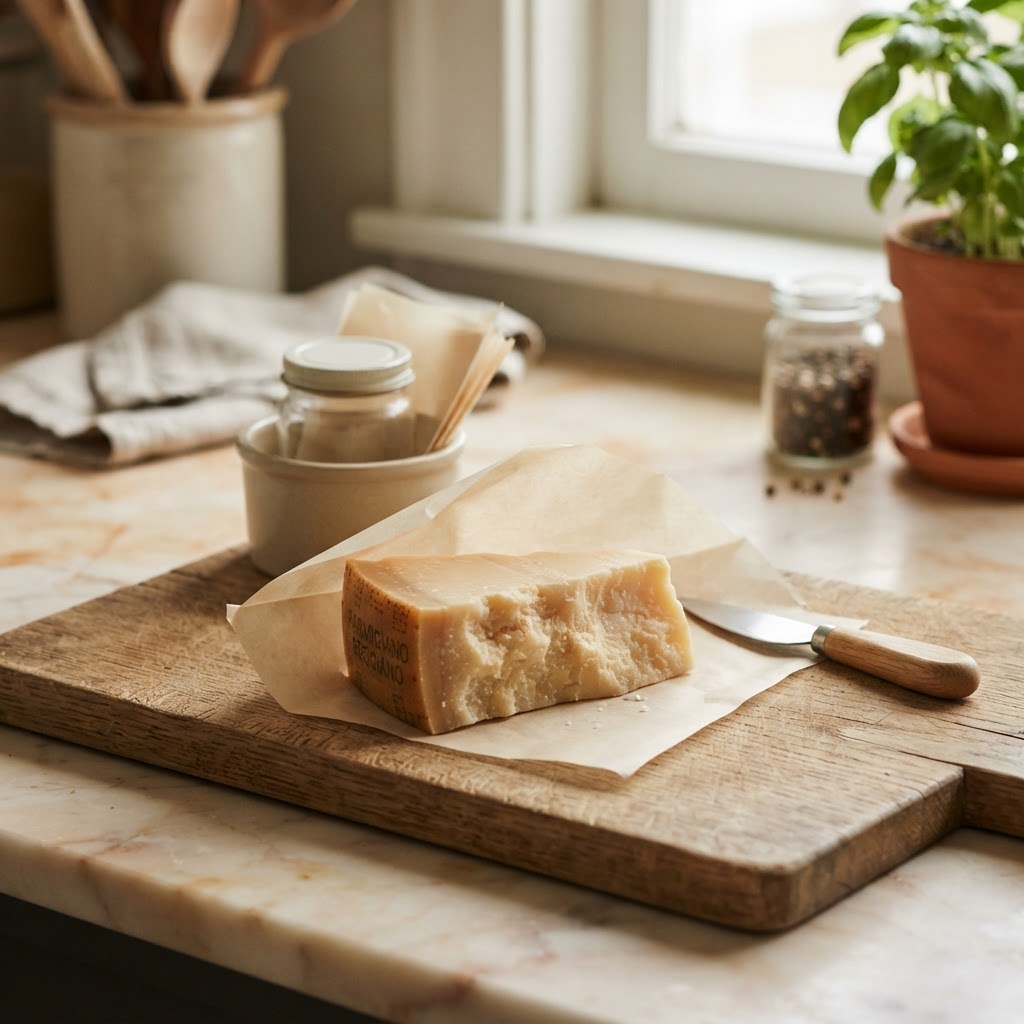
Quick reference
- Best wrap: Parchment, then loose foil Keeps the surface from drying too quickly
- Fridge spot: Stable middle shelf or drawer Avoid the warm, fluctuating door
- Check before using: Smell, surface, texture Discard if spoilage is obvious
- For serving: Bring out briefly Cut only what you need
Wrap it without trapping excess moisture
After opening, remove the original plastic if it is tight against the cheese or damp inside. Wrap the block first in parchment or cheese paper, then place it in a loose, reusable bag or lightly closed foil. This protects the cut surface while allowing a little airflow. Do not seal a warm or visibly damp piece in an airtight container; trapped moisture can encourage surface mold.
- Wrap blocks rather than pre-grating the whole piece.
- Keep the cut face covered.
- Replace the wrap if it becomes wet or greasy.
Choose a steady refrigerator spot
Store hard cheese in a cold, stable part of the refrigerator, such as a middle shelf or a cheese drawer. The door warms and cools more often, so it is less suitable for long-term storage. Keep cheese away from uncovered foods with strong odors, and use a clean knife each time you cut it. Storage time depends on the cheese, its moisture level, and how consistently it stays cold.
- Keep the package closed between uses.
- Avoid the coldest spot if it causes condensation.
- Label opened pieces with the date.
Dryness is not the same as spoilage
A firm, dry edge or slightly darker surface usually signals quality loss, not immediate spoilage. Trim a thin layer if the remaining cheese smells clean and looks normal. Crystals in aged Parmesan or similar cheeses can be a natural texture feature, not mold. However, a sour or ammonia-like odor, sliminess, unusual discoloration, or spreading fuzzy growth means the cheese should not be used.
- Dry edge: trim and reassess.
- Odd odor or slime: discard.
- Uncertain mold: do not taste-test.
What to do with surface mold
Hard, low-moisture cheeses are less vulnerable to mold penetrating deeply than soft cheeses, but visible mold still deserves caution. If a small isolated spot appears on a firm block, cut well around and below it with a clean knife, keeping the blade away from the unaffected portion as you finish. For widespread mold, deep cracks, soft patches, or a questionable smell, discard the cheese rather than trying to rescue it. This advice is specific to firm hard cheese, not every cheese style.
- Do not apply this approach to soft, fresh, sliced, or shredded cheese.
- Rewrap the trimmed block with fresh material.
- Clean the cutting board and knife afterward.
Use the opened piece while it is at its best
Take out only the amount needed, then return the rest promptly to the refrigerator. Grate hard cheese just before serving for the best aroma and texture. Older or slightly dried pieces are excellent melted into pasta, shaved over a salad, or stirred into cheese-based sauces and soups. If the block has become too dry to slice neatly but still smells and looks sound, grate it instead of discarding it.
- Pasta: grate into hot noodles or sauce.
- Salad: shave thinly over greens.
- Cheese recipes: melt or blend into a sauce.