How to Store Fresh Herbs So They Last Longer
Keep fresh herbs usable for days longer with the right refrigerator method: dry tender herbs, water-store hardy stems, and trim fading leaves early.
Quick reference
- Tender herbs: Pat dry; wrap loosely Parsley, cilantro, mint
- Hardy herbs: Wrap dry in a towel Rosemary, thyme, sage
- Basil: Store upright in water Keep at room temperature
- Already washed: Dry completely first Moisture speeds decline
Sort herbs by texture first
The most reliable way to store fresh herbs is to separate tender, leafy bunches from firm, woody sprigs. Tender herbs such as cilantro, parsley, dill, mint and chives need gentle protection from excess moisture. Hardy herbs such as rosemary, thyme, sage and oregano hold up better when wrapped dry. Basil is the exception: cold refrigerator air can damage its leaves, so keep it upright in water at room temperature.
Wash only when you can dry them well
If the herbs are visibly dirty, rinse them under cool water and shake off the excess. Spread them on a clean kitchen towel or use a salad spinner, then pat dry thoroughly. Even a few trapped droplets can make leaves soften quickly. For the longest storage, wash herbs just before using; otherwise, leave them unwashed and remove only damaged leaves.
- Discard yellow, slimy or bruised leaves.
- Do not seal damp herbs in a tight container.
- Handle leafy stems gently to avoid crushing them.
Best refrigerator methods
For tender herbs, loosely wrap dry stems and leaves in a barely damp paper towel, place them in a reusable bag or vented container, and refrigerate. Replace the towel if it becomes wet. For hardy herbs, wrap the dry sprigs in a dry paper towel before placing them in a sealed bag or container. These methods keep herbs protected without trapping excessive condensation.
Use water storage for sturdy leafy stems
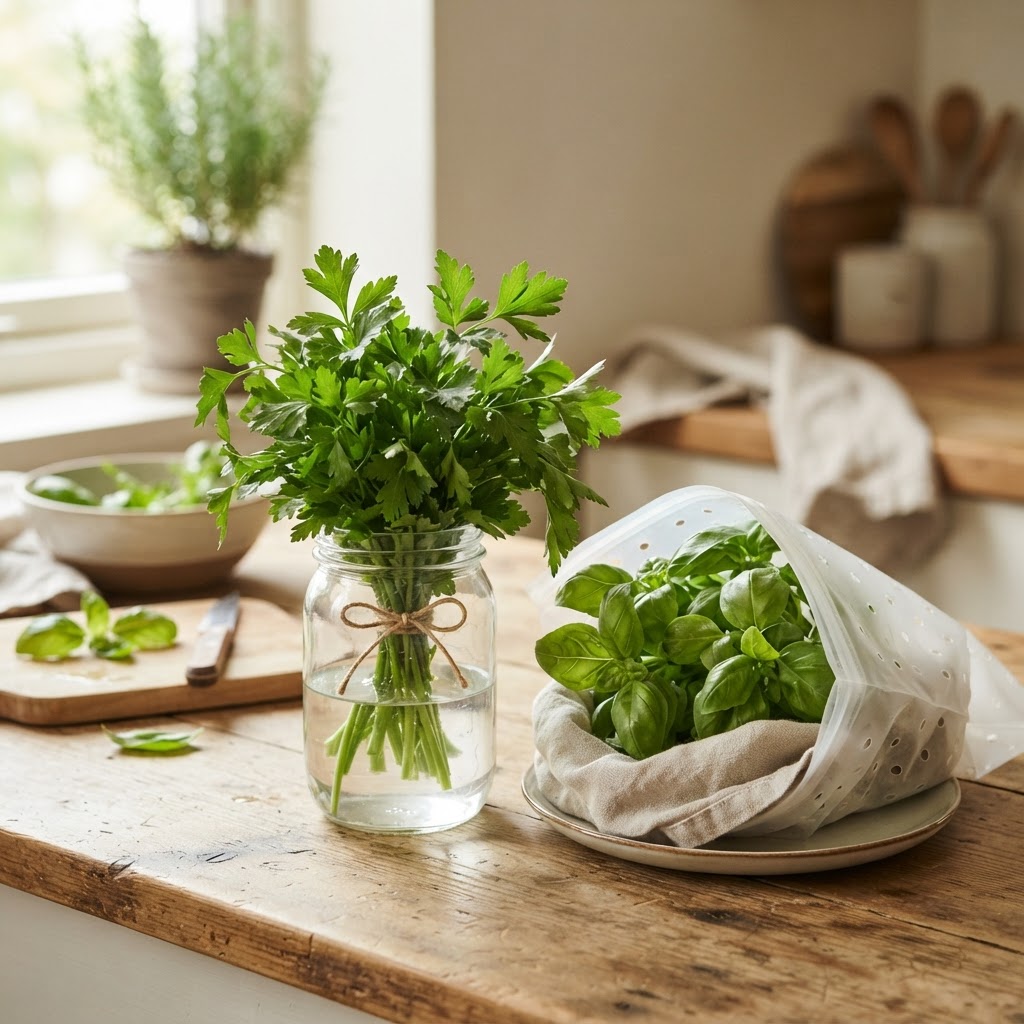
Parsley, cilantro and mint often keep well like cut flowers. Trim the stem ends, stand the bunch in a jar with about an inch of water, and cover the leaves loosely with a bag. Refrigerate the jar and change the water every day or two. Keep basil out of the refrigerator: place it in a jar of water on the counter and refresh the water regularly.
Know when herbs are past their best
Use herbs promptly when leaves are bright, fragrant and springy. A little wilting is usually reversible: trim the stems and stand the bunch in fresh water for a short time. Toss herbs that are slimy, moldy, strongly discolored or sour-smelling. If only a few leaves are fading, remove them and use the remaining herbs in a sauce, soup or finishing garnish.
- Blend soft herbs into pesto or green sauce.
- Add hardy stems to roasted vegetables or beans.
- Finish QuickDinner’s lemon chicken, tomato pasta or herby potato recipes before the bunch declines.
A simple storage routine
Label a container with the storage date, check herbs every day or two, and keep them away from produce that releases heavy moisture. When you have more than you can use fresh, chop the herbs and freeze them in a little olive oil or water in ice-cube trays. Frozen herbs work best in cooked dishes, while fresh-stored herbs are better for salads and final garnishes.