How to Store Cut Cabbage Without It Drying Out
Keep cut cabbage crisp for about a week by limiting exposed surfaces, controlling moisture, and refrigerating it in an airtight container.
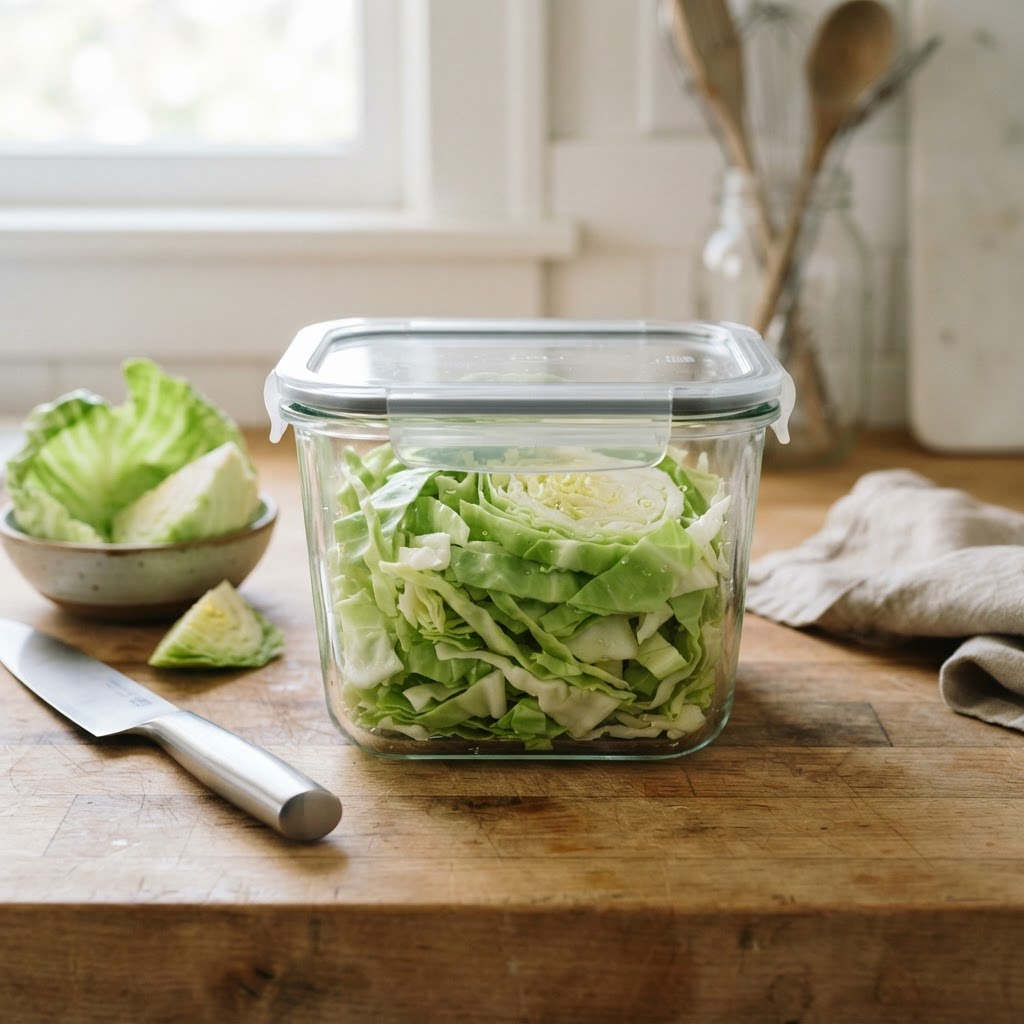
Quick reference
- Best method: Wrap cut face; bag or container Limit air exposure
- Fridge location: Crisper drawer Keep away from warm spots
- Quality window: About 5–7 days Best texture early
- Before storing: Keep dry; do not wash Wash only what you need
The simplest way to store cut cabbage
Leave the outer leaves attached when possible, then wrap the cut surface tightly with reusable food wrap or place the cabbage cut-side down in an airtight container. A produce bag with the air pressed out also works. Refrigerate it promptly in the crisper drawer. For a half head, wrapping the cut face matters most; for wedges or chopped cabbage, use a sealed container to reduce exposed edges.
- Do not store it uncovered.
- Keep cut cabbage away from strong-smelling foods.
- Use clean, dry hands and containers.
Control moisture without making it soggy
Cabbage keeps better when its cut surfaces are dry before storage. If you washed it, spin or pat it thoroughly dry before packing. Excess water can make chopped cabbage limp, while too much trapped air dries the edges. For shredded cabbage, line the container with a paper towel and replace it if it becomes damp. Avoid sealing visibly wet cabbage in a tight container.
- Store whole pieces rather than shredding ahead when convenient.
- Add a dry paper towel to chopped cabbage.
- Do not rinse cabbage before storing unless you can dry it well.
How long cut cabbage stays usable
A tightly wrapped half or wedge usually keeps good quality for about five to seven days in a cold refrigerator. Chopped cabbage may lose crispness sooner, often within three to five days. These are quality guidelines rather than guarantees: fridge temperature, freshness at purchase, and how much surface area was exposed all matter. The cabbage may remain usable after its peak texture if it still looks and smells normal.
- Use the crispest cabbage first for slaw.
- Reserve softer pieces for stir-fry or soup.
- Keep the refrigerator at 40°F / 4°C or below for perishable foods.
Check for spoilage before cooking
Discard cabbage with a sour or rotten smell, slimy patches, spreading dark decay, mold, or leaves that are collapsing and leaking. A few dry outer edges or slight browning on the cut face usually indicate quality loss rather than automatic spoilage; trim them generously and inspect the interior. When in doubt, throw it out—cooking is not a reliable fix for spoiled produce.
- Mild dryness: trim and use soon.
- Sliminess or off odor: discard.
- Mold: discard the affected cabbage rather than scraping it away.
Plan it into your next meal
For the best texture, cut only what you need for QuickDinner slaw and dress it shortly before serving. Slightly softened cabbage is still useful in a stir-fry, where high heat changes its texture, or in roasted cabbage wedges, where trimmed edges can caramelize. Use the broader cabbage article for selecting and preparing the head, then store any remaining piece with the cut face protected.
- Slaw: use the freshest, crispest pieces.
- Stir-fry: thinly slice softer cabbage.
- Roasted cabbage: keep wedges thick and tightly wrapped until cooking.