How to Soften Butter Quickly Without Melting It
Soften butter quickly for baking with three reliable methods that keep it cool, spreadable, and ready to cream without melted, greasy patches.
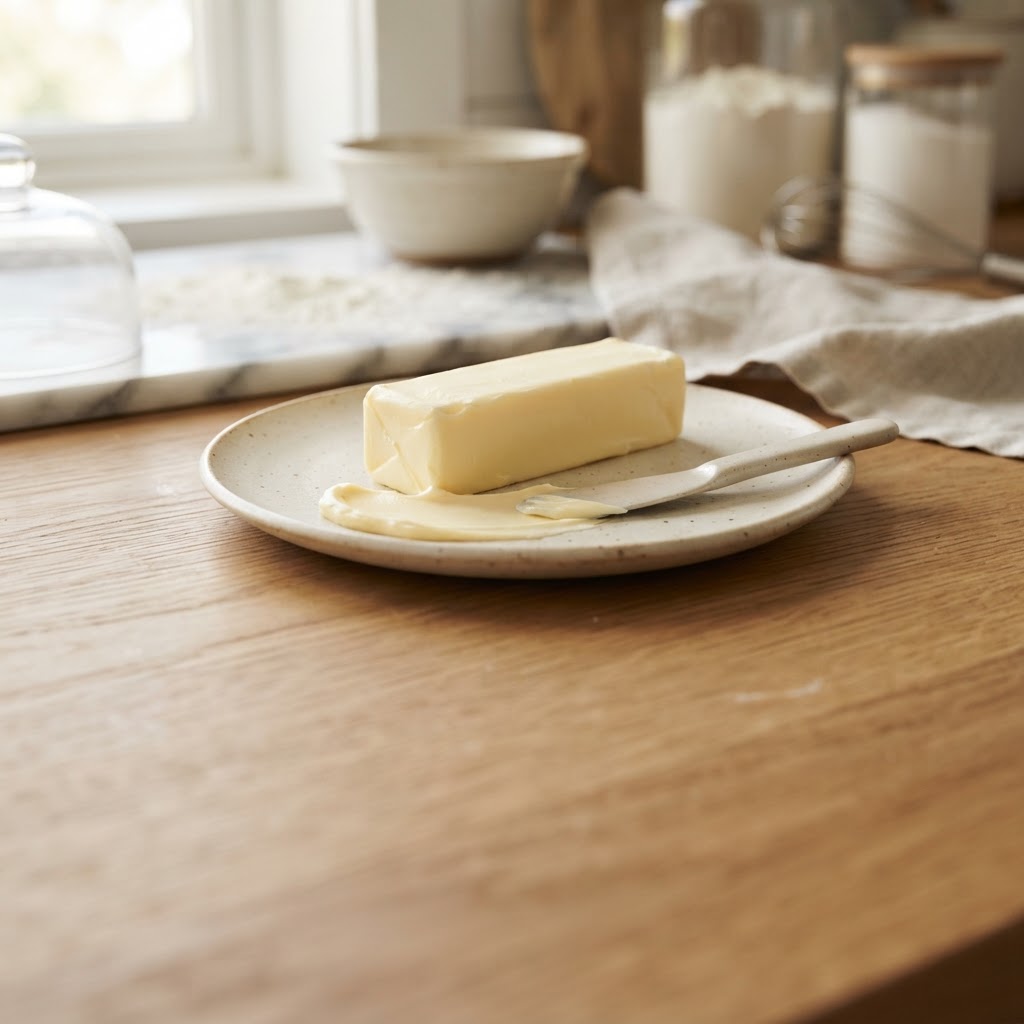
Quick reference
- Cube method: 10–20 minutes Most even
- Warm-glass method: 5–10 minutes Gentle and hands-off
- Thin-slice method: 5–10 minutes Fastest for a stick
- Ready texture: Soft but cool Press leaves a mark
What softened butter should feel like
For most baking, softened butter should be pliable enough to press with a finger but still feel cool, not greasy or shiny. A gentle indentation should remain without the butter collapsing. This texture helps butter blend evenly with sugar and other ingredients. If the butter feels oily, looks translucent, or bends without resistance, it has gone too far and is partly melted.
Cube method: the most reliable option
Cut a stick of cold butter into small, even cubes, about ½ inch wide, and arrange them in a single layer on a plate. The increased surface area lets the butter warm evenly while you measure the remaining ingredients. Depending on the room temperature and cube size, it usually takes 10 to 20 minutes. Turn the pieces once if one side is warming faster.
- Use a sharp knife for clean cuts.
- Keep pieces separated rather than stacked.
- Check by pressing the largest cube.
Warm-glass method: gentle and hands-off
Fill a heatproof glass or bowl with hot tap water, let it stand for a minute, then empty and dry it thoroughly. Place the warm vessel upside down over the butter on a plate. The trapped warmth softens the butter gradually without direct heat. Check after five minutes and repeat briefly if needed. The glass should be warm, never so hot that it makes the butter shiny or wet.
- Use hot tap water, not boiling water.
- Dry the glass before covering the butter.
- Leave a little space around the butter for even warming.
Thin-slice method: fastest for a stick
Slice the butter crosswise into thin pieces, roughly ⅛ to ¼ inch thick, and spread them apart on a plate. Thin slices soften quickly because more of the butter is exposed to the room air. They are often ready in five to 10 minutes, though a cool kitchen may take longer. This method is especially useful when a recipe calls for creaming butter and sugar right away.
- Separate slices instead of overlapping them.
- Avoid placing the plate near a hot oven or stovetop.
- Use the same check: pliable, but still cool.
Why not simply microwave it?
Microwaves can create hot spots, so one part of the butter may melt while the center remains firm. Even short bursts can leave liquid butter around colder pieces, making the texture difficult to judge. Melted butter behaves differently from softened butter: it cannot hold air in the same way when creamed with sugar, which can change a baked good’s spread and texture. If you must use a microwave, use very low power in brief intervals and turn the butter often, but the three methods above offer better control.
A quick readiness check
Press the butter with a fingertip. It should yield easily while resisting pressure, and the surface should remain matte rather than glossy. If it becomes too soft, refrigerate it for a few minutes and check again. For the most consistent results, start softening butter before measuring flour and other ingredients; by the time the batter or dough comes together, the butter is more likely to be at the proper temperature.