How to Sear Fish Without It Sticking
Keep fish from sticking by drying the fillet, preheating the pan, using enough oil, and waiting for the crust to release naturally.
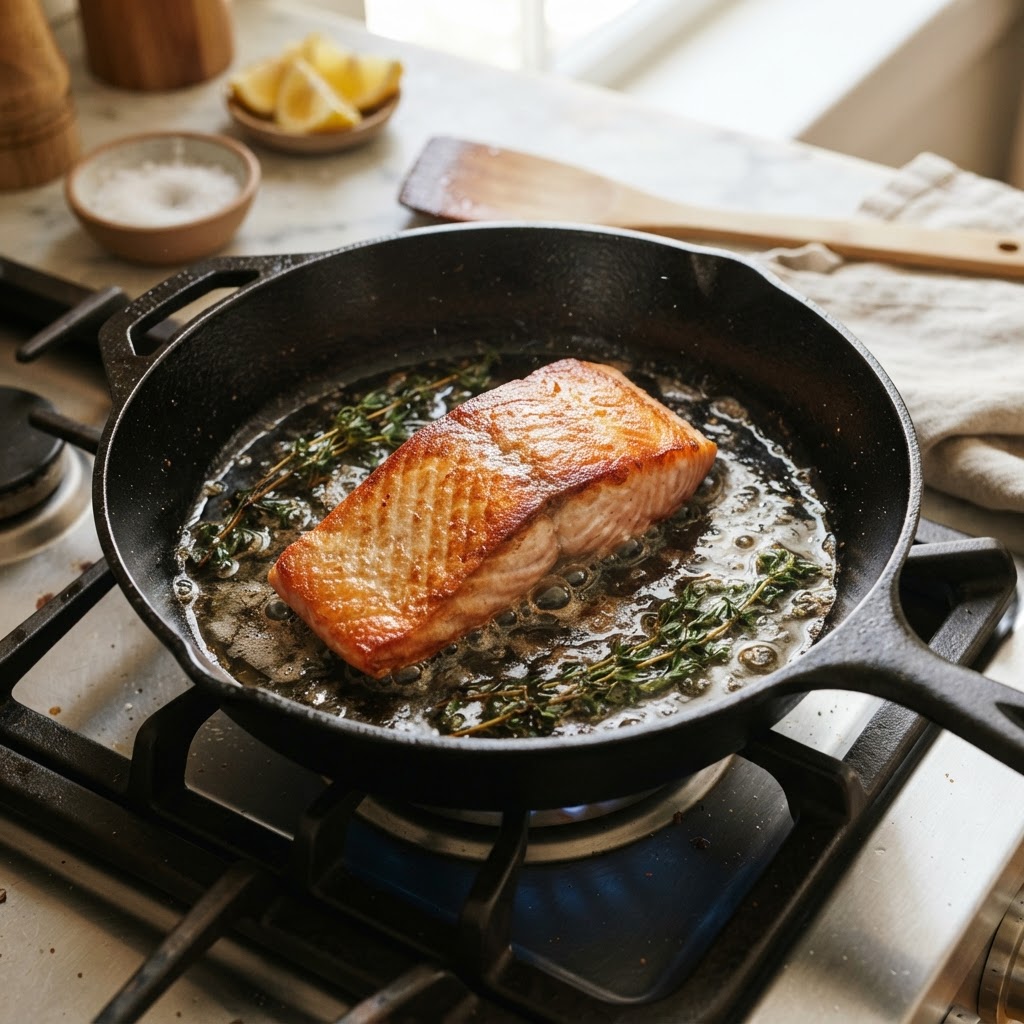
Quick reference
- Before cooking: Pat completely dry Remove surface moisture
- Pan: Medium-high heat Hot, not smoking
- Oil: Neutral, high-heat oil Use a thin coating
- Release cue: Edges are browned The fish lifts easily
Dry the fish thoroughly
Moisture is the fastest route to sticking. Pat both sides of the fillet dry with paper towels, paying extra attention to the skin. If you have time, place the fish uncovered in the refrigerator for 20 to 30 minutes, then pat it again just before cooking. Season after drying so salt does not draw more water onto the surface. A dry exterior browns instead of steaming and forms a firmer crust.
Heat the pan and oil correctly
Use a heavy skillet that holds heat, such as cast iron, carbon steel, or stainless steel. Warm it over medium-high heat until the cooking surface is hot, then add a thin layer of neutral oil with a high smoke point. The oil should shimmer but not smoke heavily. If the pan is too cool, the fish bonds to the surface before browning; if it is aggressively hot, the outside can scorch before the center cooks.
- Choose avocado, canola, grapeseed, or another neutral oil.
- Avoid overcrowding; cook in batches if needed.
Put the skin side down first
For skin-on fish, place the fillet skin side down, lowering it away from you to avoid splashes. Press gently with a spatula for the first 15 to 20 seconds so the skin stays flat as it contracts. Then leave it alone. Cook most of the way on the skin side, adjusting the heat if the skin darkens too quickly. For skinless fish, place the broader, flatter side down first to build an even crust.
Wait for the natural release
Do not pry at the fish as soon as it hits the pan. At first, the surface may cling while the crust is forming. After several minutes, the edges should look opaque and browned, and a thin spatula should slide underneath with little resistance. If the fillet still feels firmly attached, give it another 30 to 60 seconds and check again. Forcing it early is what causes many fillets to tear.
- Use a thin, flexible fish spatula.
- Lift from the edges, then support the center.
Finish gently and serve
Once the fish releases, turn it carefully and cook the second side briefly; thinner fillets may need only a minute or two. Cooking time varies with thickness and type, so check the thickest part rather than relying only on the clock. Fish is done at 145°F / 63°C, or when the flesh is opaque and flakes easily. Transfer it to a plate promptly so the crust stays crisp.