How to Roast Chestnuts in the Oven
Roast chestnuts at 400–425°F for about 20–30 minutes, then steam and peel them while warm for tender, easy-to-eat nuts.
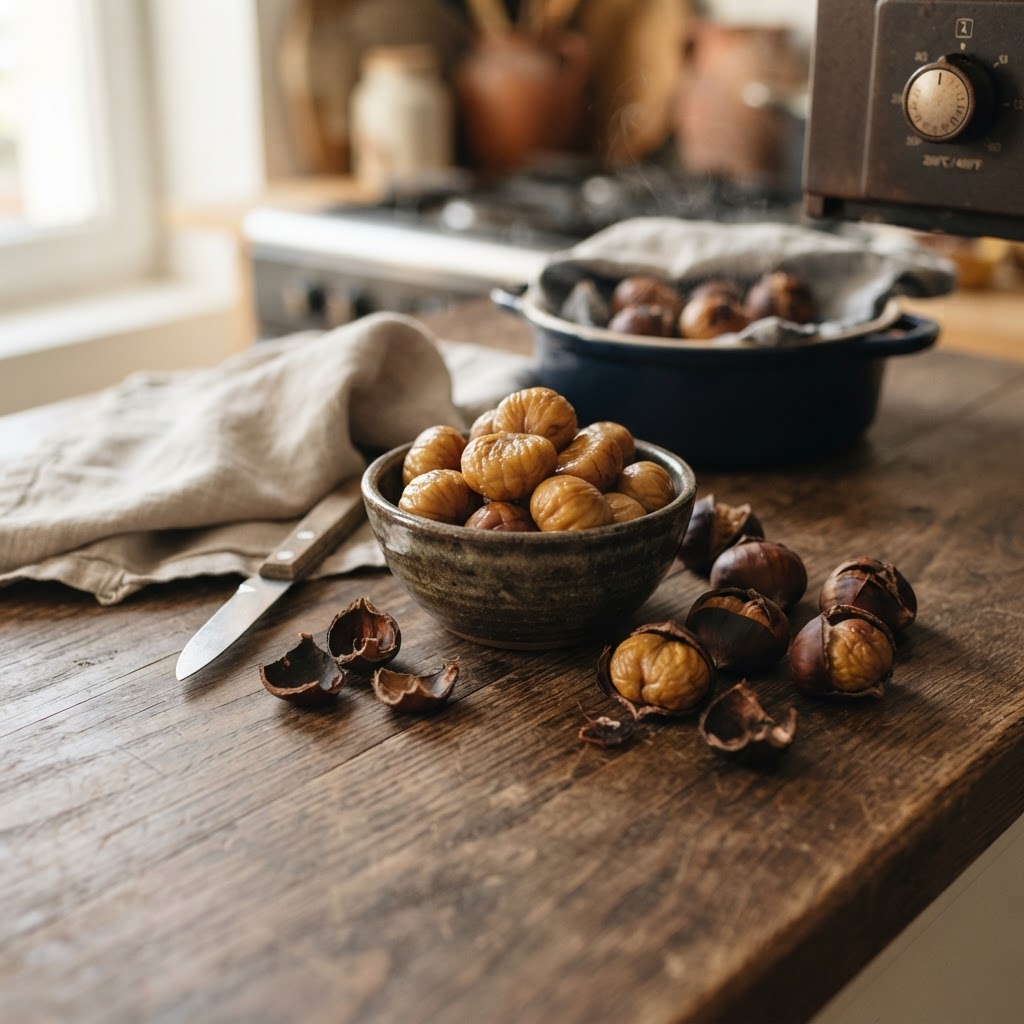
Quick reference
- Oven temperature: 400–425°F Use a fully preheated oven
- Roast time: 20–30 minutes Depends on size and oven
- Soaking: Optional, 10–20 minutes Drain and dry well
- Peeling: While warm Steam under a towel first
- Storage: Refrigerate up to 4 days Use an airtight container
Ingredients and equipment
You need fresh chestnuts, water if you choose to soak them, a small sharp knife, a baking sheet, and a clean kitchen towel. Select nuts that feel heavy for their size and have smooth, uncracked shells. Discard chestnuts with mold, deep cracks, or a hollow rattle. Heat the oven to 400–425°F; the higher temperature gives faster browning, while 400°F is a little gentler for smaller nuts.
- Fresh chestnuts
- Small sharp knife
- Baking sheet and clean towel
Score the shells safely
Rinse and dry the chestnuts. Place one flat side down on a cutting board and hold it firmly with your fingertips away from the blade. Cut a clear X through the shell on the rounded side, or make one long slit across it. Cut through the shell and thin inner skin, but avoid slicing deeply into the nut. The opening lets steam escape and gives the shell room to split during roasting.
- Work with one chestnut at a time.
- Use a chestnut knife or serrated knife if the shell is slippery.
- Never roast unscored chestnuts.
Optional soak and roast
If you like, soak the scored chestnuts in warm water for 10–20 minutes. Drain and dry them thoroughly; soaking is optional and does not replace scoring. Arrange the nuts cut-side up in a single layer on a baking sheet. Roast for about 20–30 minutes, turning the pan once if your oven browns unevenly. They are ready when the shells curl back and the exposed nut feels tender when pierced.
- Leave space between the nuts.
- Start checking smaller chestnuts around 20 minutes.
- Add a few minutes for large or especially firm nuts.
Steam, peel, and serve
Transfer the hot chestnuts to a clean towel and fold it over them. Let them steam for 5–10 minutes; this softens the shells and inner skins. Peel one at a time while they are still warm, removing both the hard shell and papery membrane. If a chestnut cools and becomes stubborn, return it to the warm oven briefly or peel it under the towel. Serve them plain, or use the tender pieces in stuffing, soups, or salads.
- Use a towel or heatproof gloves to protect your hands.
- Remove any bitter, hard-to-peel inner skin.
- Chestnuts are easiest to peel warm.
Storage and reheating
Cool peeled chestnuts promptly, then place them in an airtight container and refrigerate for up to 4 days. For longer storage, freeze peeled chestnuts in a freezer-safe bag for up to 3 months; thaw them in the refrigerator before using. Rewarm refrigerated chestnuts gently in a skillet, covered baking dish, or microwave so they do not dry out. Do not leave cooked chestnuts at room temperature for more than 2 hours.
- Label frozen chestnuts with the date.
- Store whole or chopped chestnuts once fully cooled.
- Discard chestnuts that develop mold or an off smell.