How to Reheat Roasted Vegetables Without Making Them Soft
Reheat roasted vegetables in a hot oven, skillet, or air fryer for crisp edges; use the microwave only when speed matters more than texture.
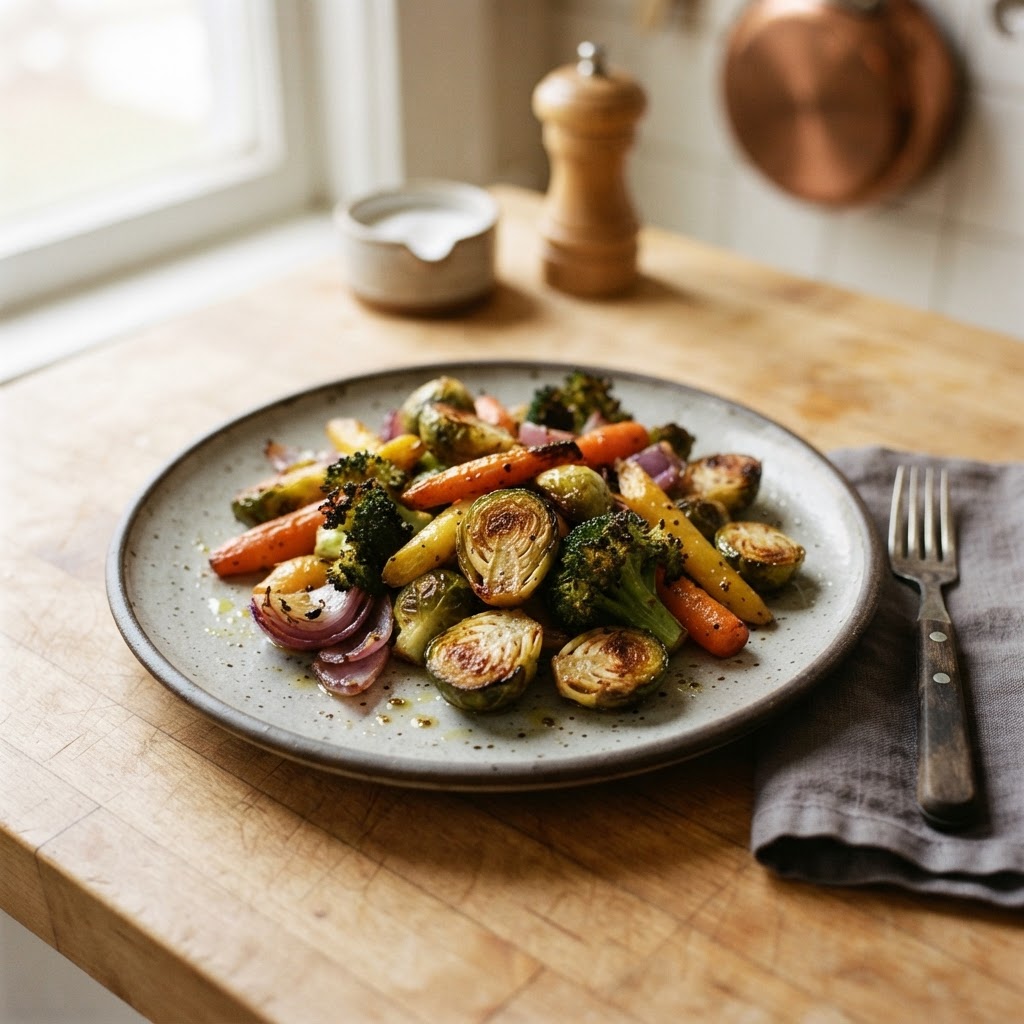
Quick reference
- Oven: 425°F; 8–15 min Best for a full tray
- Skillet: Medium-high; 5–8 min Best for small portions
- Air fryer: 375–400°F; 4–8 min Fastest crisp finish
- Microwave: 30–90 sec Softest texture
The best method for crisp edges
For the closest result to freshly roasted vegetables, use a hot oven or air fryer. Spread the vegetables in one layer so hot air can reach their surfaces, and avoid covering them. A skillet is also effective for a small serving. The microwave is convenient, but trapped steam softens browned edges, especially on potatoes, broccoli, cauliflower, and squash.
- Use a hot cooking surface.
- Leave space between pieces.
- Reheat only the portion you need.
Oven method: best for a larger batch
Heat the oven to 425°F. Spread chilled roasted vegetables on a rimmed sheet pan, leaving gaps around larger pieces. Reheat for 8 to 15 minutes, turning once if the pieces are unevenly sized. They are ready when hot in the center and browned at the edges. If the vegetables look dry, add only a light slick of oil; too much can make them greasy rather than crisp.
- Preheat the pan for extra browning.
- Cut oversized pieces in half.
- Do not pile vegetables deeply.
Skillet method: quick and controlled
Warm a wide skillet over medium-high heat, then add the vegetables in a single layer. Cook for 5 to 8 minutes, stirring occasionally so several sides contact the pan. Use a teaspoon or less of oil if needed. Keep the skillet uncovered: a lid traps moisture and turns crisp roasted vegetables soft. This method works particularly well for carrots, potatoes, onions, and firm root vegetables.
- Choose a wide pan, not a crowded saucepan.
- Stir sparingly for better browning.
- Lower the heat if edges darken too quickly.
Air-fryer method: fastest crisp finish
Preheat the air fryer to 375–400°F if your model recommends it. Arrange the vegetables in a loose layer and cook for 4 to 8 minutes, shaking once halfway through. Smaller pieces may finish sooner, while dense potatoes or thick carrots need longer. Check early because air fryers vary in basket size and power. Reheat in batches when necessary rather than stacking the food.
- Keep the basket below half full.
- Shake once for even browning.
- Add delicate vegetables near the shorter end of the range.
Why the microwave softens them
Microwaving heats the water already inside the vegetables, producing steam. In a covered or crowded container, that steam has nowhere to go, so browned surfaces lose their dry, crisp texture. If speed is the priority, microwave in a single layer on a plate in short bursts, uncovered, and stop as soon as the center is hot. For a better compromise, microwave briefly, then finish in a hot skillet or air fryer.
- Use 30-second bursts.
- Leave the dish uncovered.
- Finish with dry heat when texture matters.
Storage and meal-prep tips
Cool and refrigerate cooked vegetables promptly in a shallow, covered container, then use them within 3 to 4 days. Store them without sauce when possible; add pesto, dressing, or cheese after reheating. For meal prep, roast vegetables slightly firm and keep portions separate so they can be spread out during reheating. Pair this method with QuickDinner’s roasted-vegetable recipes and meal-prep recipes for make-ahead sides that reheat more successfully.
- Keep sauces separate.
- Avoid sealing vegetables while they are steaming hot.
- Reheat only once for the best texture.