How to Plan a Freezer-Friendly Week of Dinners
Plan five dinners by freezing sauces, soups, casseroles, and cooked proteins separately, then use fresh meals first and reheat frozen portions for a smoother week.
Quick reference
- Best frozen separately: Sauce, protein, grains Combine after reheating
- Freeze confidently: Soups, stews, casseroles Cool before packing
- Use fresh first: Salad, herbs, crisp toppings Add after reheating
- Typical fridge window: 3–4 days Keep chilled promptly
Build the week in the right order
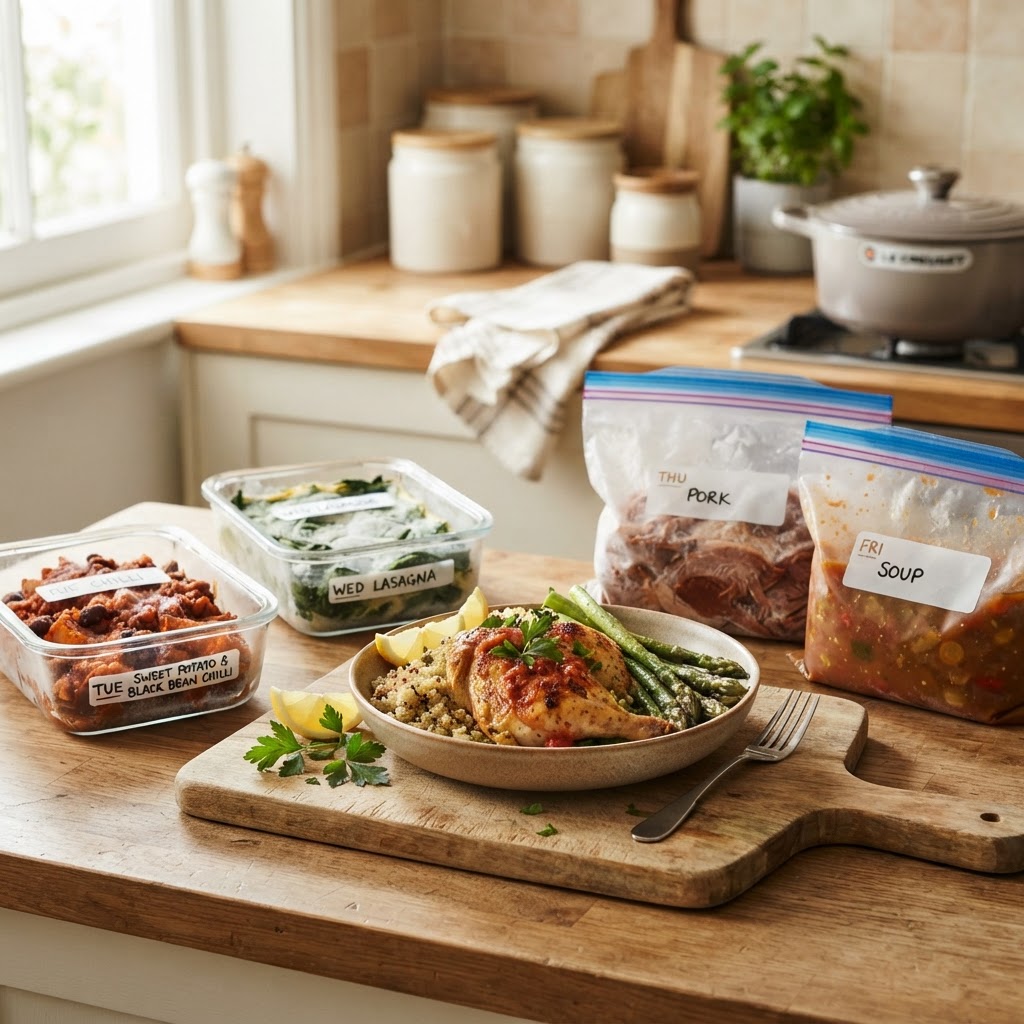
Plan fresh, quick-cooking dinners for the first one or two nights, followed by refrigerated leftovers, then frozen meals. This keeps delicate ingredients at their best and gives you time to thaw safely. A practical lineup might be a fresh skillet meal on Monday, casserole leftovers Tuesday, soup Wednesday, a fresh dinner Thursday, and a frozen sauce with pasta or rice Friday. Label each container with the meal and date.
- Cook once, portion twice: dinner tonight plus freezer portions.
- Freeze individual servings when schedules differ.
- Leave one simple fresh meal as a buffer.
Choose foods that tolerate freezing
QuickDinner casseroles, soups, braises, tomato sauces, chili, and cooked-protein recipes are reliable freezer anchors. Moist dishes usually reheat better than meals built around crisp coatings or raw vegetables. Freeze cooked chicken, beef, pork, or beans with enough sauce or broth to prevent drying, then pair them later with freshly cooked rice, pasta, potatoes, or vegetables.
- Good: broth-based soups, baked pasta, shredded meats, tomato sauces.
- Less reliable: leafy greens, watery vegetables, fried coatings, cream-heavy sauces.
- Freeze cheese toppings separately when they may become oily or soggy.
Pack components for better texture
Whenever possible, separate the parts that reheat at different speeds. Store sauce with meat, but keep pasta, rice, crunchy toppings, fresh herbs, and garnishes apart. Slightly undercook pasta and vegetables if they will be reheated in a sauce; otherwise they can turn soft. For casseroles, assemble and freeze before baking when the ingredients hold their shape, or freeze baked portions for the fastest weeknight finish.
- Use airtight, shallow containers for faster cooling and even reheating.
- Leave room for expansion in soups and sauces.
- Press parchment or plastic wrap against thick sauces before sealing.
Freeze, thaw, and reheat safely
Cool cooked food promptly, refrigerate it within 2 hours, and freeze it once it is no longer steaming heavily. Thaw frozen dinners in the refrigerator, or reheat from frozen when the recipe and container allow it—never thaw raw meat on the counter. Reheat leftovers until the center reaches 165°F / 74°C, stirring soups and sauces halfway through when practical. Appliance performance varies, so check the middle rather than relying only on timing.
- Refrigerated cooked leftovers generally keep 3–4 days.
- Use freezer-safe containers and date every package.
- Add a splash of broth, water, or sauce if a dish seems dry.
A simple freezer-week workflow
On prep day, make one soup or casserole, one versatile sauce, and one cooked protein. Portion each into dinner-sized packages, reserving fresh accompaniments for later. Move the next frozen meal to the refrigerator the night before, and cook grains or crisp vegetables on serving day. Finish with herbs, toasted crumbs, grated cheese, or a squeeze of lemon after reheating to restore contrast.
- Sunday: batch-cook and label.
- Night before: transfer the next meal to the refrigerator.
- Serving day: reheat the main component and add fresh sides.