How to Plan a Fall Dinner Menu So Everything Finishes Together
Coordinate a fall dinner with a backward timeline for roasts, squash, grains, vegetables, sauces, and make-ahead sides.
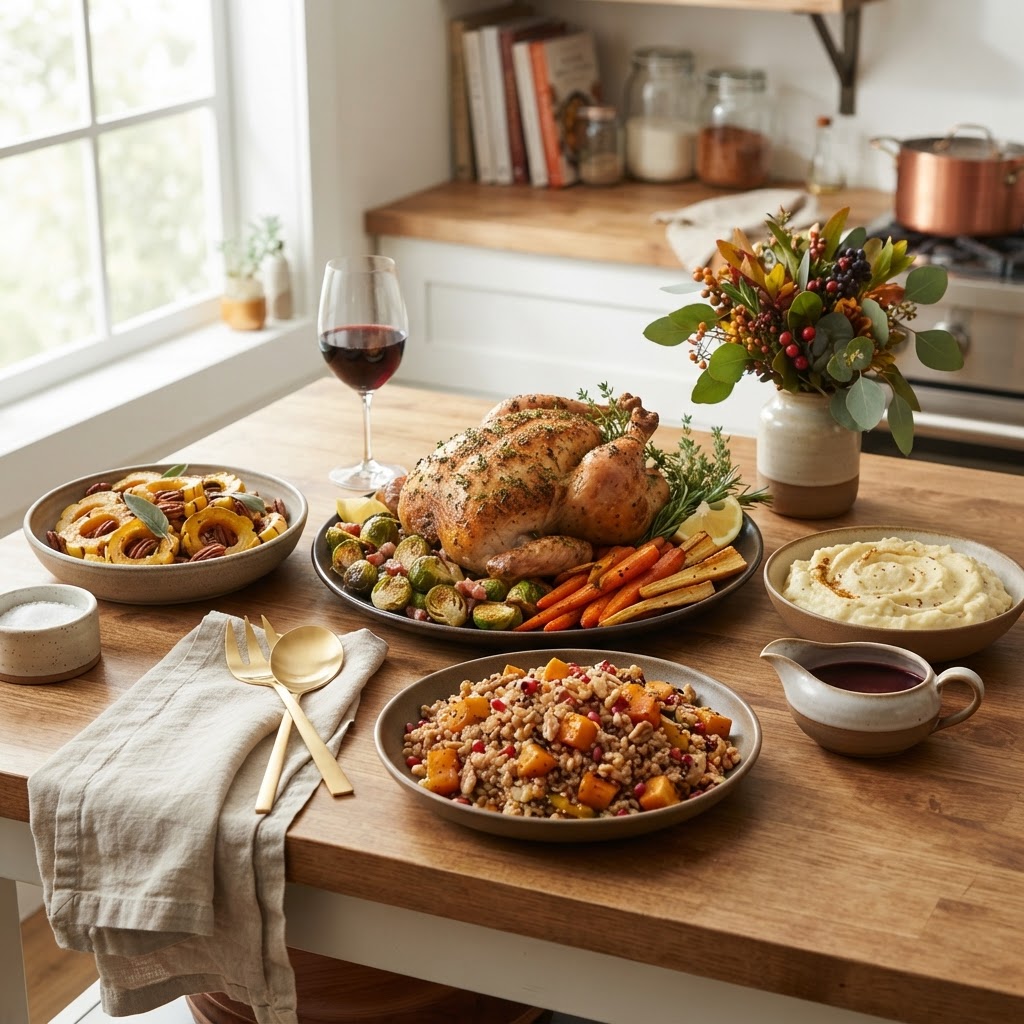
Quick reference
- Dish type: Typical final step Plan backward from serving
- Roast: Rest 10–30 min Tent loosely with foil
- Squash: Roast 25–45 min Size changes timing
- Grains: Rest 5–10 min Hold covered
- Sauce: Reheat 5–10 min Finish seasoning last
Start with the serving time
Write down when dinner should be on the table, then work backward. Put the main roast’s finish time first, allowing for its resting period. Add the dishes that need the oven next, followed by stovetop items and room-temperature components. Build in a 10-minute buffer for carving, transferring food, and adjusting seasoning. A written schedule prevents the common mistake of starting every dish at once.
- Choose one oven temperature when possible.
- Reserve a burner for the final sauce or gravy.
- List serving dishes beside each menu item.
Set the roast as the anchor
Calculate the roast’s cooking time from its size, shape, starting temperature, and your oven—not from a fixed calendar rule. Use a thermometer to confirm doneness, then rest the meat while you finish vegetables or gravy. A large roast can provide useful oven time for squash or other sides, but check whether the temperature suits both dishes. For poultry, cook to 165°F / 74°C; whole beef, pork, lamb, and veal should reach 145°F / 63°C followed by a 3-minute rest.
- Schedule carving during the roast’s rest.
- Keep a thermometer accessible.
- Treat recipe timing as a planning range, not a guarantee.
Work backward through oven and stovetop dishes
Place the slowest side in first, then add quicker items according to their cooking times. Cut squash or root vegetables into similarly sized pieces so they finish evenly. Grains can usually be cooked slightly early, covered, and fluffed just before serving. Green vegetables are best timed near the end; blanch them ahead if the oven and burners are crowded, then reheat briefly with butter, oil, or a splash of water.
- Label each oven rack by dish and finish time.
- Avoid opening the oven repeatedly.
- Use a covered pan to hold grains warm without drying them.
Make sauces and components ahead
Prepare sauces, dressings, compound butter, toasted nuts, and dessert components earlier in the day. Chill perishable cooked foods promptly, then reheat sauces gently so they do not split or reduce too far. Keep crisp toppings separate until serving. If a dish improves after resting—such as a braise, stuffing, or baked gratin—make it first and reserve the final browning or garnish for the last stretch.
- Prep garnishes while the roast cooks.
- Taste reheated sauces before serving.
- Keep crunchy toppings dry and separate.
Use a final 30-minute landing plan
At 30 minutes before dinner, start the final hot sides and bring make-ahead dishes back to serving temperature. At 15 minutes, finish grains, sauces, and vegetables; transfer food to warmed or heatproof serving dishes. During the last 5 minutes, carve the roast, add herbs or toppings, and check salt, acidity, and texture. If one dish finishes early, cover it and move it away from direct heat rather than continuing to cook it.
- Serve hot foods in covered dishes when practical.
- Leave one person free for plating and timing.
- Write the schedule in clock times, not just cooking durations.