How to Make Thanksgiving Gravy Ahead
Make Thanksgiving gravy ahead with a stock-and-roux base, chill it safely, then reheat with pan drippings and adjust the seasoning on the day.
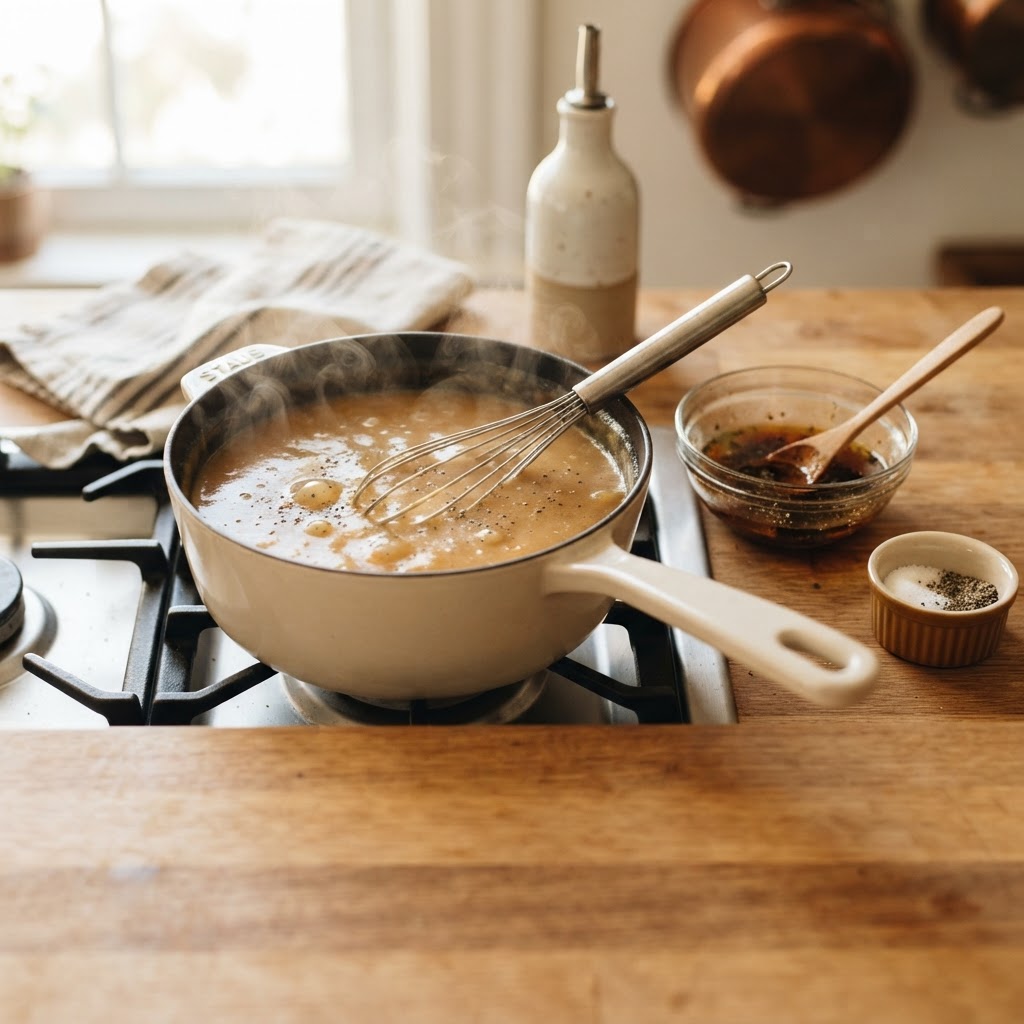
Quick reference
- Make the base: 1–3 days ahead Use stock and roux
- Cool and chill: Within 2 hours Use shallow containers
- Reheat: Day of serving Stir over medium-low heat
- Finish: After drippings Adjust thickness and salt last
Make the gravy base
Prepare the gravy without relying on turkey drippings. Melt butter or another cooking fat, whisk in an equal amount of flour, and cook until the roux loses its raw flour smell and takes on a light golden color. Gradually whisk in warm stock to prevent lumps. Simmer until the sauce lightly coats a spoon; it can be slightly thinner than your final target because it will thicken as it cools.
- Use unsalted or low-sodium stock when possible.
- Add herbs, pepper, or sautéed aromatics now if desired.
- Do not finalize the salt yet.
Cool and refrigerate promptly
Transfer the finished base to a shallow container so it cools faster, then refrigerate it promptly—within 2 hours, or within 1 hour if the room is above 90°F / 32°C. Cover once chilled or use a tightly sealed container. The gravy keeps for 3–4 days in the refrigerator, making it practical to prepare several days before Thanksgiving.
- Label the container with the date.
- Avoid leaving a full pot at room temperature to cool slowly.
- For longer storage, freeze the base instead.
Reheat gently on Thanksgiving
Warm the chilled gravy in a saucepan over medium-low heat, whisking often. If it is very thick, loosen it with a splash of stock or water before it gets hot. Bring it to a steady simmer rather than a hard boil, which can make the texture uneven. If reheating leftovers, heat them to 165°F / 74°C, checking the center with a food thermometer.
- Whisk in small additions of liquid.
- Scrape the bottom as the sauce warms.
- Hold it warm, covered, once finished.
Add drippings and finish the texture
After the turkey comes out, pour the pan juices into a measuring cup and separate excess fat if needed. Strain the flavorful liquid, then whisk some into the hot gravy base. Taste before adding more; drippings vary in saltiness and intensity. If the gravy is too thin, simmer it uncovered briefly. If it is too thick, add warm stock a tablespoon or two at a time.
- Use browned bits from the roasting pan for extra flavor.
- Strain drippings if you want a smooth gravy.
- Add cream or butter only after the consistency is right.
Adjust salt last and serve
Once the stock, drippings, and any finishing ingredients are combined, taste and adjust salt last. Add black pepper or a small splash of stock if the flavor needs balancing. If the gravy separates slightly after chilling, vigorous whisking over low heat usually brings it back together. Keep it hot for serving, and stir occasionally so a skin does not form.
- Taste with the food it will accompany.
- Thin just before transferring to a warmed pitcher.
- Serve promptly for the smoothest texture.