How to Make Pumpkin Puree From Fresh Pumpkin
Make homemade pumpkin puree by roasting sugar pumpkins until tender, blending the flesh smooth, and storing it safely in the refrigerator or freezer.
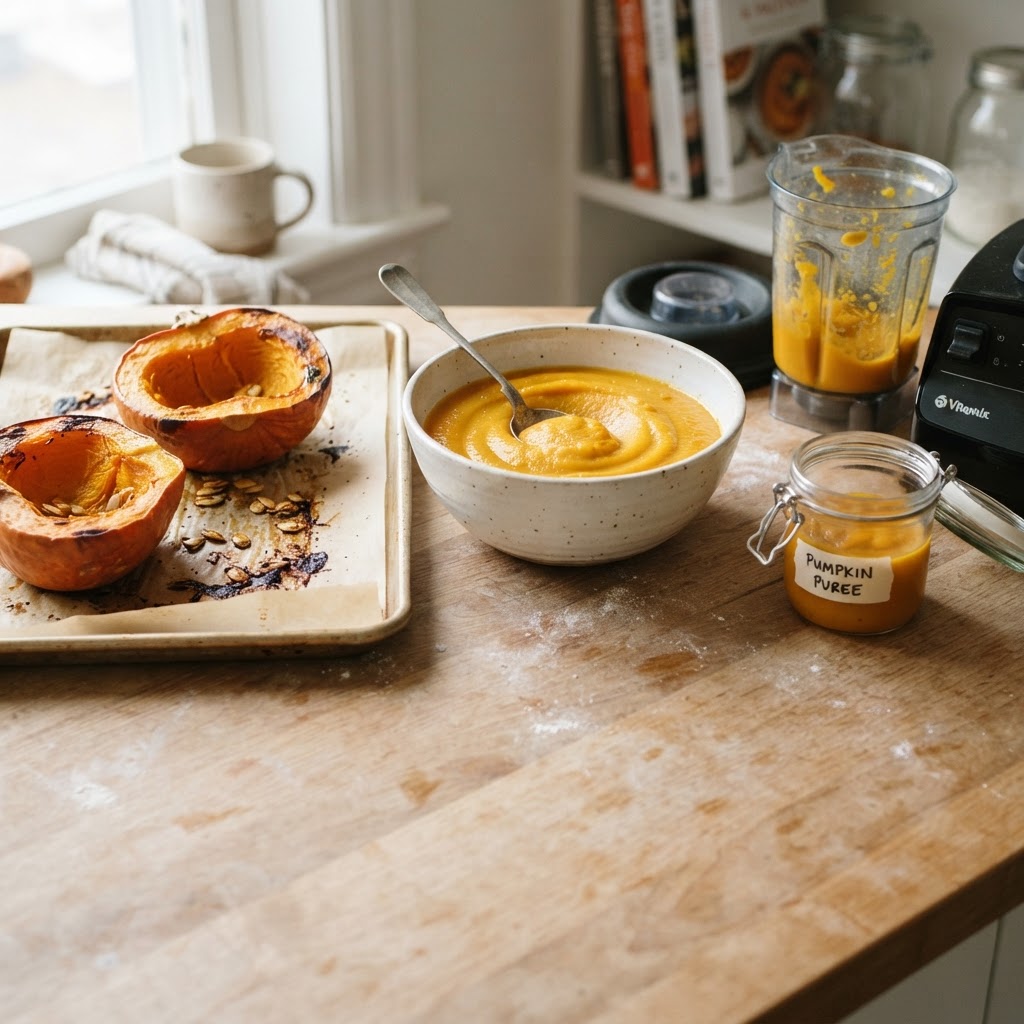
Quick reference
- Best pumpkin: Sugar or pie pumpkin Choose firm, small squash
- Roasting: 400°F until tender Usually 35–60 minutes
- Texture fix: Drain in a sieve Use if the puree is watery
- Storage: Refrigerate or freeze promptly Cool in shallow containers
Choose and prepare the pumpkin
Use a sugar pumpkin or pie pumpkin rather than a large carving pumpkin; smaller cooking varieties usually produce denser, smoother flesh. Heat the oven to 400°F. Scrub the pumpkin, cut it in half from stem to base, and scoop out the seeds and stringy fibers. Place the halves cut-side down on a parchment-lined baking sheet. There is no need to peel the pumpkin before roasting.
Roast until tender
Roast the pumpkin halves until a fork slides easily through the thickest part, usually 35 to 60 minutes depending on size and thickness. The skin should look softened and may pull away slightly from the flesh. Let the halves stand just until they are cool enough to handle safely. Roasting concentrates the flavor and makes the flesh easy to remove.
Scoop and blend
Turn the halves over and scoop the soft flesh from the skins. Transfer it to a food processor or blender and blend until smooth, stopping to scrape down the sides as needed. For a small batch, a potato masher works, though the texture will be more rustic. If the puree seems watery, spoon it into a fine-mesh sieve lined with cheesecloth and let excess liquid drain before using.
- Blend in batches if the pumpkin fills the appliance.
- Do not add water unless the blades genuinely need help moving.
- Strain only as long as needed for the consistency you want.
Measure for recipes
Measure fresh pumpkin puree by weight for the most consistent results, or pack it into a dry measuring cup when a recipe gives a volume amount. Let the puree cool before measuring. Because pumpkin varieties and moisture levels vary, a homemade batch may be thicker or looser than canned puree; draining it helps bring the texture closer to a dense, spoonable consistency.
Store promptly
Refrigerate the puree promptly in a covered container, preferably divided into recipe-size portions. Keep it refrigerated for 3 to 4 days. For longer storage, freeze it in measured portions in freezer-safe containers or bags, leaving a little room for expansion. Label each portion with the amount and date, then thaw it in the refrigerator before using and stir well if separation occurs.
- Cool and refrigerate perishable puree within 2 hours; use 1 hour when the room is above 90°F / 32°C.
- Freeze flat in bags for faster, more compact storage.
- Use drained puree in pies, muffins, soups, sauces, and smoothies.