How to Make Beef and Broccoli Without a Watery Sauce
Fix watery beef and broccoli by drying vegetables, avoiding a crowded pan, searing beef in batches, reducing the sauce, and adding slurry at the end.
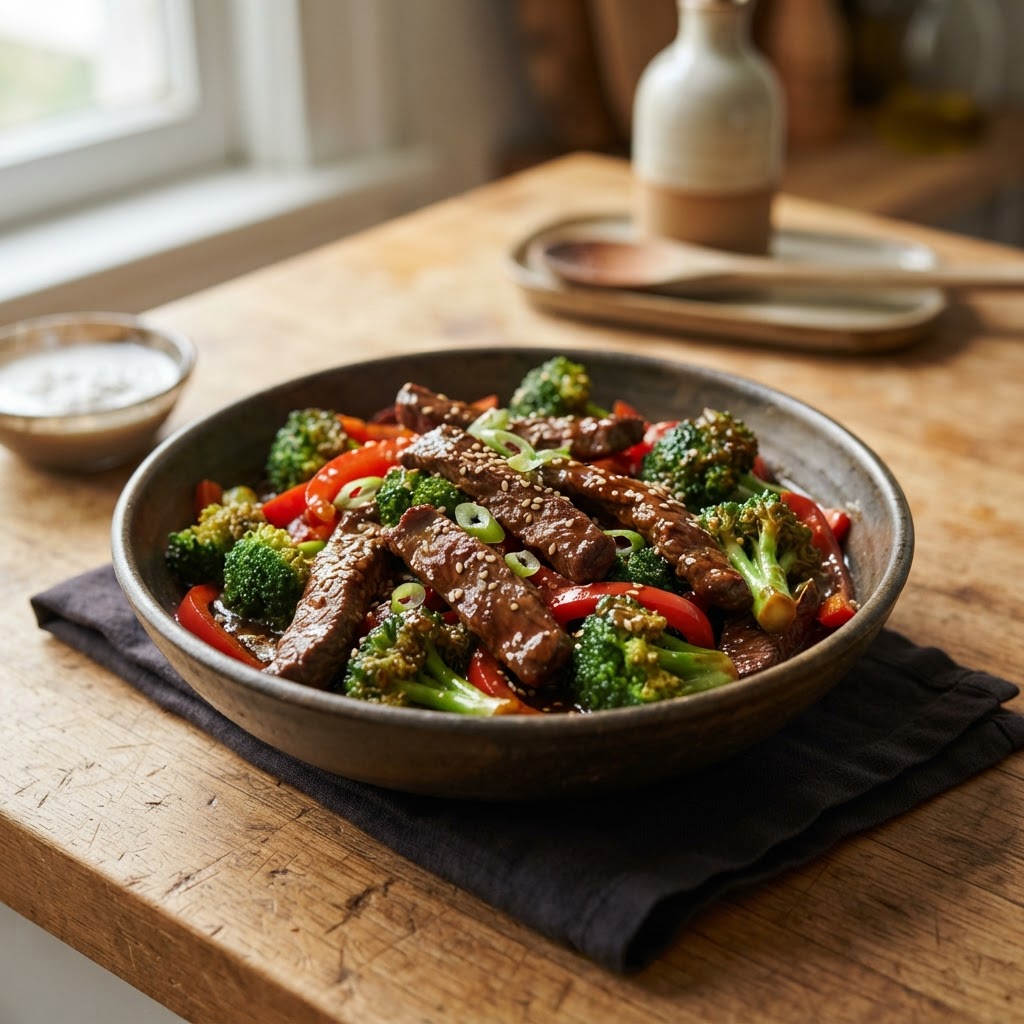
Quick reference
- Problem: Likely cause Quick fix
- Watery broccoli: Surface moisture Drain and dry well
- Pale beef: Crowded pan Sear in batches
- Thin sauce: Too much liquid Reduce before thickening
- Lumpy sauce: Early slurry Add slurry at the end
Start with dry vegetables and a hot pan
Broccoli releases water as it cooks, especially when it is rinsed and added wet. Drain it thoroughly, then pat the florets dry before cooking. If using frozen broccoli, thaw and drain it first; excess ice will dilute the sauce. Heat the skillet or wok until a drop of water evaporates quickly, then add a small amount of oil. Cook broccoli in a single layer until bright green and just tender, and transfer it to a plate if the pan starts to steam rather than sear.
- Use smaller, evenly sized florets.
- Do not pour rinse water into the pan.
- Cook in batches if needed.
Give the beef room to sear
A crowded pan traps steam and causes beef to release liquid without browning. Pat thinly sliced beef dry, then cook it in a single layer over high heat. Work in two batches when necessary, allowing the pan to reheat between batches. Sear just until the edges brown; the beef will finish in the sauce. Remove it before adding the sauce so it does not overcook while the liquid reduces.
- Leave space between slices.
- Avoid stirring immediately; let the first side brown.
- Add more oil only if the pan is dry.
Reduce the sauce before adding starch
Combine the sauce ingredients separately so sugar, soy sauce, aromatics, and stock are evenly distributed. Add the mixture to the hot pan after removing the beef, scrape up browned bits, and let it bubble uncovered for a few minutes. Reduction concentrates flavor and removes excess water. If you add cornstarch too early, the sauce can thicken before it has reduced, leaving a gummy texture or a thin layer of liquid underneath.
- Keep the sauce at a steady simmer, not a violent boil.
- Taste after reducing before adjusting salt or sweetness.
Use a small slurry at the finish
Mix cornstarch with an equal amount of cold water until smooth. Once the sauce has reduced, lower the heat slightly and stir in the slurry gradually. Let the sauce simmer for about 30 to 60 seconds, stirring, until it coats a spoon. Add only as much as needed; extra slurry can make the coating heavy. Return the beef and broccoli, toss briefly, and serve immediately.
- Stir the slurry again just before pouring.
- Never add dry cornstarch directly to the pan.
- Thin an overly thick sauce with a teaspoon or two of water.
Build the recipe around the fix
For a straightforward one-pan version, use QuickDinner’s beef-and-broccoli skillet and apply the same order: dry the vegetables, sear the beef separately, reduce the sauce, then finish with slurry. If you prefer a saucier meal, the QuickDinner beef-and-broccoli noodle recipe gives the sauce a fuller base, but cook the noodles separately and drain them well. Toss noodles in only after the sauce has thickened so they do not dilute it.
- Keep cooked noodles well drained.
- Add the final toss off high heat.
- Serve as soon as the sauce coats the ingredients.