How to Make a Vinaigrette That Stays Emulsified
Keep homemade vinaigrette from separating with the right oil-to-acid ratio, an emulsifier, and a steady whisk or blender technique.
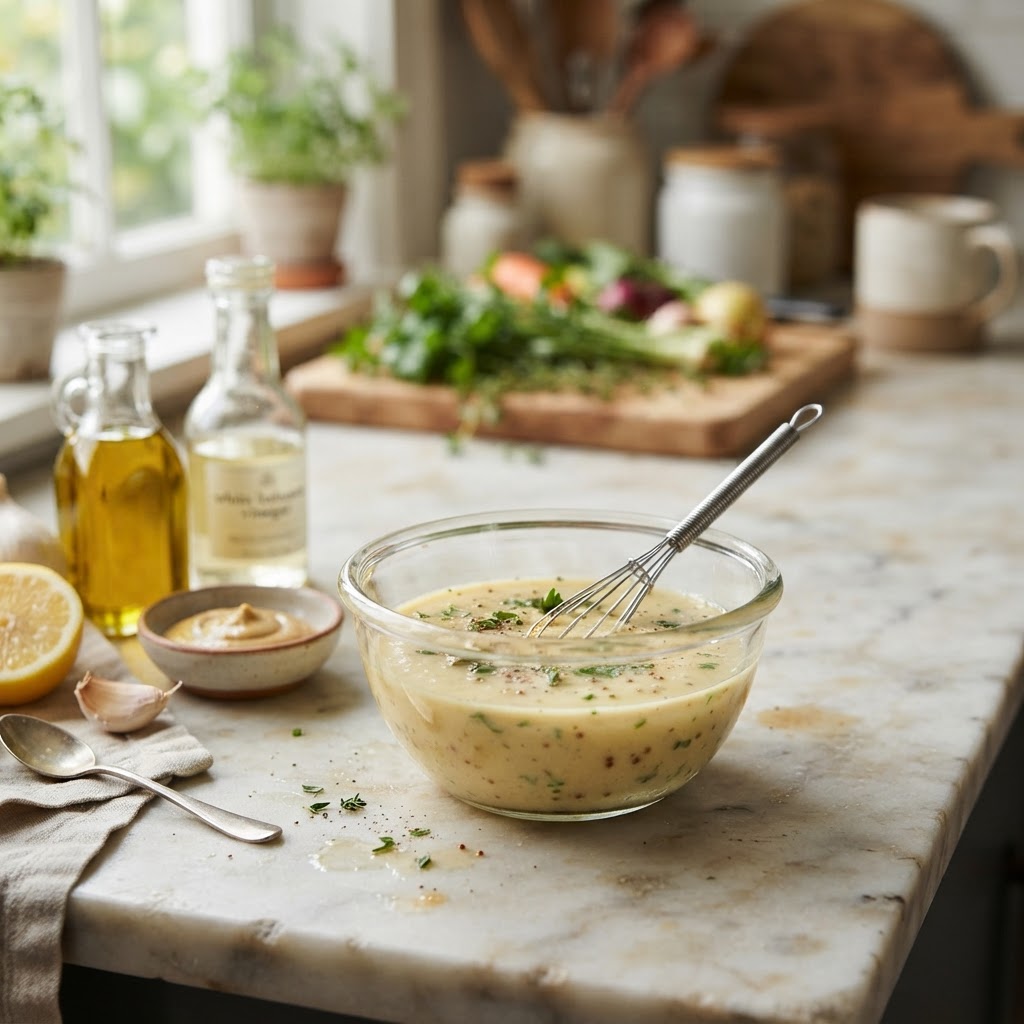
Quick reference
- Starting ratio: 3 parts oil : 1 part acid Adjust to taste
- Best emulsifiers: Dijon, honey, tahini Use 1–2 teaspoons
- Whisking: Add oil slowly Builds a smoother emulsion
- Blending: Blend in a thin stream Most stable method
Start with the right structure
A dependable vinaigrette begins with about three parts oil to one part acid, such as vinegar or lemon juice. For a sharper dressing, use two parts oil; for a milder one, add more oil after tasting. Mix the acid with salt and any seasonings first, then incorporate the oil gradually. This gives the water-based and oil-based ingredients a better chance to combine instead of splitting immediately.
Add an emulsifier
An emulsifier helps the dressing stay combined by giving the oil and acid something to cling to. Dijon mustard is the easiest choice and adds savory depth without making the dressing heavy. Honey, maple syrup, tahini, mayonnaise, or a small amount of mashed garlic can also help. Start with 1 to 2 teaspoons per ½ cup dressing, then adjust for flavor and texture.
- Dijon: classic and tangy
- Honey or maple: smooths sharp acidity
- Tahini: rich and nutty
Whisk oil in slowly
For a hand-whisked vinaigrette, combine the acid, salt, mustard, and other seasonings in a bowl. Whisk continuously while adding the oil in a very thin stream. Once the mixture looks glossy and slightly thickened, you can add the remaining oil a little faster. A jar with a tight lid also works: shake vigorously, but expect the dressing to separate sooner than one made with a blender.
Use a blender for longer stability
A blender or immersion blender creates a finer, more stable emulsion. Blend the acid, emulsifier, and seasonings first, then pour in the oil slowly while the blade runs. Keep the stream narrow rather than dumping in the oil. This is especially useful for dressings with fresh herbs, garlic, honey, or tahini, which benefit from a smooth texture.
Mind temperature and storage
Use ingredients at similar, moderate room temperature when possible. Very cold oil or acid can make the dressing look thick or uneven while you mix it. If the vinaigrette separates after sitting, whisk or shake it again before serving; separation is normal, even in a well-made dressing. Store it covered in the refrigerator and bring it out briefly before serving if the oil firms up.
- Taste after resting for 5 minutes
- Thin with a teaspoon of water if needed
- Use within several days for the freshest flavor
Quick troubleshooting
If the dressing breaks immediately, the oil was probably added too quickly or there was not enough emulsifier. Whisk a teaspoon of mustard or a teaspoon of water in a clean bowl, then slowly whisk the broken vinaigrette into it. If it tastes harsh, add oil or a small amount of honey; if it tastes flat, add salt or a few drops of acid. Spoon it over QuickDinner salads or roasted vegetable recipes just before serving.