How to Make a Buttermilk Substitute
Make a reliable buttermilk substitute with milk and lemon juice or vinegar, or thin yogurt for pancakes, biscuits, cakes, and other baking.
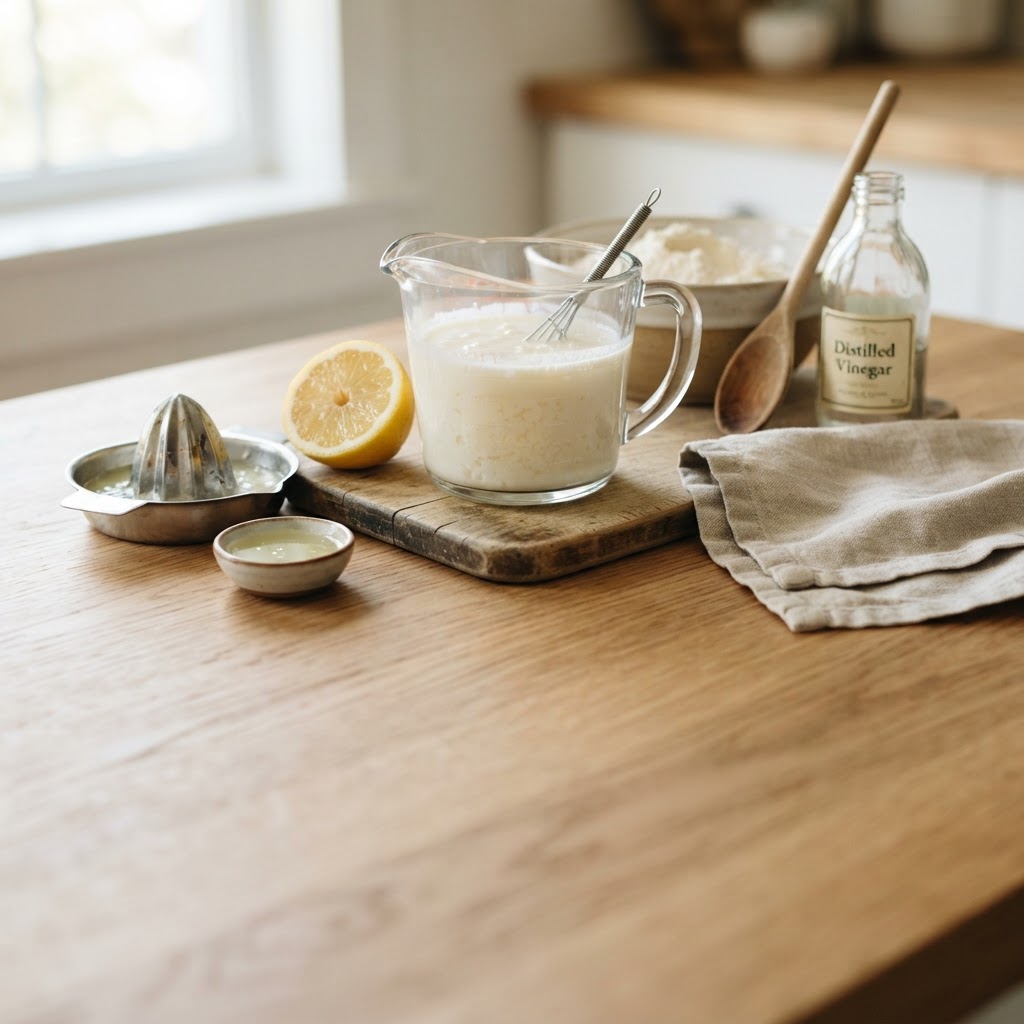
Quick reference
- Milk + lemon juice: 1 cup milk + 1 tbsp juice Rest 5–10 minutes
- Milk + vinegar: 1 cup milk + 1 tbsp vinegar Use a mild vinegar
- Yogurt method: ¾ cup yogurt + ¼ cup water Whisk until pourable
- Smaller batch: 1 tbsp acid per cup milk Scale as needed
The easiest buttermilk substitute
For each 1 cup of buttermilk called for, pour 1 tablespoon lemon juice or white vinegar into a measuring cup. Add enough milk to reach the 1-cup line, then stir. Let it stand for 5 to 10 minutes. The milk may look slightly thickened or separated; stir once before using. This quick substitute works especially well in pancakes, waffles, biscuits, muffins, quick breads, and many cakes.
Milk and lemon juice or vinegar
Use lemon juice when you want a mild, fresh acidity, particularly in lightly flavored batters. White vinegar is more neutral and is usually the better choice when you do not want citrus notes. Room-temperature or slightly cool milk blends easily, but avoid heating it. Measure the acid first, then top up with milk so the final volume stays accurate.
- Use 1 tablespoon acid per cup of milk.
- Choose plain dairy milk for the most predictable texture.
- Rest for the full 5–10 minutes before mixing it into a recipe.
Yogurt-thinned option
Plain yogurt makes a thicker buttermilk alternative. Whisk ¾ cup plain yogurt with ¼ cup water or milk to make 1 cup, adjusting slightly until it pours like loose cream. This option adds tang and works well in marinades, dressings, pancakes, and baked goods. Use unsweetened yogurt; Greek yogurt generally needs more thinning than regular yogurt.
How to choose the right option
These substitutes provide acidity and moisture, which are the key qualities many baking recipes need. They are not identical to cultured buttermilk: the thickness, richness, and flavor can vary by milk, yogurt, and brand. For delicate recipes or recipes where buttermilk is a major ingredient, the original product may give a more exact result. Otherwise, the milk-and-acid method is a dependable pantry solution.
- Best for: pancakes, biscuits, muffins, cakes, and quick breads.
- For sauces or dressings, thin yogurt may give better body.
- Do not use sweetened or flavored yogurt.
Practical measuring tips
Make only as much as the recipe needs, and stir the finished substitute before measuring or adding it. If a recipe calls for less than 1 cup, use ¾ teaspoon lemon juice or vinegar for every ¼ cup of milk. Add the substitute when the recipe directs you to add buttermilk, and mix just until combined to avoid a tough baked result.