How to Layer Ingredients in a Slow Cooker
Arrange ingredients by cooking speed: put dense vegetables near the heat, add tender produce and dairy later, and keep the cooker below full.
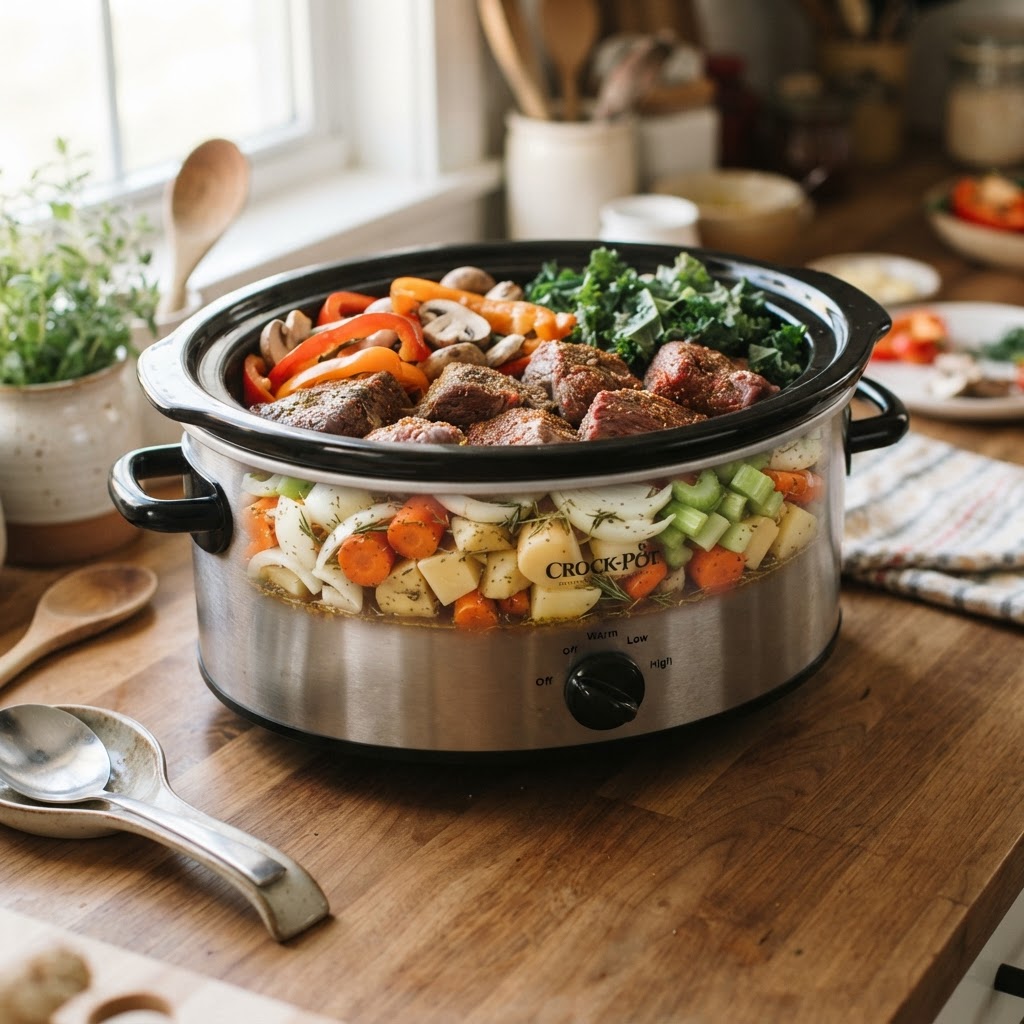
Quick reference
- Bottom layer: Dense root vegetables Potatoes, carrots, parsnips
- Middle layer: Meat and sturdy produce Follow the recipe
- Liquid: Add as directed Usually no extra is needed
- Last additions: Quick vegetables and dairy Add near the end
- Capacity: Keep below full Leave room for circulation
Start with the ingredients that take longest
The most reliable slow cooker ingredient order begins with dense vegetables. Put potatoes, carrots, parsnips, winter squash, and other firm roots on the bottom, closest to the heating area. Cut unusually large pieces smaller so they cook at a similar pace. This layer also creates a sturdy base for ingredients above it and helps prevent delicate foods from breaking down too soon.
- Use evenly sized pieces.
- Place dense vegetables below softer ones.
- Check large roots for tenderness before serving.
Place meat according to the recipe
Meat does not always belong in one fixed layer. For stews, chunks can usually sit over the root vegetables and cook in the surrounding liquid. A roast may work best on top, while poultry may be arranged according to the recipe’s sauce and vegetable proportions. Follow the recipe when it specifies placement; the cut, thickness, and amount of liquid all affect the result.
- Keep pieces in a fairly even layer when possible.
- Do not pack meat tightly into one cold, crowded mass.
- Use a thermometer to confirm doneness.
Add liquid without flooding the pot
Pour broth, sauce, or other liquid over the ingredients as directed rather than automatically covering everything. Slow cookers lose little moisture, so adding extra liquid can make a finished dish thin. Scrape browned bits from a skillet into the cooker if the recipe calls for browning. Keep the total contents below the manufacturer’s maximum fill line, with room for gentle circulation.
- Measure liquid before adding more.
- Avoid filling above the recommended level.
- Use the recipe’s liquid amount as the starting point.
Save quick vegetables and dairy for later
Tender vegetables such as peas, spinach, zucchini, green beans, and fresh herbs usually need less time. Add them near the end so they retain better color, texture, and flavor. Dairy can split or become grainy during a long cook, so stir in cream, sour cream, soft cheese, or similar ingredients during the final stage unless the recipe specifically says otherwise. A thickener may also work best near the end.
- Add leafy greens during the final minutes.
- Stir in dairy after reducing heat exposure.
- Add delicate herbs just before serving.
Keep the lid closed and check at the right time
Once the cooker starts, keep the lid closed as much as possible. Each peek releases heat and extends cooking, and repeated stirring is rarely necessary. Begin checking near the recipe’s earliest stated finish time because appliance performance and ingredient size vary. If meat is included, verify its internal temperature with a food thermometer rather than relying only on appearance.
- Open once to add scheduled late ingredients.
- Check tenderness with a fork for root vegetables.
- Serve promptly when the dish is fully cooked.