How to Keep Turkey Breast Juicy
Keep turkey breast juicy with careful thermometer placement, optional brining, a 165°F endpoint, and a proper rest before slicing.
Quick reference
- Brining: Optional Adds seasoning and moisture insurance
- Oven approach: Roast uncovered Use foil only if skin browns too fast
- Thermometer spot: Thickest center Avoid bone
- Safe endpoint: 165°F / 74°C Check before removing
- Resting time: 10–20 minutes Tent loosely before slicing
Start with even seasoning
For juicy turkey breast, begin with a fully thawed, evenly sized piece. Brining is optional: a wet brine can add seasoning and moisture, while a dry brine—salt rubbed over the surface and refrigerated—helps season the meat without adding liquid. Follow the salt amount and timing for your recipe, since pre-seasoned or enhanced turkey may already contain added salt.
- Pat the skin dry before roasting.
- Leave the breast uncovered in the refrigerator after dry-brining for drier, better-browning skin.
- Do not rinse raw poultry.
Protect the surface
Rub the skin with softened butter or oil before the turkey goes into the oven. This encourages browning and helps the seasoning adhere. Roast according to your recipe and the breast’s size; oven performance and thickness can change the cooking time. Keep the turkey uncovered so the skin can brown. Add foil only if the surface is browning faster than the center is cooking.
- Butter gives a rich finish; oil tolerates higher heat well.
- Use a rack when possible so heat circulates around the meat.
- Do not rely on color or cooking time alone.
Do not overcook
The most reliable way to prevent dry turkey breast is to monitor temperature instead of waiting for a fixed time. Insert an instant-read thermometer into the thickest part of the breast from the side, aiming toward the center. The tip should be in the meat, not touching bone or sitting in a hollow area. Check more than one spot if the breast is uneven.
- Begin checking before the recipe’s estimated finish time.
- Move the probe if the reading seems unexpectedly low or high.
- Cook until the thickest portion reaches 165°F / 74°C.
Rest before slicing
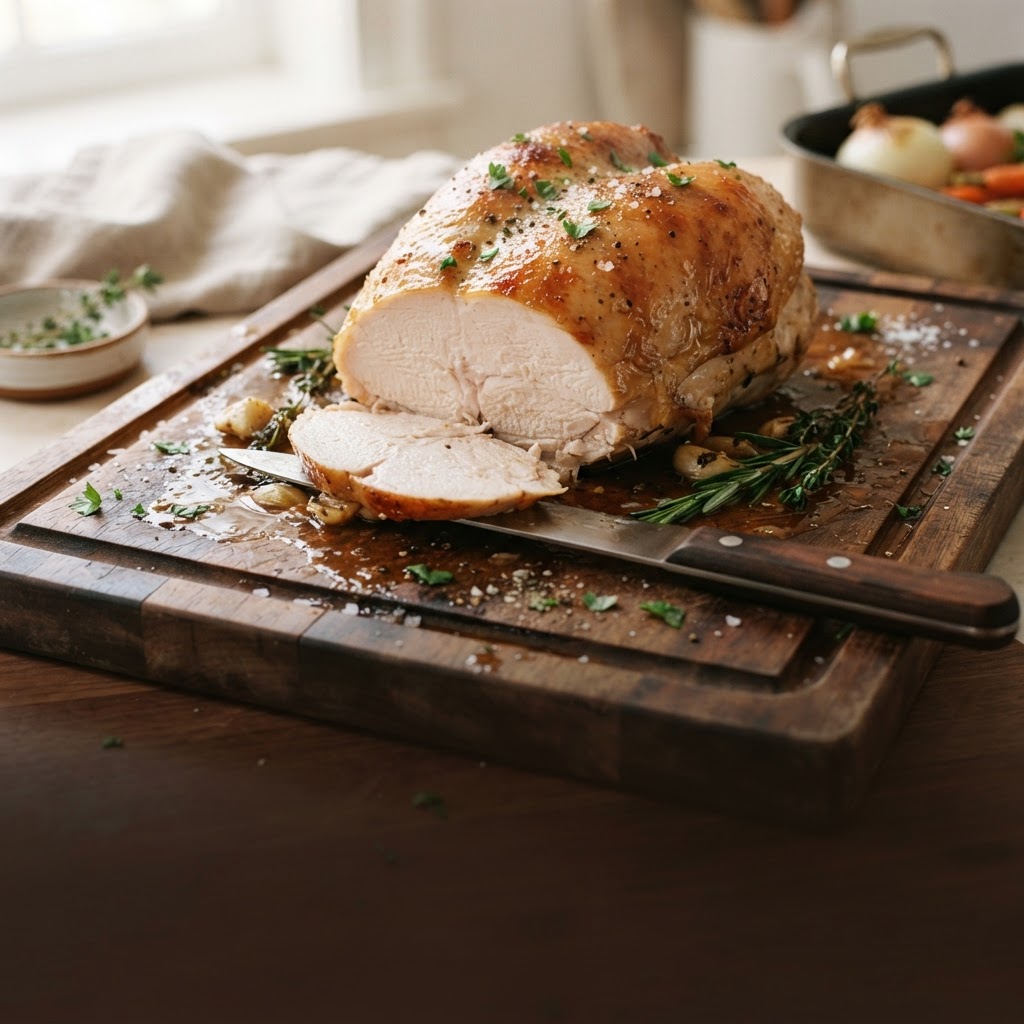
Once the thickest part reaches the safe endpoint of 165°F / 74°C, transfer the turkey to a cutting board. Rest it for about 10 to 20 minutes before slicing, depending on its size. Tent loosely with foil if desired, but do not wrap it tightly, which can soften the skin. Resting gives the meat time to settle and makes cleaner slices with less juice left on the board.
- Keep the breast whole while it rests.
- Use a sharp carving knife.
- Slice across the grain for more tender-looking pieces.
If the turkey is already drying out
Slice the breast thinly and serve it with warm pan juices, gravy, or a little stock-based sauce. For next time, start checking earlier, confirm thermometer placement, and remove the turkey promptly when the thickest section reaches 165°F / 74°C. A smaller or thinner breast will finish sooner than a large one, so use temperature as the final guide rather than assuming every roast follows the same schedule.
- Keep sliced meat covered until serving.
- Store cooked turkey promptly if it will not be served right away.
- Refrigerate leftovers within 2 hours.