How to Keep Slow Cooker Potatoes From Turning Mushy
Keep slow cooker potatoes firm by choosing waxy varieties, cutting evenly, using low heat, and adding delicate pieces later.
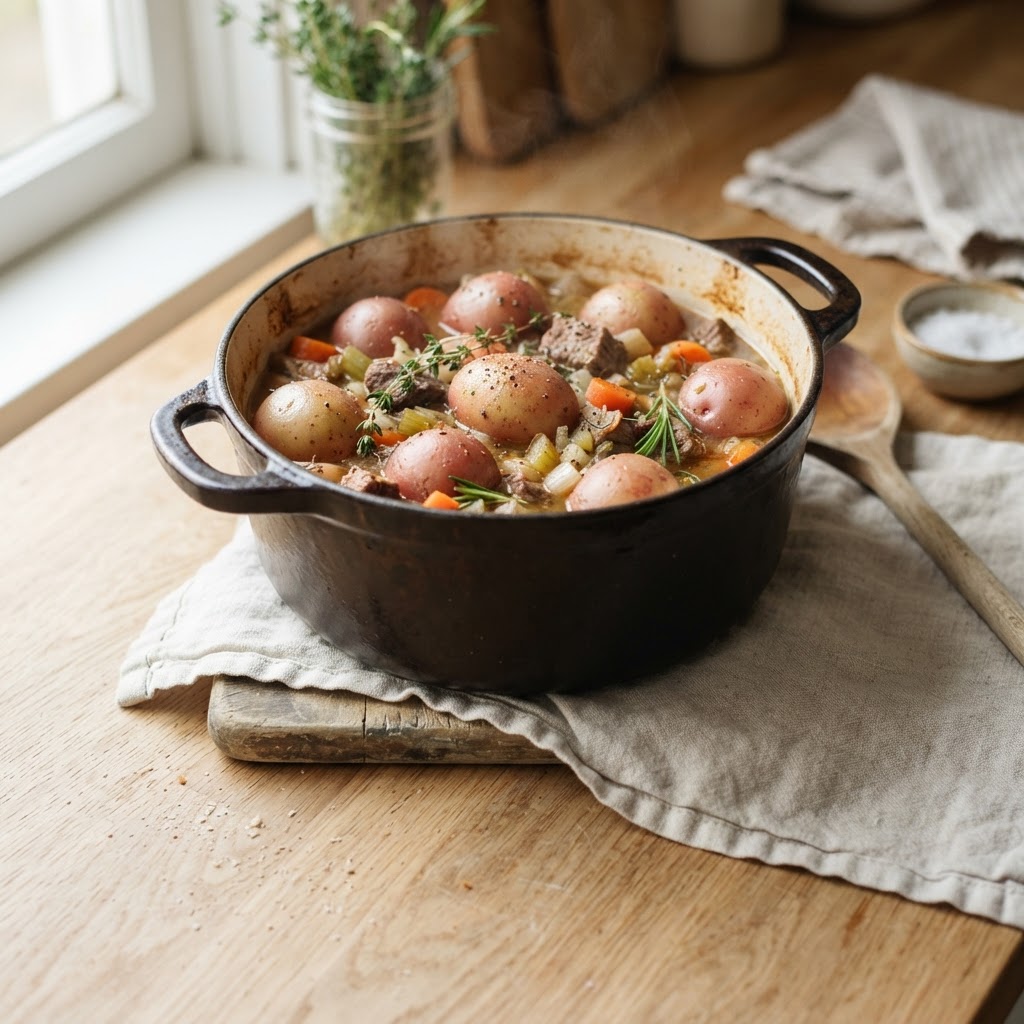
Quick reference
- Potato type: Yukon Gold, red, baby Best for holding shape
- Cut size: 1½–2-inch chunks Keep pieces uniform
- Low setting: 4–6 hours Check early; appliance times vary
- High setting: 2½–4 hours More likely to overcook
Choose potatoes that hold their shape
For slow cooker potatoes not mushy, start with waxy or all-purpose varieties. Red potatoes, baby potatoes, fingerlings, and Yukon Golds generally stay intact better than russets, which are starchier and can break down into the cooking liquid. Use firm, unblemished potatoes and scrub or peel them according to the recipe. Small whole baby potatoes work well; larger potatoes should be cut before cooking.
- Best choices: red, baby, fingerling, or Yukon Gold potatoes.
- Use russets when a soft, thick texture is wanted.
- Avoid mixing very different sizes in one batch.
Cut evenly and avoid tiny pieces
Cut potatoes into uniform 1½- to 2-inch chunks so they finish at roughly the same time. Small cubes soften quickly and are more likely to crumble when stirred. If using baby potatoes, leave the smallest ones whole and halve larger ones. Keep the cut surfaces as intact as possible, and do not repeatedly toss the potatoes once they are in the cooker.
- Aim for pieces about the same size.
- Do not dice potatoes smaller than the recipe requires.
- Handle cooked potatoes gently.
Place potatoes where the heat is strongest
Put potatoes in the bottom of the slow cooker, beneath or around larger, slower-cooking ingredients such as meat. This gives them steady contact with the cooking liquid and helps them cook evenly. Add enough liquid for the recipe, but do not submerge the potatoes unless the dish calls for it; excess liquid can make delicate pieces waterlogged. Keep the lid closed during cooking because repeated peeking extends the cooking time.
- Layer potatoes underneath larger ingredients.
- Use only the liquid the recipe needs.
- Keep the lid closed as much as possible.
Use low heat when you have the time
Low is usually the safer setting for firm slow cooker potatoes because the gentler schedule gives you more control. Start checking at about 4 hours on low or 2½ hours on high, then test a piece with a fork. It should offer slight resistance but not feel raw. Exact timing depends on cut size, cooker design, potato variety, and how full the crock is, so use tenderness rather than the clock alone.
- Low: roughly 4–6 hours for 1½- to 2-inch pieces.
- High: roughly 2½–4 hours; check sooner.
- Stop cooking when a fork meets light resistance.
Add acidic and delicate ingredients strategically
Tomatoes, wine, vinegar, and other acidic ingredients can slow potato softening. If a recipe contains a strongly acidic sauce, potatoes may need extra time, or they can be partially cooked before assembling the dish. For very small, tender, or thin-skinned potatoes, add them later so they do not spend the entire cooking time in the crock. Add herbs, greens, and other delicate ingredients near the end as well, when the recipe allows.
- Expect acidic sauces to lengthen cooking time.
- Add delicate potatoes during the final 1–2 hours when practical.
- Test potatoes before thickening or stirring the finished dish.