How to Keep Slow Cooker Pasta From Getting Mushy
Keep slow cooker pasta firm by adding dry pasta near the end, using hot liquid, checking early, and cooking separately for long holds.
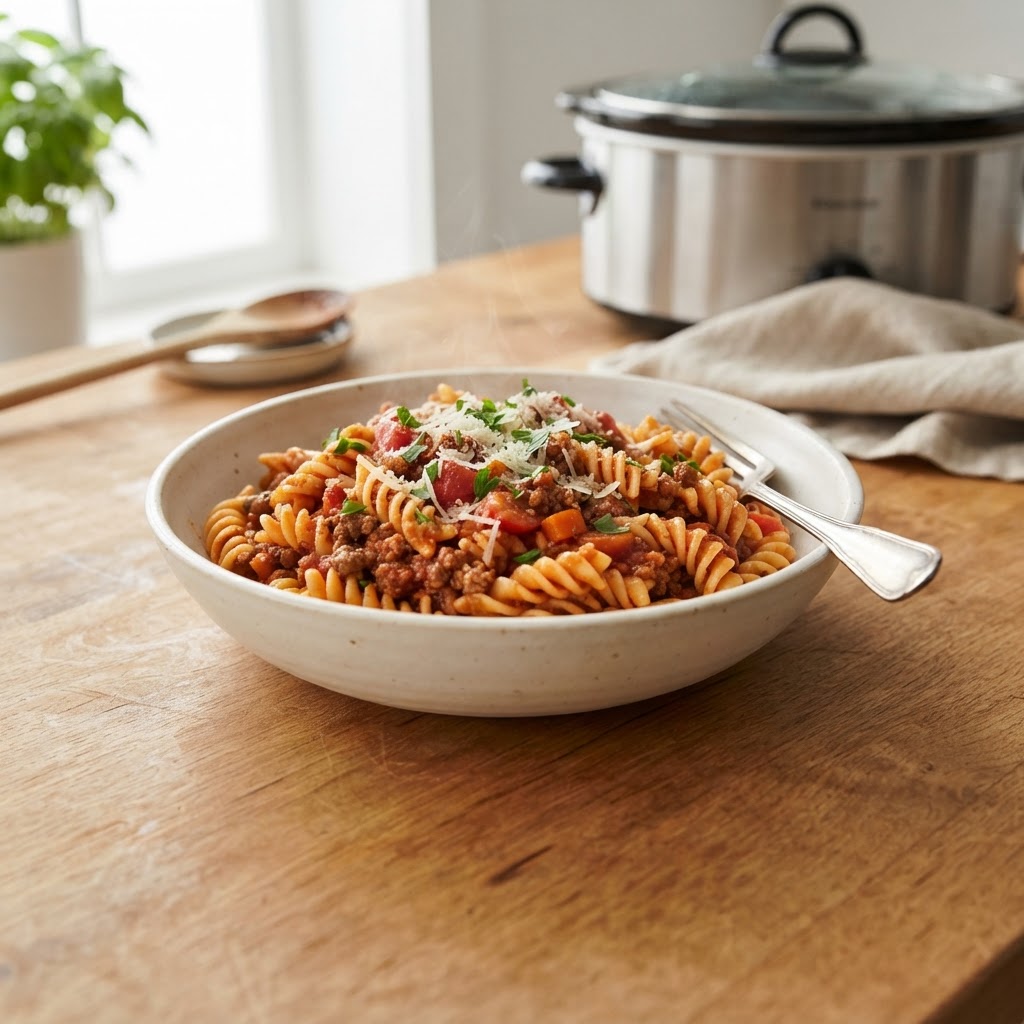
Quick reference
- Pasta type: Add near the end Timing varies by brand
- Small pasta: Start checking early Cooks quickly
- Tortellini: Add last Delicate and fast-cooking
- Long hold: Cook separately Combine just before serving
Add pasta late
For slow cooker pasta not mushy, keep the pasta out until the sauce or broth is already hot and nearly finished. Add dry pasta during the final 20 to 35 minutes, depending on its shape and the cooker’s heat. Stir once so the pieces are submerged, then replace the lid. Pasta continues softening in residual heat, so remove it as soon as it reaches al dente rather than waiting for it to become very tender.
- Read the package cooking time and begin checking before the low end.
- Use sturdy shapes such as shells, rotini, or penne when possible.
Use enough hot liquid
Pasta needs sufficient liquid to hydrate evenly, but excess liquid can leave the finished dish thin. Before adding the pasta, the cooking liquid should be hot and loose enough to surround it. If the sauce is very thick, stir in a little hot stock or water first. Avoid adding dry pasta to a cold, crowded cooker: it may cook unevenly while absorbing liquid from only the areas around it.
- Stir pasta into the liquid instead of leaving it in a dry layer on top.
- Keep pieces mostly submerged for even cooking.
Check earlier than you think
Slow cookers vary, and pasta shape, quantity, and brand all affect timing. Start tasting after about 15 minutes for small pasta and tortellini, and check larger shapes soon after. Lift a piece from the center, where cooking may be slower, and test for a slight firm bite. If it is nearly ready, switch off the cooker and serve promptly; the trapped heat will finish the job.
- Small pasta cooks faster than large shapes.
- Tortellini can become soft quickly, especially if refrigerated or fresh.
Choose the right pasta for the dish
Thin noodles and delicate filled pasta are less forgiving than sturdy dried shapes. For a soup or saucy meal, small shells, elbows, ditalini, and similar shapes can work well when added late. Tortellini should go in close to serving time and needs gentle stirring to avoid tearing. If the recipe contains acidic ingredients, dense vegetables, or a thick sauce, expect the timing to shift and rely on tasting rather than the clock alone.
- Avoid overfilling the cooker; crowded pasta cooks less evenly.
- Reserve fragile pasta for the final stage.
Cook separately for long holds
If the dish must stay on warm for a party, potluck, or delayed dinner, cook the pasta separately in salted water and drain it while still slightly firm. Toss it with a small amount of sauce or oil, then combine it with the slow-cooked sauce immediately before serving. This is the most reliable way to prevent pasta from absorbing liquid and turning mushy during a long hold. Reheat only briefly, since extended heat continues to soften it.
- Keep sauce and pasta separate until serving when timing is uncertain.
- For leftovers, store them promptly in the refrigerator and reheat gently.