How to Keep Slow Cooker Chicken From Drying Out
Keep slow cooker chicken moist by matching cut and timing, using similar-size pieces, and checking the thickest piece reaches 165°F without overcooking.
Quick reference
- Cut: Typical timing Check early; appliances vary
- Boneless breast: Low: about 2–4 hours Easier to overcook
- Boneless thighs: Low: about 3–5 hours More forgiving
- Bone-in pieces: Low: about 4–6 hours Thickness changes timing
- Safe finish: 165°F / 74°C Check the thickest piece
Start with the right timing
The simplest way to keep slow cooker chicken not dry is to stop cooking as soon as the thickest piece reaches 165°F / 74°C. Chicken breast is lean and can turn dry in an oversized cook window, so begin checking it well before the recipe’s maximum time. Thighs contain more fat and connective tissue and usually tolerate a longer cook, but they can still become stringy if left in the cooker for hours beyond doneness.
- Breast: check early, especially when boneless.
- Thighs: allow a little more time, but still use a thermometer.
- Do not extend cooking just because the slow cooker is on LOW.
Keep pieces uniform
Cut or portion the chicken so the pieces are close in size and thickness. A large breast beside small strips creates uneven results: the small pieces dry out while the center of the large piece finishes. Arrange pieces in a single, reasonably even layer when possible, and avoid packing the cooker so tightly that heat reaches the chicken inconsistently. If using mixed cuts, place thicker pieces where they have the best contact with the cooking liquid and check each type separately.
- Trim very thick breasts horizontally or use smaller portions.
- Avoid combining thin cutlets with large whole breasts.
- Turn or rearrange only if the recipe calls for it; frequent lifting loses heat.
Use enough sauce—but do not rely on it
Broth, salsa, tomato sauce, or a well-seasoned braising liquid helps keep the surface from drying and gives the finished chicken a better texture. It does not protect chicken from overcooking. Once the meat has passed 165°F / 74°C, continued heat can make it dry even when it is surrounded by sauce. Add enough liquid to coat or partially surround the pieces according to the recipe, rather than flooding the cooker and diluting the flavor.
- Sauce improves moisture and texture, not cooking accuracy.
- Keep the lid closed to retain heat and liquid.
- Do not use extra liquid as a reason to add hours.
Check doneness with a thermometer
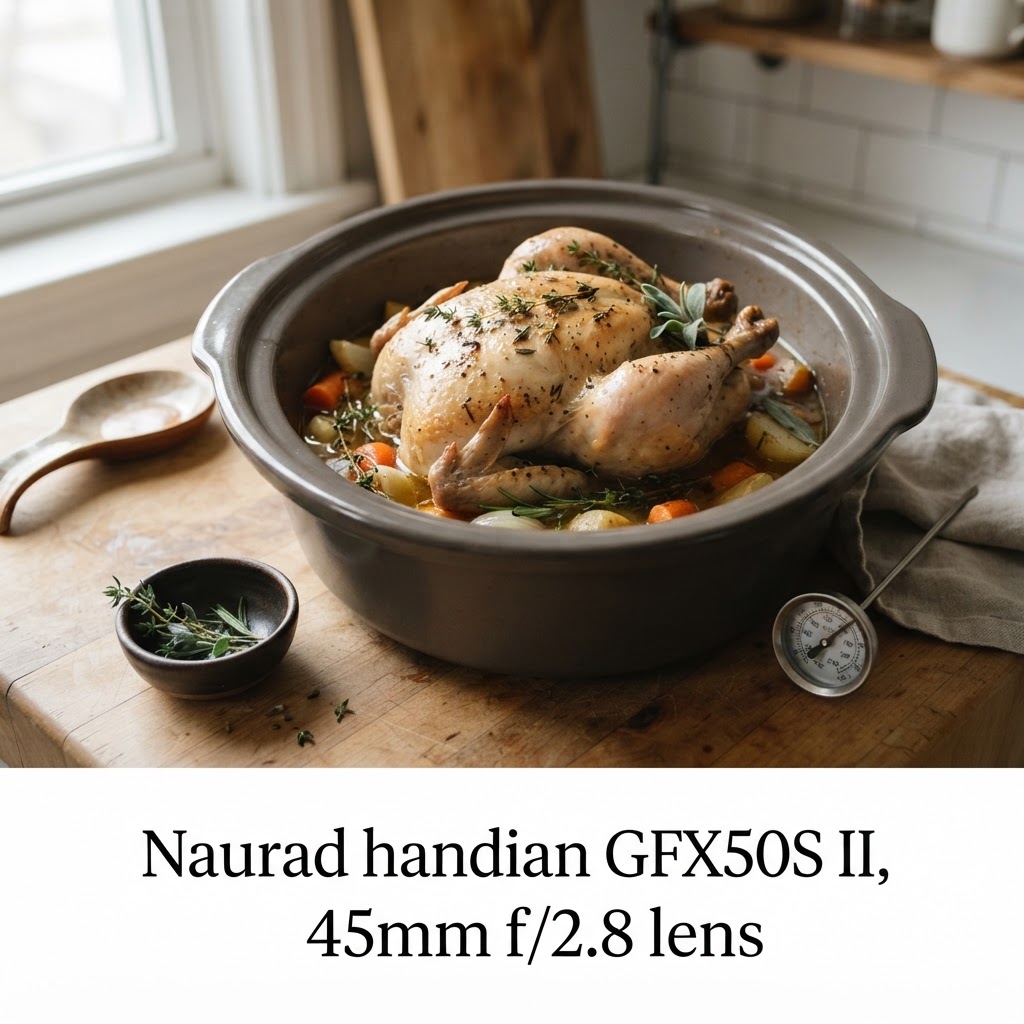
A thermometer is more reliable than the slow cooker’s setting or a guessed time. Insert it into the thickest part of the largest piece, avoiding bone, and check more than one piece when sizes vary. Remove the chicken when it reaches 165°F / 74°C. If the chicken is already at temperature but the sauce needs more time, transfer the meat to a plate, cover it, and finish the sauce separately when practical.
- Check near the recipe’s earliest stated finish time.
- Measure breast and thigh pieces separately.
- Rest briefly before slicing so juices stay in the meat.
A practical formula for moist chicken
For consistently moist slow cooker chicken, choose one cut, keep the portions similar, add a flavorful cooking liquid, and set a reminder to check early. Boneless breasts often need the narrowest timing window; boneless thighs are generally more forgiving. Appliance performance, piece thickness, starting temperature, and the amount of food can shift the result, so use the stated times as a starting point rather than a guarantee. Refrigerate cooked chicken within two hours and use leftovers within three to four days.
- Prefer a shorter cook window over an automatic long setting.
- Slice only what you plan to serve immediately.
- Reheat leftovers to 165°F / 74°C.