How to Keep Sheet-Pan Dinners From Steaming
Make a sheet pan dinner crispy with a hot pan, dry ingredients, enough space, and smart oiling. These simple steps improve browning every time.
Quick reference
- Pan size: Use the largest pan that fits Leave room around ingredients
- Ingredient prep: Pat everything dry Especially vegetables and proteins
- Arrangement: Use one layer Avoid overlapping pieces
- Potatoes: Preheat the oiled pan Add potatoes to a hot surface
- Marinade: Use a thin coating Drain watery excess first
Start with a large, hot pan
For a sheet pan dinner crispy enough to brown instead of steam, give the food space. Use the largest rimmed pan that fits your oven, preferably a sturdy metal one. A crowded small pan traps moisture between ingredients. For potato-heavy dinners, preheat the lightly oiled pan in the oven before adding the potatoes. The hot surface helps their cut sides begin browning immediately. Follow the recipe’s temperature and timing, since ovens and pan materials vary.
Dry the ingredients well
Surface moisture is the fastest route to steaming. Pat chicken, fish, tofu, and vegetables dry with paper towels before seasoning. Drain canned ingredients thoroughly, and let rinsed beans or vegetables air-dry briefly if needed. Frozen vegetables should be used according to the recipe; excess frost can release water onto the pan. Dry ingredients do not need to be bone-dry, but they should not be visibly wet when they go into the oven.
Keep everything in one layer
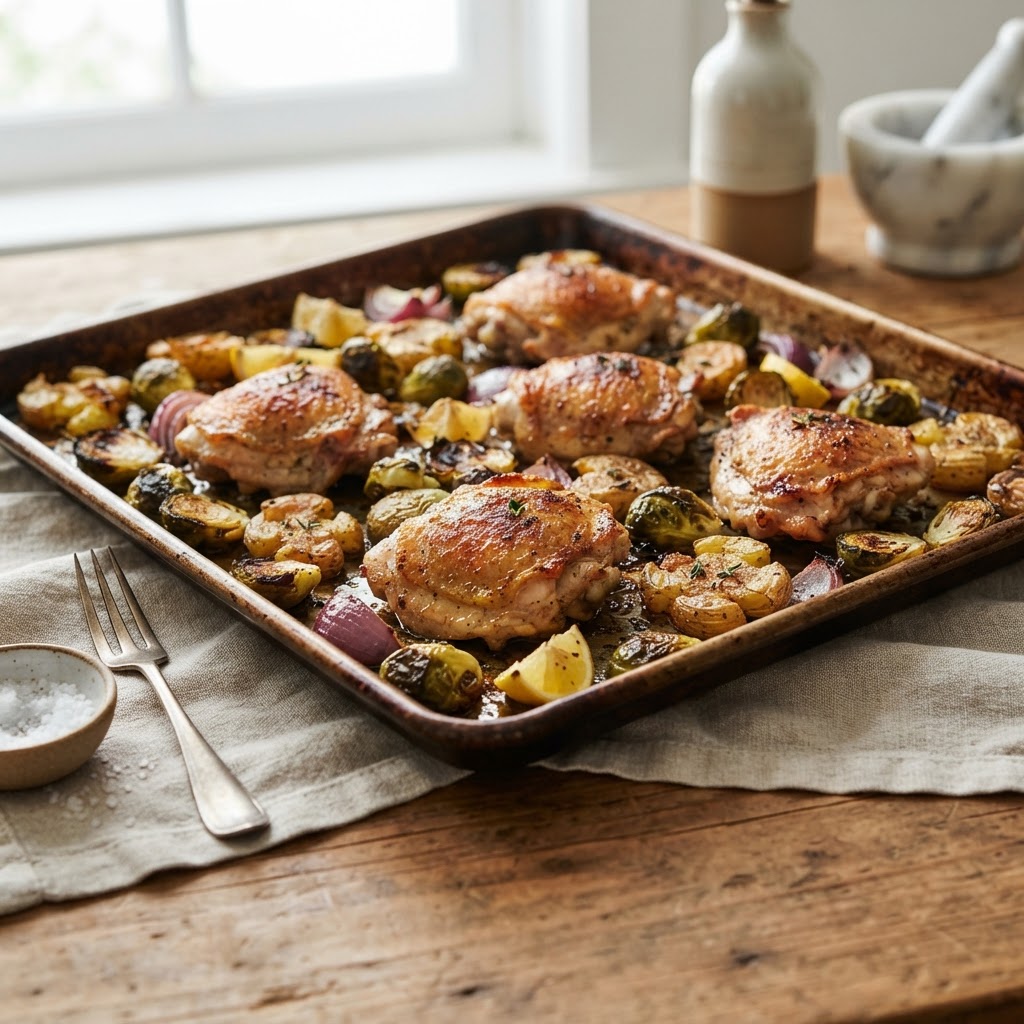
Arrange ingredients in a single, uncrowded layer with a little space between pieces. Overlapping vegetables or piling protein together creates a moist pocket where browning slows. Cut dense vegetables into similarly sized pieces so they finish at roughly the same time. If the pan looks full before cooking, divide the food between two pans rather than forcing everything onto one. Rotate pans only when your recipe or oven requires it.
Use enough oil—but not a puddle
Oil helps food brown and keeps cut surfaces from drying, but more is not always better. Toss ingredients until they have a thin, even coating, then spread them out. A dry coating can leave vegetables pale and tough; excess oil can make the pan greasy without improving crispness. Season after coating, unless a marinade or spice blend is designed to go on first.
Control marinades and late additions
Watery marinades can pool on the pan and turn roasting into steaming. Drain excess liquid before arranging the food, or reduce the marinade separately and brush it on near the end. Avoid adding wet sauces at the beginning unless the recipe is meant to braise. Dense foods may need a head start, while quick-cooking vegetables or fish can be added later so they do not release moisture for the entire cook.
Use the oven wisely
Fully preheat the oven before the pan goes in, and avoid opening the door repeatedly. If food is cooked through but still pale, move the pan to a higher rack for a short finishing period, watching closely. A broiler can brown quickly, but it varies widely by oven and should never be left unattended. For reliable results, check thick proteins with an instant-read thermometer rather than judging doneness by color alone.