How to Keep Scrambled Eggs Soft and Creamy
Make creamy scrambled eggs with gentle heat, well-timed butter, and steady folding. Learn when to remove the pan so the eggs stay soft.
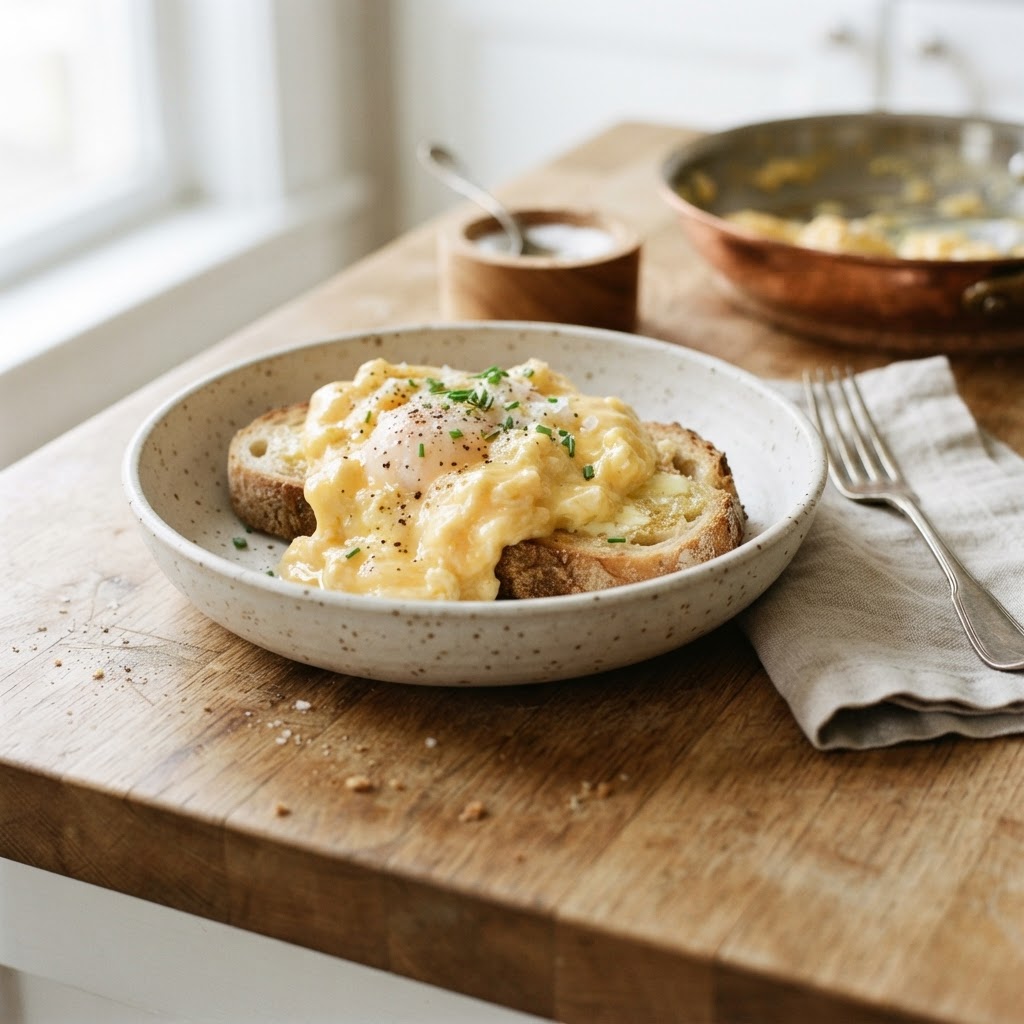
Quick reference
- Pan heat: Low to medium-low Gentle cooking prevents dryness
- Butter timing: Melt before eggs Coat the pan evenly
- Stirring: Stir and fold Keep curds tender
- Finish: Pull while glossy Residual heat completes cooking
Start with a cool, well-buttered pan
Crack the eggs into a bowl and whisk just until the whites and yolks are blended. Season before cooking if you like. Melt butter in a nonstick skillet over low to medium-low heat, tilting the pan to coat the base. Add the eggs when the butter has melted but has not browned. Starting gently gives you time to build soft curds instead of a firm, dry layer.
Stir and fold, don’t scramble aggressively
As the eggs begin to set around the edges, use a silicone spatula to push them toward the center, then fold the loose eggs over themselves. Pause briefly between strokes so tender curds can form. Keep the motion steady rather than rapidly stirring, which can break the eggs into small pieces and make them cook faster. Scrape the bottom and corners as you work.
- Use broad, gentle strokes.
- Move the pan off the burner briefly if the eggs set too quickly.
- Stop stirring once the curds are softly formed.
Pull them before they look fully done
For creamy scrambled eggs, remove the skillet from the heat while the curds are still slightly glossy and look just shy of fully set. They should hold together but remain soft, with no watery egg pooling in the pan. Avoid waiting for a completely dry surface: the eggs will continue cooking from the pan and their own residual heat.
Use residual heat to finish the texture
After taking the pan off the burner, fold the eggs a few more times as they finish setting. If they seem too loose, return the skillet to low heat for a few seconds, then remove it again. Transfer them to a warm plate promptly; leaving them in the hot pan is a common cause of overcooking. A final small piece of butter can add gloss, but it is optional.
Common fixes for dry scrambled eggs
High heat is the main problem: it sets the outside before you can control the center. An oversized pan can also spread the eggs into a thin layer that cooks too quickly. If your curds are firm or rubbery, shorten the cooking time and lower the heat next time. For consistently soft eggs, use a smaller nonstick skillet, watch the texture rather than the clock, and pull them early.
- Too firm: lower the heat and remove sooner.
- Too wet: fold over low heat for a few more seconds.
- Browning: reduce heat immediately and use a lighter pan.