How to Keep Roasted Squash From Getting Soggy
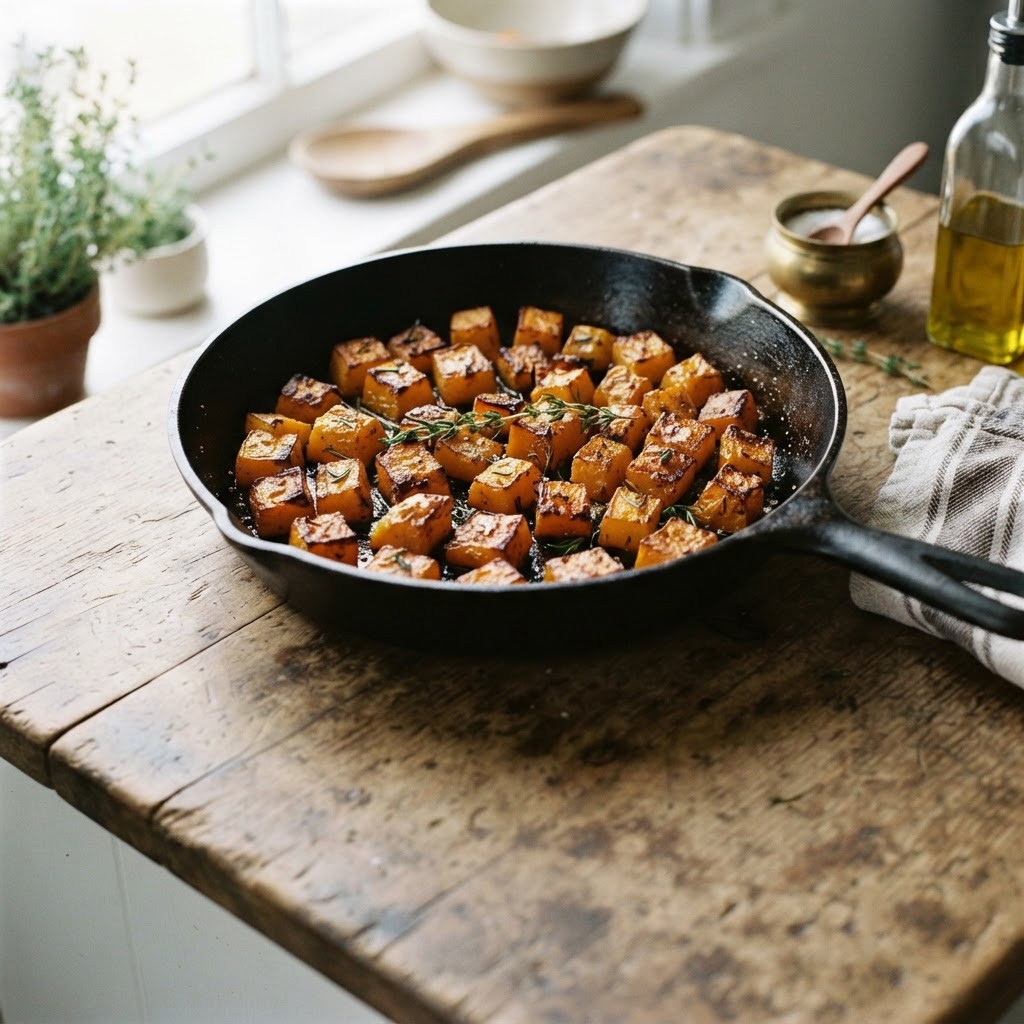
Keep roasted squash crisp at the edges with a dry surface, hot pan, single layer, and well-timed salt or glaze.
Quick reference
- Oven: 425–450°F Use the hotter end for firmer pieces
- Pan setup: Single layer Leave visible space between pieces
- Oil: Light, even coating Enough to coat, not pool
- Glaze: Last 5–10 minutes Add after browning begins
Start with a dry surface
Moisture on the outside of squash turns into steam before the edges can brown. Pat peeled or cut squash thoroughly with a clean towel, especially after rinsing. Cut pieces to a similar size so they finish together, and avoid soaking them in water. If you are prepping ahead, keep the pieces uncovered or loosely covered in the refrigerator, then pat them dry again before roasting.
Use high heat and a hot pan
Roast squash at 425–450°F, depending on your oven and the size of the pieces. A fully preheated oven matters; for extra browning, heat the sheet pan while the oven comes up to temperature. Use a sturdy metal pan rather than a deep dish, which can hold steam. Squash is ready when the centers are tender and the cut edges are deeply browned.
Give every piece room
Spread the squash in one layer with space around each piece. Overcrowding traps moisture and makes the pieces soften instead of caramelize. If the pan looks packed, divide the squash between two pans or roast in batches. Arrange the broad, flat cut sides down so they make direct contact with the pan; those surfaces develop the best browning.
- Leave small gaps between pieces.
- Use two pans rather than piling squash.
- Turn only after the first side has browned.
Oil enough, but not too much
Toss the squash with just enough oil to lightly coat the surfaces. Too little encourages sticking and dry patches; too much leaves a greasy film that can slow browning. Add oil to the squash in a bowl and toss before arranging it on the pan. Check the pan after a few minutes: oil should lightly shine beneath the pieces, not collect in puddles.
Time salt and sweet additions carefully
Salt draws moisture toward the surface, so for especially wet squash, season just before it goes into the oven or add part of the salt after browning begins. Firm winter squash usually tolerates early seasoning well. Save maple syrup, honey, brown sugar, and other sugary glazes for the final 5–10 minutes; added too soon, they can burn before the squash is tender and encourage a sticky exterior.
- Season lightly before roasting; adjust at the end.
- Brush on sugary glaze near the finish.
- Add fresh herbs after roasting if they scorch easily.
If it still softens
Check the simplest causes first: a crowded pan, damp pieces, low oven heat, or squash cut too small. Roast longer after separating the pieces, or transfer them to a clean hot pan if liquid has collected. For the crispest roasted squash, serve promptly; covering it traps steam. If holding it briefly, keep it uncovered in a warm oven rather than sealing it in a container.