How to Keep Pumpkin Pie Crust From Getting Soggy
Prevent a pumpkin pie soggy crust with a sturdy metal pan, optional blind-baking, a hot filling, and lower-rack baking until the custard is set.
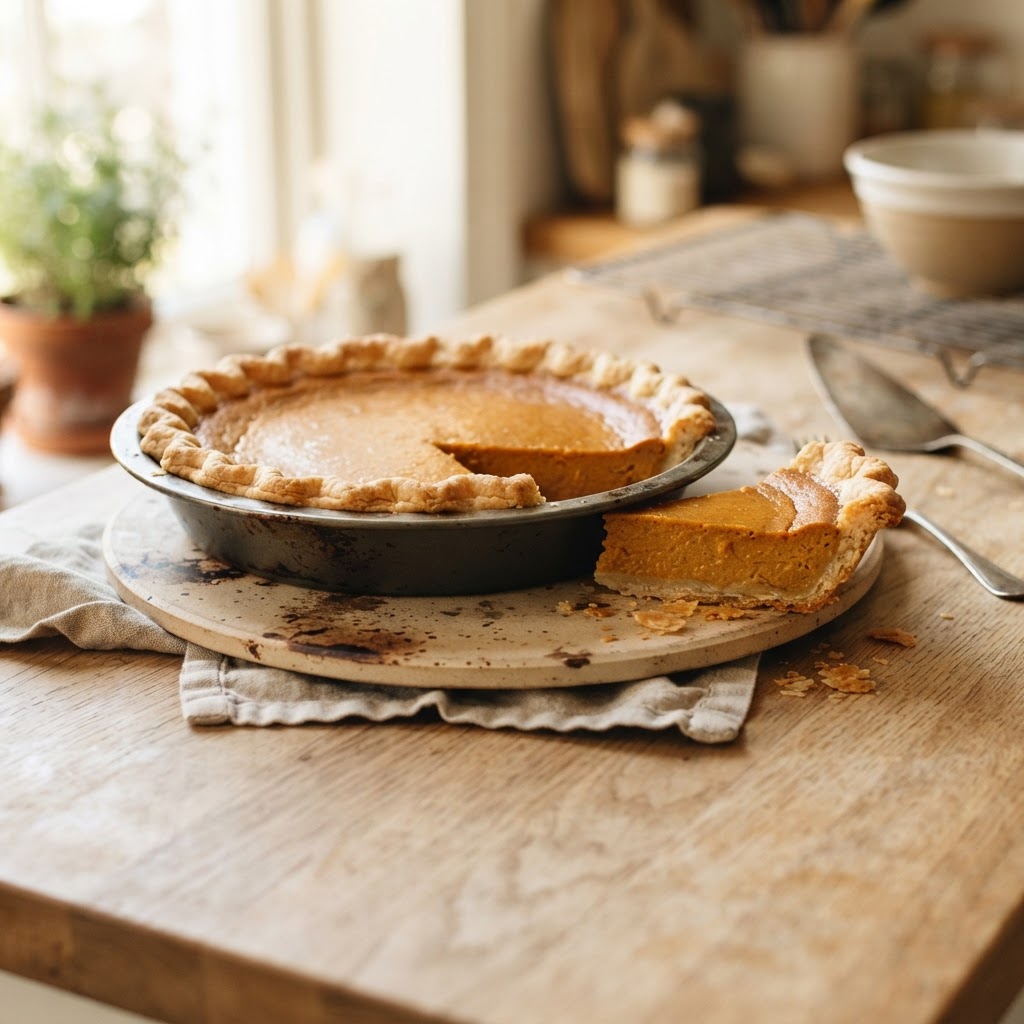
Quick reference
- Pan: Light-colored metal Transfers heat efficiently
- Crust option: Blind-bake or bake filled Both can work
- Filling: Warm, not cold Use soon after mixing
- Oven position: Lower rack Helps crisp the base
- Doneness: Edges set, center wobbles Avoid a dry custard
Start with the right crust setup
For a reliable pumpkin pie soggy crust fix, use a light-colored metal pie pan. Metal conducts heat quickly to the bottom crust; glass and ceramic pans can still work, but may need more time or a different rack position. Chill the shaped crust until firm, then dock it lightly if your recipe allows. Avoid stretching the dough into the pan, since shrinkage can leave the filling thicker and the base less evenly baked.
Choose a blind-baking method
Blind-baking gives the crust a head start before the wet custard goes in. Line the chilled shell with parchment and pie weights, then bake until the sides look set; remove the weights and bake briefly again until the base looks dry. For a simpler option, skip blind-baking and use a well-chilled crust, a hot filling, and lower-rack baking. A thin egg wash brushed over a partially baked crust can also add a moisture-resistant layer.
- Full blind-bake: best for a crisp, pre-baked base.
- Partial blind-bake: enough when the filling will bake for a long time.
- No blind-bake: workable with strong heat and a metal pan.
Use a warm filling with a cold crust
A cold crust and warm filling are compatible, and often helpful. Keep the shaped crust refrigerated while mixing the custard, then pour in the filling when it is warm or just above room temperature—not steaming hot. A cold filling slows the bake and leaves the dough soaking in liquid longer. Do not let the filled shell sit on the counter while the oven heats; prepare the filling close to baking time.
Bake the bottom before the top overbrowns
Place the pie on a lower oven rack so the bottom receives stronger heat. Preheat fully, and set the pie on a preheated baking sheet if your recipe and pan allow; this adds direct heat beneath the metal. Follow the recipe’s temperature, since custard pies often begin hotter and then finish at a lower temperature. If the rim darkens early, shield it with a strip of foil while the center continues baking.
Fully bake the custard without drying it out
Pumpkin custard is done when the outer ring is set and the center still has a small, gentle wobble. It will firm as it cools. A wet-looking, rippling center usually needs more time, while a puffed, cracked filling has likely gone too far. Start checking near the recipe’s lower time estimate because pan material, crust thickness, filling depth, and oven accuracy all affect the finish. Cool the pie completely before slicing; cutting early can make the filling seem loose and the crust seem wetter.
- Set edges plus a slight center wobble means it is ready.
- Do not judge doneness by a completely rigid center.
- Cool fully on a rack before refrigerating or slicing.