How to Keep One-Pot Pasta From Getting Mushy
Keep one-pot pasta firm by measuring the liquid, simmering gently, stopping at al dente, and adding cheese only after the heat is off.
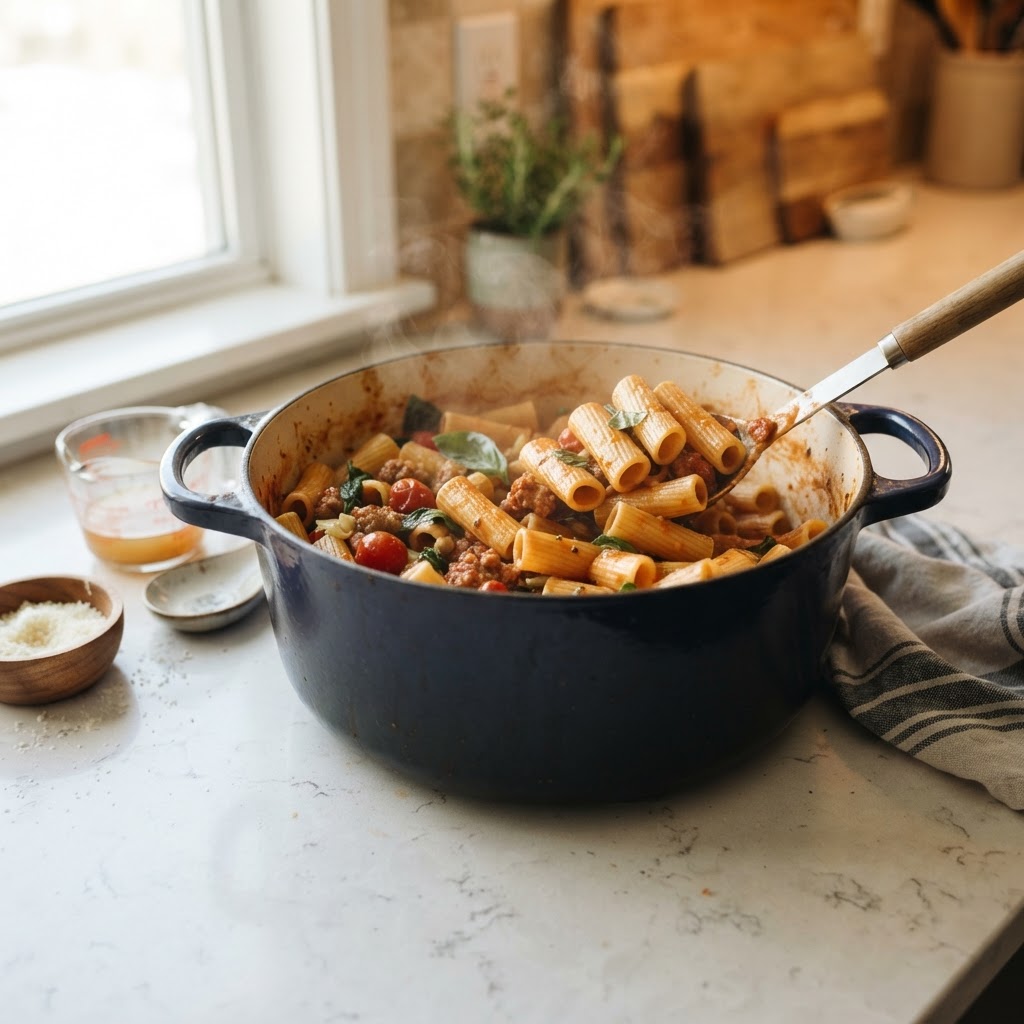
Quick reference
- Liquid: Just enough to cook Pasta should be barely covered
- Heat: Gentle simmer Avoid a rolling boil
- Stirring: Every few minutes Prevent sticking and hot spots
- Finish: Stop slightly early Carryover completes cooking
Measure the liquid carefully
The main fix for mushy one-pot pasta is using less liquid than you would for a soup. Start with enough broth or water to barely cover the pasta, then add a small splash later only if the pan looks dry before the noodles are tender. The exact amount varies with pasta shape, pan width, sauce ingredients, and how tightly the lid fits. A wide pan evaporates more quickly than a deep saucepan.
Simmer gently, not hard
Bring the liquid to a boil initially, then reduce the heat as soon as the pasta is moving freely. Keep it at a steady, gentle simmer rather than a vigorous boil. Hard boiling can cook the outside of the pasta too quickly while forcing liquid to evaporate before the center is tender. If the pan is bubbling aggressively, lower the heat and check whether the pasta still has enough liquid around it.
Stir enough to prevent sticking
Stir the pasta every few minutes, scraping across the bottom and separating strands or folded shapes. This keeps pieces from clumping against the pan and helps them cook more evenly. Constant stirring is unnecessary and can break delicate pasta or make the sauce overly starchy. If the mixture thickens before the pasta is ready, loosen it with a tablespoon or two of hot water.
Stop at al dente, not soft
Begin tasting two to three minutes before the package’s shortest cooking time, since one-pot pasta can cook differently from pasta boiled in a large volume of water. Remove the pan when the center still has a slight firm bite. The pasta will continue cooking from the heat held by the pan and sauce, so waiting until it feels fully soft on the stove usually produces a mushy finish.
Add dairy and cheese last
Turn off the heat before adding cream, butter, soft cheese, or grated Parmesan. Residual heat is usually enough to melt and blend them into the sauce. Adding dairy too early can make the sauce tighten while the pasta continues absorbing liquid, leaving both the noodles and sauce too thick. Let the finished pasta stand for one or two minutes, then serve promptly.