How to Keep Mashed Sweet Potatoes From Getting Watery
Keep mashed sweet potatoes thick and creamy by choosing dry-cooking methods, draining well, mashing hot, and adding dairy a little at a time.
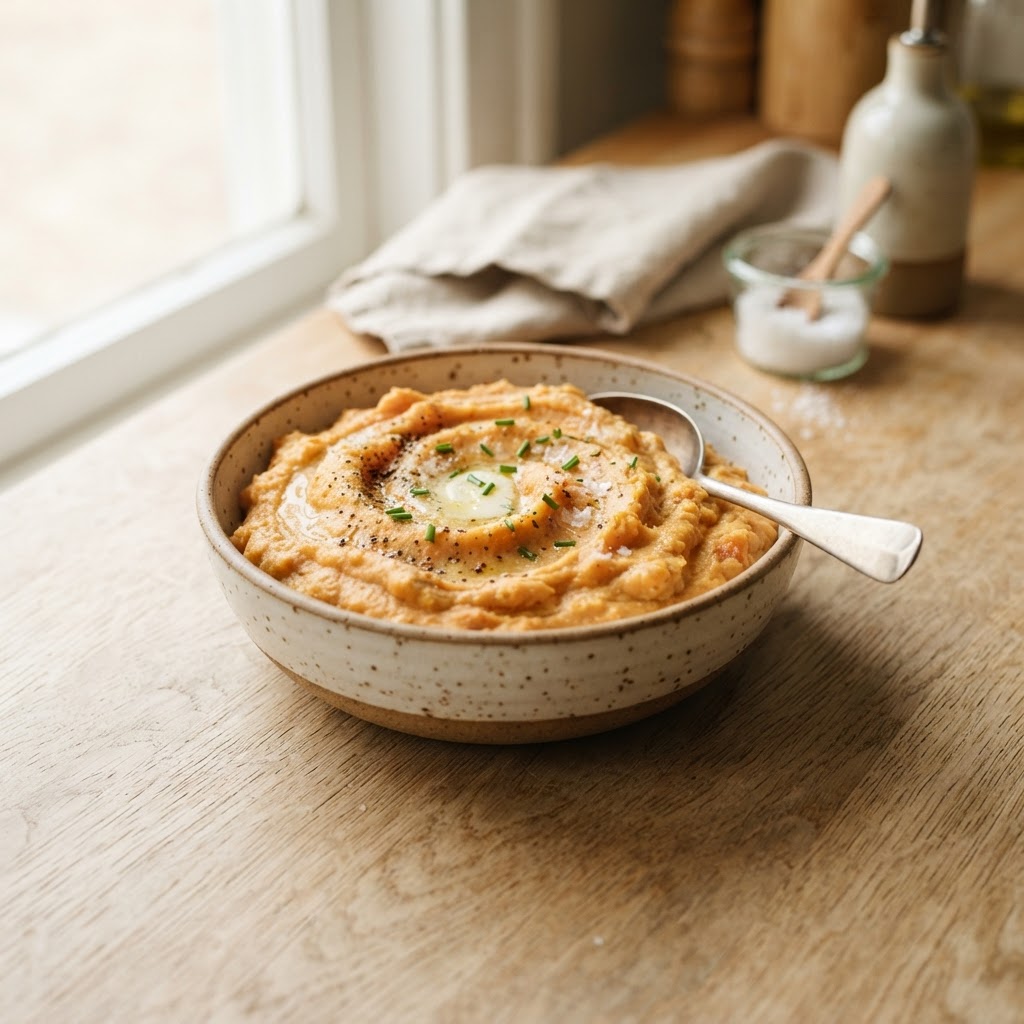
Quick reference
- Best cooking method: Bake or steam Avoid simmering in water
- When to mash: While hot For a smoother texture
- Dairy: Add gradually Stop when creamy
- Too loose: Warm gently Stir off excess moisture
Choose a dry cooking method
The easiest way to prevent mashed sweet potatoes from becoming watery is to keep excess water out from the start. Bake whole sweet potatoes until completely tender, then split and scoop out the flesh. Steaming is another good option because the potatoes stay above the water. If you must boil them, use large pieces and cook only until tender; smaller pieces absorb more water.
- Bake at 400°F until easily pierced, with timing based on size.
- Steam until a knife slides through the thickest part.
- Avoid cutting potatoes into small cubes before boiling.
Drain and dry the cooked flesh
If you boiled the sweet potatoes, drain them immediately and let them sit in the colander for a few minutes so surface moisture can escape. Return them to the warm, empty pot over low heat for a short time, stirring gently, if they still look wet. Do not brown or scorch them. This small drying step often fixes mashed sweet potatoes watery from the cooking process.
- Shake the colander gently to release trapped water.
- Use low heat and stop as soon as the surface looks dry.
- Do not press water into the potatoes while draining.
Mash while the potatoes are hot
Hot sweet potatoes mash more readily and absorb butter or dairy evenly. Use a potato masher, ricer, or food mill; avoid a blender or food processor, which can make the mixture gluey. Mash just until smooth, leaving a little texture if you prefer. If the potatoes have cooled, rewarm them gently before adding liquids.
- Add butter first if using it, then assess the texture.
- Keep the mash in the warm pot while finishing.
- Avoid vigorous processing.
Add dairy gradually
Warm your milk, cream, or other dairy before adding it, then pour in a small amount at a time. Fold and mash after each addition, stopping as soon as the potatoes are soft and creamy. Sweet potatoes vary in moisture, so a recipe’s full liquid amount is only a starting point. You can always add more, but removing excess liquid is harder.
- Use room-temperature or warmed dairy.
- Add liquid by tablespoonfuls near the end.
- Taste and season after the texture is right.
How to rescue a loose mash
If the finished mash is too thin, transfer it to a wide saucepan and warm it over low heat, stirring frequently. Leave the pan uncovered so excess moisture can evaporate. Remove it as soon as the consistency improves; prolonged heating can make the potatoes sticky. If needed, fold in a little more plain mashed sweet potato rather than adding a dry thickener that may change the flavor.
- Use gentle heat to avoid scorching.
- A wide pan helps moisture escape faster.
- Do not keep reducing once the mash is creamy.