How to Keep Gnocchi From Falling Apart
Keep gnocchi intact with a gentle simmer, a lightly salted pot, enough cooking space, and sauce added after the dumplings are drained.
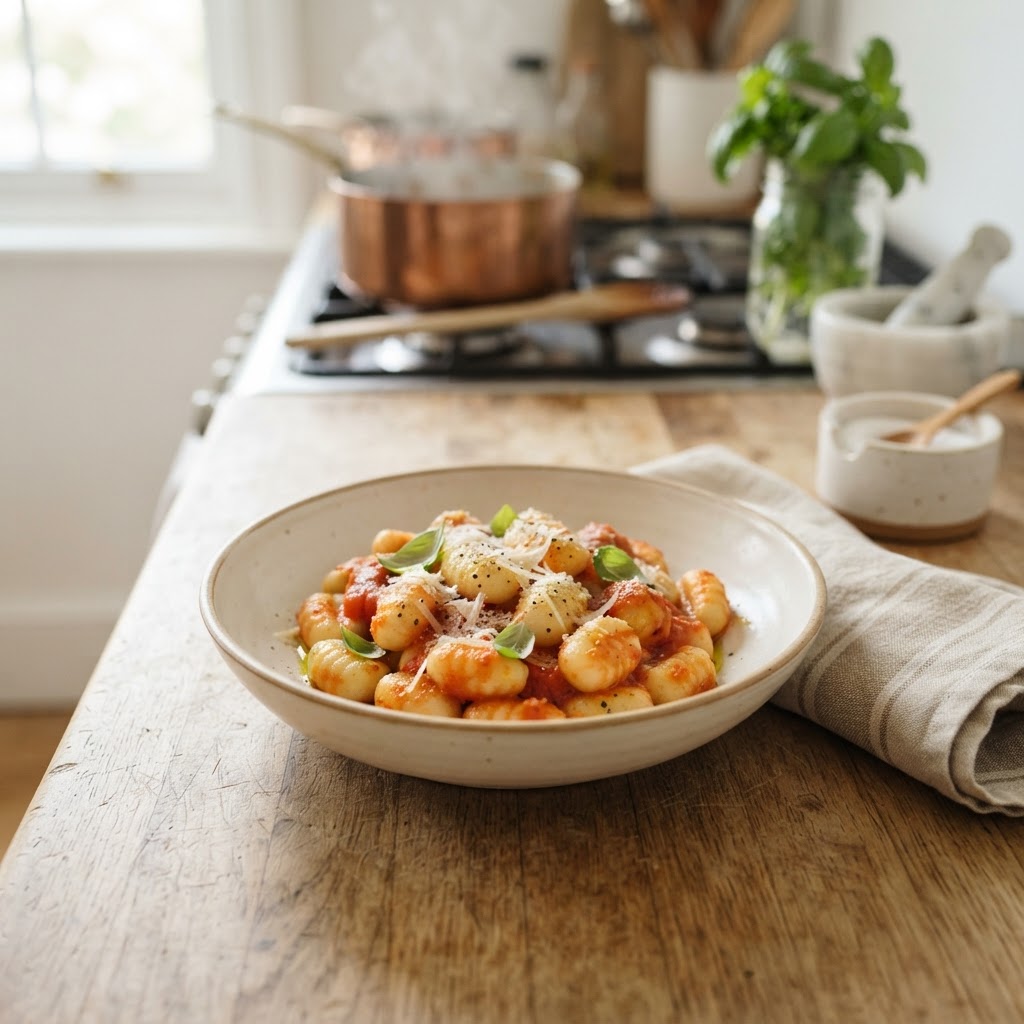
Quick reference
- Gnocchi type: Fresh Delicate; cook gently
- Gnocchi type: Shelf-stable Firmer; follow package timing
- Water: Simmer Avoid a rolling boil
- Pot: Roomy Cook in batches if needed
- Sauce: After draining Toss gently off heat
Start with the right dough
Homemade gnocchi often fall apart because the dough contains too much moisture. Use potatoes that have been baked or cooked until just tender, then let them release steam before ricing. Add flour gradually, using only enough to form a soft, workable dough. Overworking makes gnocchi dense; under-floured dough can dissolve in the pot. Test one dumpling before shaping the rest. If it breaks, knead in a little more flour and test again.
- Avoid wet, freshly boiled potatoes when possible.
- Shape evenly so pieces finish at the same time.
- Keep shaped gnocchi lightly floured, not coated heavily.
Fresh and shelf-stable gnocchi cook differently
Fresh homemade or refrigerated gnocchi are tender and need especially gentle handling. Shelf-stable gnocchi are usually firmer and may tolerate slightly more movement, but they can still split if boiled aggressively. Check the package for timing rather than assuming all varieties cook alike. Frozen gnocchi should generally go straight into the water unless the package says otherwise; thawed pieces can become soft and sticky.
- Fresh: handle minimally and cook soon after shaping.
- Shelf-stable: use the package instructions as your baseline.
- Frozen: follow the package directions and avoid countertop thawing.
Use a gentle simmer, not a hard boil
Bring a large pot of salted water to a boil, then reduce the heat so it settles into a gentle simmer before adding the gnocchi. A hard boil tosses the dumplings against one another and the pot, which is a common reason for gnocchi falling apart. Lower them in carefully and stir once, very lightly, only if they seem to be sticking. When they rise, give them the recommended cooking time or taste one for tenderness.
- Lower gnocchi with a slotted spoon if they are very delicate.
- Keep the water moving gently, not violently.
- Remove them promptly once tender.
Do not overcrowd the pot
Too many pieces lower the water temperature and encourage sticking, while crowded gnocchi are harder to lift without tearing. Work in batches when the pot is not large enough for the dumplings to float in a loose layer. Refresh the simmer between batches if needed. Have a slotted spoon, spider, or sieve ready so cooked gnocchi can come out quickly without being left in hot water.
- Leave room for gnocchi to move freely.
- Cook separate batches for a large quantity.
- Drain over the pot briefly, without shaking hard.
Add sauce after cooking
Drain the gnocchi as soon as they are tender and transfer them to a warm bowl or skillet. Add sauce after cooking rather than simmering the dumplings in it, especially when they are homemade or fresh. Fold with a spoon or gently swirl the pan instead of stirring forcefully. A thin coating of sauce helps prevent sticking while preserving the dumplings’ shape.
- Warm the sauce separately.
- Use a little reserved cooking water only if the sauce needs loosening.
- Serve soon after tossing for the best texture.