How to Keep Cream Soup From Curdling
Prevent cream soup curdling with moderate heat, tempered dairy, a gentle simmer, and careful timing for acidic ingredients.
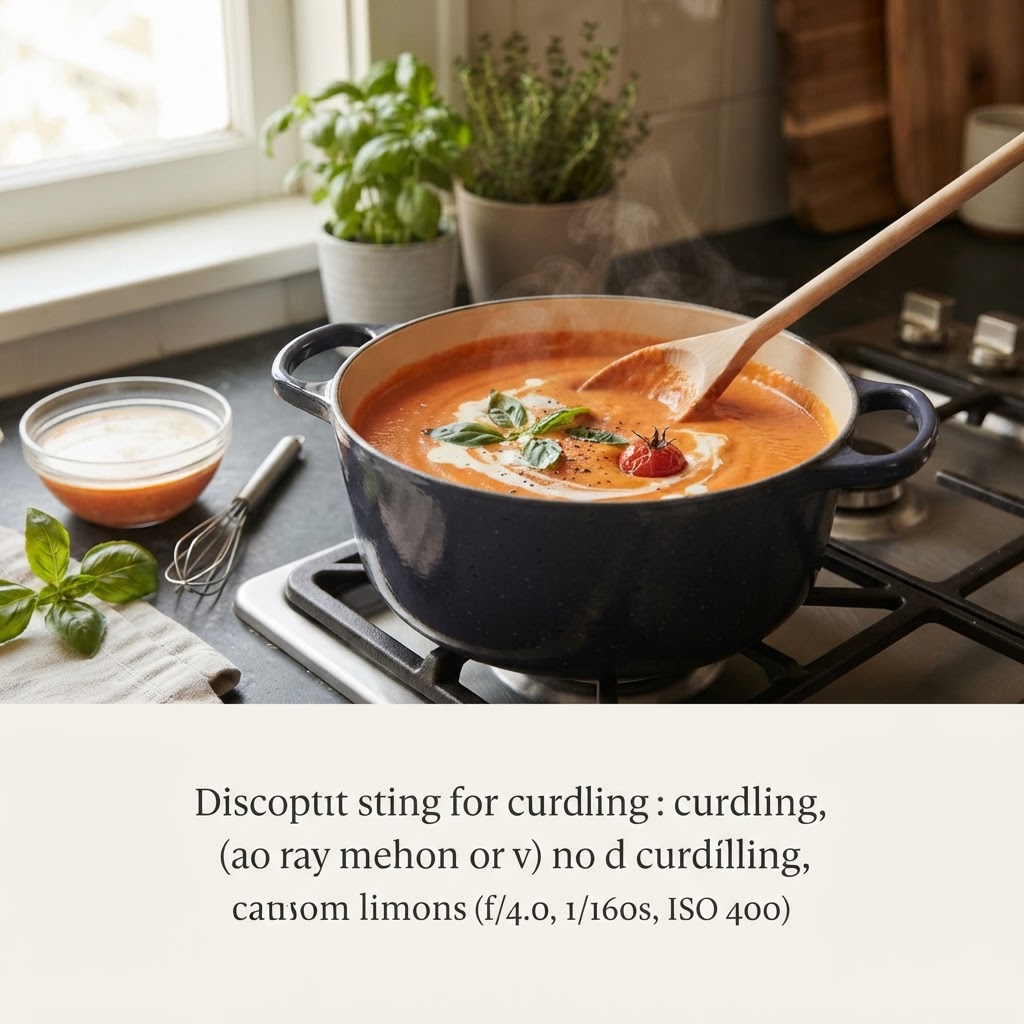
Quick reference
- Heat: Low to moderate Avoid a hard boil
- Dairy timing: Near the end Warm it before adding
- Dairy choice: Higher-fat options More forgiving when suitable
- Acidic ingredients: Add carefully Use small amounts and taste
Keep the heat gentle
The simplest way to prevent cream soup curdling is to cook it over low to moderate heat. Once dairy is in the pot, aim for gentle steaming and an occasional small bubble rather than a rolling simmer. A hard boil can make the soup separate, especially when it contains milk, cream, or a lighter dairy product. If the pot gets too hot, move it briefly off the burner and stir before continuing.
Add dairy near the end
Build the soup base first: soften aromatics, cook the vegetables or protein, and add broth until everything is tender. Stir in cream, milk, or another dairy ingredient during the final stage, then heat only until warmed through. This shorter exposure to high heat helps keep the texture smooth. For especially delicate soups, turn off the heat before adding the dairy and return the pot to low heat only if needed.
Temper milk or cream before adding
A sudden temperature change can make dairy seize or separate. To temper it, place the measured dairy in a bowl and slowly whisk in a ladleful of hot soup. Add another ladleful while whisking, then pour the warmed mixture back into the pot in a thin stream. Keep stirring and maintain moderate heat. This method is particularly useful when the soup base is very hot or thick.
Choose dairy that suits the soup
Higher-fat dairy is generally more forgiving in a hot soup than low-fat milk. Heavy cream, whipping cream, and full-fat coconut milk can give a more stable, rich finish when their flavor fits the recipe. Lower-fat dairy can still work, but use gentler heat and avoid prolonged simmering. If using yogurt, sour cream, or crème fraîche, temper it first and add it at the end; these ingredients are more sensitive to heat and acidity.
Handle acidic ingredients carefully
Tomatoes, citrus juice, vinegar, wine, and some sharp cheeses can increase the chance of separation when combined with dairy. Add acidic ingredients in small amounts, preferably before the dairy when the recipe allows, and let the soup settle at a gentle heat. If acidity must be added after cream, reduce the heat first and stir it in gradually. Taste as you go rather than adding the full amount at once.
If the soup starts to separate
Remove the pot from the heat immediately and whisk gently. A splash of warm broth, milk, or cream may help loosen the mixture, depending on how far it has separated. Do not try to fix it with a hard boil. For a soup with cooked vegetables, a careful blend can improve the appearance, though it will not always restore the original texture. Next time, lower the heat, temper the dairy, and add it later.