How to Get Crispy Chicken Skin in the Oven
Make crispy chicken skin in the oven with a dry surface, well-timed salt, uncovered roasting, good airflow, and a safe finish.
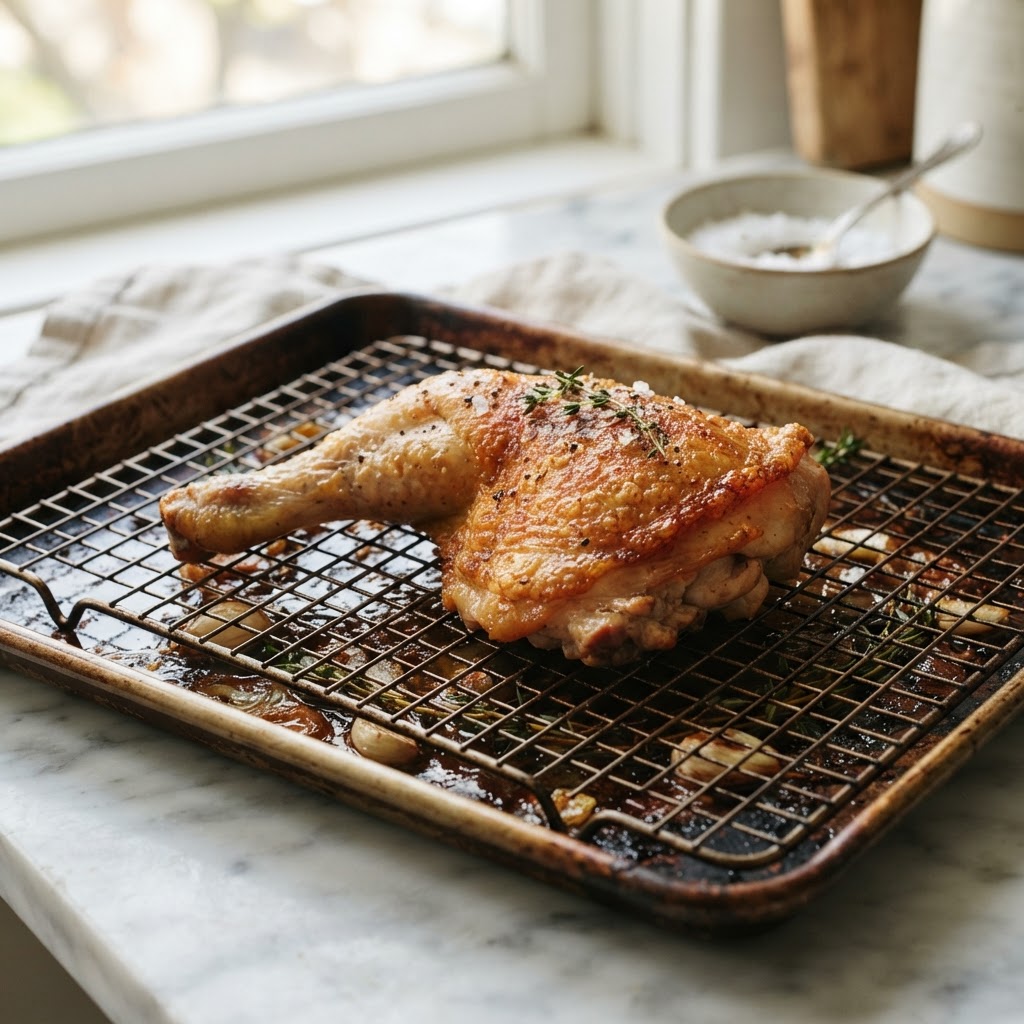
Quick reference
- Surface: Very dry Pat thoroughly with paper towels
- Salt: At least 1 hour ahead Overnight uncovered is even better
- Roasting: Uncovered Leave space around pieces
- Doneness: 165°F / 74°C Check the thickest part
- Broil: Briefly, if needed Only after safe doneness
Start with a dry surface
Moisture is the main obstacle to crisp skin. Pat the chicken thoroughly with paper towels, including around joints and folds. If you have time, place the seasoned chicken on a rack over a tray and refrigerate it uncovered for several hours or overnight. This dries the exterior and lets the seasoning work in. Do not rinse the chicken; it adds moisture and can spread raw juices around the kitchen.
Salt at the right time
For the best chicken skin, salt before roasting rather than immediately as the pan goes into the oven. A few hours ahead is helpful, while overnight seasoning gives the surface more time to dry. Use other dry seasonings with the salt, but avoid a wet marinade right before roasting. Liquid on the skin can leave it soft, especially if the chicken goes straight from marinade to the oven.
Set up for airflow
Roast the chicken uncovered on a rack set over a rimmed baking sheet, or use a shallow roasting pan that leaves space between pieces. Air should reach as much of the skin as possible. Crowding traps steam, and a deep layer of vegetables or liquid beneath the chicken can slow browning. Keep the skin facing upward and avoid covering the pan with foil.
Roast until the skin is browned
Use a fully preheated oven and roast according to the cut and its size; bone-in pieces and whole chickens will not finish at the same rate. Begin checking near the recipe’s expected cooking time. If the skin browns before the meat is done, lower the oven temperature slightly rather than covering the skin, which can soften it. For reliable results, use an instant-read thermometer in the thickest part, avoiding bone.
Use the broiler only as a final touch
If the chicken has reached 165°F / 74°C but the skin needs more color, switch to the broiler for a short burst. Keep the pan close enough to brown but watch constantly: skin can go from golden to burnt quickly. The broiler is a finishing tool, not a substitute for roasting the chicken through. Rest the chicken briefly before serving so the juices settle while the skin remains exposed to the air.