How to Freeze Soup Without Ruining the Texture
Freeze soup with less texture damage: cool it quickly, pack it with room to expand, thaw safely, and reheat leftovers thoroughly.
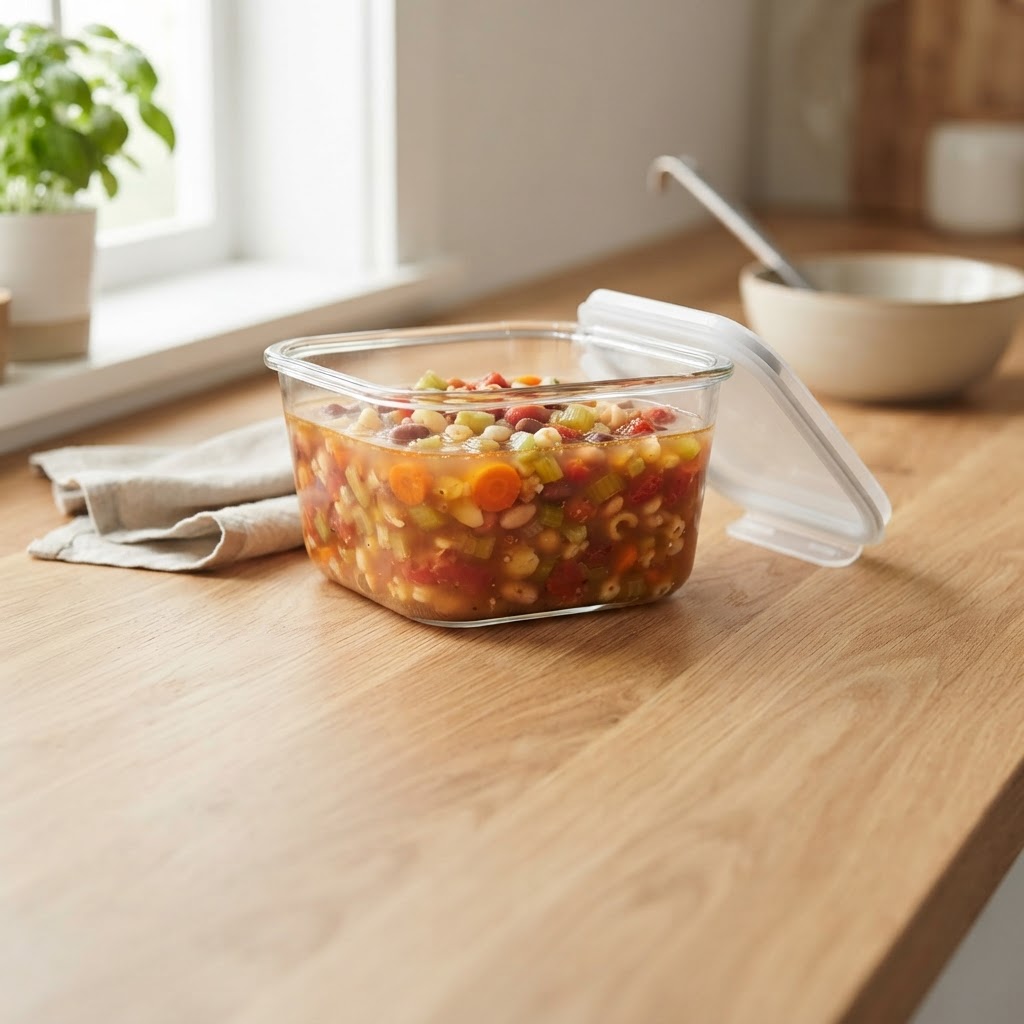
Quick reference
- Cool before packing: Promptly; refrigerate within 2 hours Use shallow containers to speed cooling
- Expansion room: Leave 1 inch at the top Leave more for wide-mouth glass jars
- Best thawing method: Refrigerator Set the container on a plate
- Reheating target: 165°F / 74°C Stir and check the center
Cool soup promptly
To freeze soup successfully, start by cooling it quickly. Divide a large batch into shallow containers or smaller portions rather than leaving the pot on the counter. Refrigerate perishable cooked food within two hours, or within one hour if the room is above 90°F / 32°C. Once the soup is cold, transfer it to freezer-safe containers. Label each portion with the soup name and date.
- Use single-serving portions for faster thawing.
- Do not seal steaming-hot soup in a deep container.
- Leave space around containers in the refrigerator so cold air can circulate.
Choose containers and leave expansion room
Use sturdy freezer containers, heavy-duty freezer bags, or freezer-safe jars. Soup expands as it freezes, so leave about 1 inch of headspace in most rigid containers; wide-mouth jars may need more. For bags, press out excess air, seal securely, and freeze them flat on a tray. Once solid, stack the bags upright or horizontally to save space.
- Avoid thin storage tubs that can crack or warp.
- Place liquid-filled jars upright until fully frozen.
- Label portions with the date and any reheating notes.
Protect delicate texture
Brothy soups, bean soups, chili, and many vegetable soups usually freeze well. Cream, milk, coconut milk, and cheese-based soups can separate or become grainy after thawing, while potatoes may soften. When possible, freeze the base without dairy and stir in cream, milk, or cheese while reheating. Cooked pasta and rice are also best added separately or freshly cooked, since they can absorb broth and turn soft.
- Freeze pasta, rice, croutons, and fresh herbs separately when practical.
- Blend or whisk separated soup while it warms.
- Add a splash of broth or water if the soup thickens in storage.
Thaw in the refrigerator
For the most even, controlled thaw, move frozen soup to the refrigerator and let it thaw in its sealed container, preferably overnight. Put the container on a plate to catch leaks. If you need it sooner, transfer the soup to a saucepan while still frozen and warm it gently over low to medium heat, stirring often. Do not thaw soup on the counter.
- Break up large frozen pieces as the soup loosens.
- Avoid repeatedly thawing and refreezing the same portion.
- Use thawed soup within the refrigerator storage window for cooked leftovers.
Reheat gently and thoroughly
Reheat soup in a saucepan over medium-low heat, stirring from the bottom so it warms evenly. Add reserved dairy, pasta, rice, or fresh garnishes near the end. For leftovers, heat the soup to 165°F / 74°C, checking the thickest or coolest part with a food thermometer. Bring delicate soups to a gentle simmer rather than a hard boil, which can further damage their texture.
- Stir several times during reheating.
- Add liquid gradually to restore a thick soup’s consistency.
- Serve only the portion you plan to eat, then cool and store any remainder promptly.