How to Freeze Pesto, Herb Sauces, and Chimichurri
Freeze pesto, herb sauces, and chimichurri in small portions for easy meals, while protecting color, texture, and fresh flavors after thawing.
Quick reference
- Best portion: 1–2 tablespoons Sauces, dressings, finishing
- Meal portion: ¼–½ cup Pasta, grains, vegetables
- Container: Airtight, shallow Leave a little headspace
- Best quality: Up to 3 months Longer storage is safe but less fresh
Portion the sauce for how you’ll use it
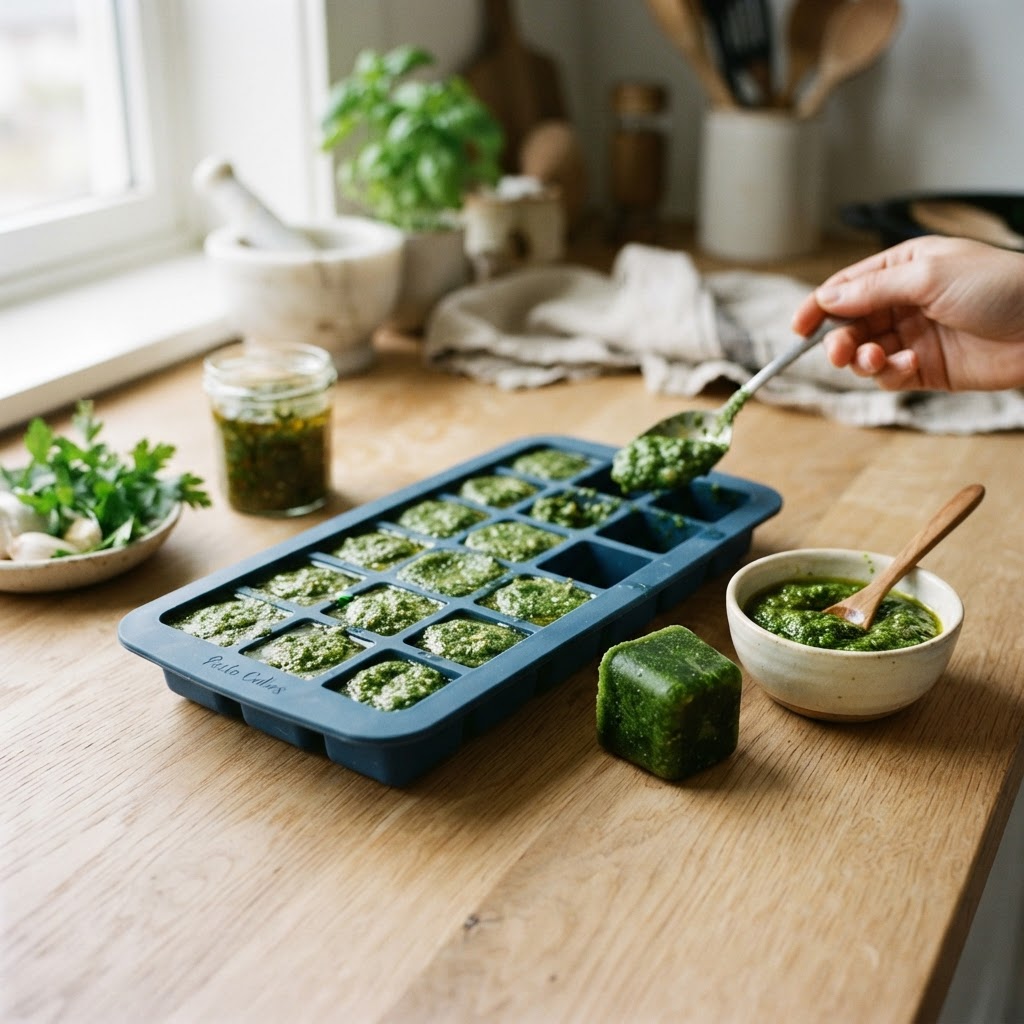
The most useful way to freeze pesto, chimichurri, or another herb sauce is in portions you can finish at one meal. Spoon small amounts into an ice-cube tray for pasta, sandwiches, roasted vegetables, or grilled foods. Use a small freezer container for a larger pasta sauce portion. Freeze sauces in a thin layer when possible; they thaw faster and are easier to break apart.
- 1–2 tablespoons: garnish or sandwich spread
- ¼–½ cup: pasta, grains, or vegetables
- Freeze extra in separate portions rather than one large block
Choose containers that limit air
Use a clean, airtight freezer container, small jar, silicone mold, or heavy-duty freezer bag. Leave a little room at the top if the sauce contains water or stock, since it can expand as it freezes. Press plastic wrap directly against the surface before sealing a container, or squeeze excess air from a freezer bag. Label the sauce and date it so older portions are easy to use first.
- Freeze trays on a level shelf until solid
- Transfer cubes to a labeled freezer bag
- Avoid thin, loosely sealed containers
Protect color and fresh flavor
Pesto and herb sauces usually freeze well, but their texture may soften after thawing. Basil can darken, olive oil can look cloudy or separate, and cheese may become slightly grainy. Chimichurri’s herbs and vinegar remain useful, though the chopped leaves will not be as crisp as when freshly made. Freeze sauces as soon as practical after preparing them, and keep them tightly covered to reduce freezer odors. For best flavor, use within about three months.
- A thin oil layer can help cover pesto’s surface
- Expect separation; it is usually fixed by stirring
- Fresh texture is best when herbs are added after thawing
Ingredients better added after thawing
For the freshest result, freeze the base sauce and add delicate ingredients when serving. Hold back grated hard cheese, fresh citrus juice, crisp chopped herbs, and crunchy nuts if the recipe allows. Garlic can taste stronger after freezing, while dairy-based additions may separate. Thaw a portion, stir well, then adjust with olive oil, lemon juice, vinegar, cheese, salt, or freshly chopped herbs.
- Add cheese and nuts after thawing for better texture
- Finish chimichurri with fresh parsley or cilantro
- Taste before adding more acid or salt
Thaw and use frozen herb sauces
Thaw a portion overnight in the refrigerator, or place a sealed container in cool water for a quicker method. Small pesto cubes can often melt directly into hot pasta, grains, soup, or vegetables. Do not repeatedly thaw and refreeze the sauce. Once thawed, keep it refrigerated and use it promptly; discard any portion left at room temperature for more than two hours, or one hour when the temperature is above 90°F / 32°C.
- Stir separated oil and herbs back together
- Use gentle heat so fresh herbs do not scorch
- Pair with QuickDinner pasta, grilled vegetables, and herb-heavy recipes