How to Freeze Cooked Beans Without Ruining Their Texture
Cool cooked beans quickly, freeze them in useful portions with or without liquid, and thaw them gently for soups, bowls, and stews.
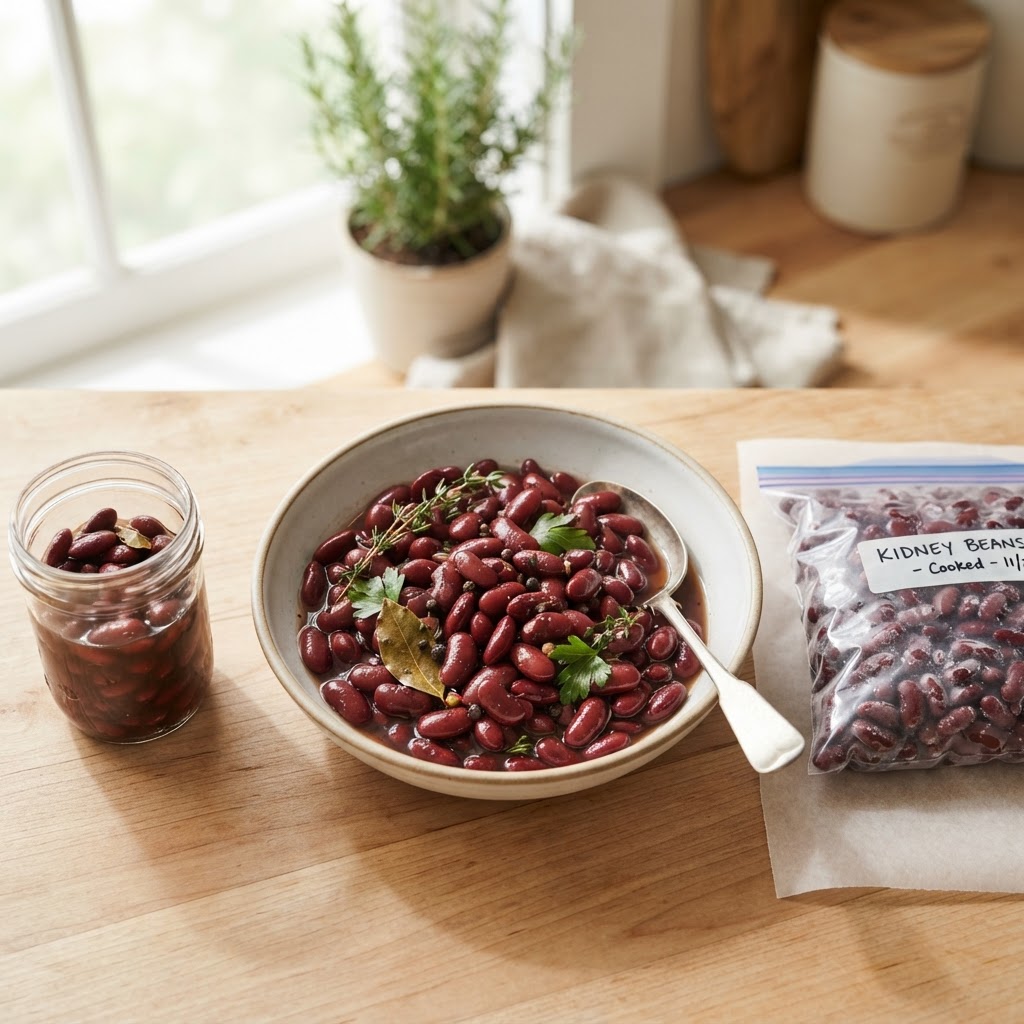
Quick reference
- Best container: Freezer bag or airtight tub Remove excess air
- Portion size: 1–2 cups Match typical recipes
- With liquid: Add enough to coat Useful for whole beans
- Freezer quality: Best within 3 months Label every portion
Cool the beans before freezing
Drain beans if you plan to freeze them dry, then spread them in a shallow pan so they cool quickly. If they are in a seasoned broth, divide the mixture into shallow containers instead. Refrigerate cooked beans within 2 hours, or within 1 hour when the room is above 90°F / 32°C. Do not seal a large, steaming batch and put it straight in the freezer; it can warm nearby food and freeze unevenly.
- Cool in small, shallow portions.
- Label with the bean type and date.
- Use refrigerated beans within 3–4 days if not freezing.
Choose dry or liquid-packed beans
Freeze beans with a little cooking liquid when you want to protect their surface and keep them ready for soups, stews, or saucy dishes. Add just enough cooled broth or bean liquid to coat the beans without leaving a large pocket of liquid. For bowls, salads, or recipes where you want firmer beans, drain them well and blot away excess moisture before packing.
- Leave about ½ inch of headspace in rigid containers.
- Press air from freezer bags before sealing.
- Freeze broth separately if you want more control later.
Freeze in practical portions
Measure portions you will actually use—about 1 to 2 cups works well for many home recipes. Spread beans in a thin, even layer inside freezer bags so they stack and thaw quickly. For containers, use airtight freezer-safe ones and leave room for expansion. Freeze the portions flat until solid, then stand the bags upright to save space. Quality is best within about 3 months, although continuously frozen beans remain safe longer if kept properly frozen.
- Freeze one recipe’s worth per package.
- Avoid repeatedly thawing and refreezing the same batch.
- Keep delicate beans, such as cannellini, in liquid when possible.
Thaw beans gently
For the best texture, thaw a portion overnight in the refrigerator, set over a plate or bowl to catch leaks. You can also add frozen beans directly to a simmering soup, stew, or sauce; allow extra time for the dish to return to a simmer. Microwave thawing is convenient for immediate use, but stir several times and avoid overheating, which can split skins and make beans mushy.
- Drain thawed beans if the dish does not need extra liquid.
- Do not thaw perishable cooked food on the counter.
- Reheat leftover dishes to 165°F / 74°C.
Use softer beans to your advantage
Some texture loss is normal after freezing and thawing, especially with beans that were already very tender. They are still excellent in bean soups, chili, braises, and QuickDinner stews, where a softer texture blends into the sauce. For bowls, warm them gently with a spoonful of broth or dressing. If you need distinct, firm beans for a salad, freeze them only briefly after cooking and avoid overcooking them in the first place.
- Best fits: soups, bowls, chili, and stews.
- Mash softer beans into a sauce or spread.
- Add thawed beans near the end of cooking when possible.