How to Freeze Casseroles: Before Baking vs After Baking
Freeze most casseroles before baking for fresher texture; freeze fully baked dishes for convenience when reheating small portions or leftovers.
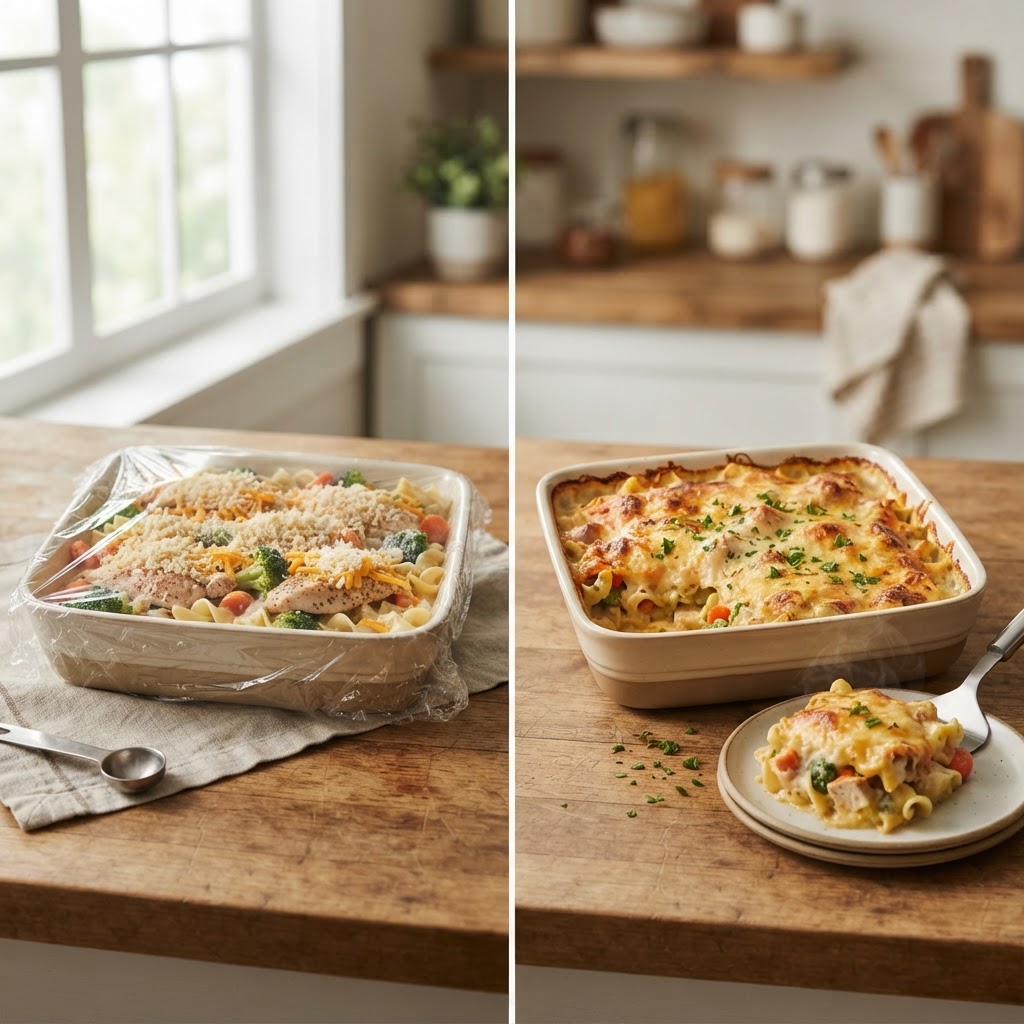
Quick reference
- Best before baking: Pasta, rice, enchiladas Best texture after cooking
- Best after baking: Small portions, leftovers Fastest serving option
- Freeze unbaked: Wrap tightly Label with baking directions
- Reheat baked: Thaw or bake covered Uncover to finish
Choose before baking for the best texture
Freeze a casserole before baking when it contains pasta, rice, tortillas, vegetables, or a crumb topping that could become soft after a second trip through the oven. Assemble the dish, cool any cooked filling completely, then freeze it unbaked. This method lets the ingredients cook only once, so pasta is less likely to turn mushy and cheese toppings stay fresher. It is usually the best choice for a planned freezer meal.
- Slightly undercook pasta or rice if the recipe allows.
- Cool hot fillings before assembling and freezing.
- Add delicate breadcrumbs or fresh herbs after thawing when possible.
Choose after baking for convenience
Freeze a fully baked casserole when you want ready-to-reheat portions, are storing leftovers, or the dish is already cooked. Baked casseroles such as lasagna, shepherd’s pie, and layered vegetable bakes generally freeze well, though their texture may be a little softer after reheating. Cool the casserole promptly, divide it into practical portions, and package each portion separately for easier thawing and less waste.
- Cool within 2 hours before refrigerating or freezing.
- Portion large dishes before freezing if possible.
- Avoid freezing creamy sauces that tend to split unless the recipe specifically supports it.
Package it to prevent freezer damage
Use a freezer-safe baking dish or transfer portions to airtight containers. Press parchment or freezer wrap against the surface, then add a second tight layer of foil or a fitted lid. Leave only a small amount of headspace in containers, since excess air encourages ice buildup. Label the dish with its name, date, and whether it is unbaked or fully cooked. For best quality, use frozen casseroles within a few months.
- Choose shallow portions for faster, more even reheating.
- Do not place a very cold glass dish directly into a hot oven unless its instructions allow it.
- Keep toppings separate when they are especially crisp or delicate.
Bake an unbaked frozen casserole
For the most even result, thaw an unbaked casserole in the refrigerator before baking, following the recipe’s temperature and timing as a starting point. If baking directly from frozen is permitted, keep it covered so the center can heat before the top browns; expect substantially longer cooking than the original recipe states. Remove the cover near the end and bake until bubbling and fully hot in the center.
- Use a metal or freezer-to-oven-safe dish for direct-from-frozen baking.
- Add extra time rather than raising the oven temperature sharply.
- Check the center, not just the edges, for doneness.
Reheat a baked frozen casserole
Thaw a baked casserole overnight in the refrigerator when you have time, then reheat it covered until hot throughout. Smaller portions can often be reheated in the microwave or a moderate oven; stir or rotate where practical for even heating. If reheating from frozen, cover the dish to limit drying and uncover it briefly at the end to restore a browned top. Reheat leftovers to 165°F / 74°C.
- Add a splash of sauce or broth if the casserole looks dry.
- Rest for a few minutes before serving so heat can distribute.
- Use QuickDinner casserole recipes for the dish-specific baking and reheating times.