How to Freeze Bread, Rolls, and Flatbreads for Better Texture
Freeze bread sliced and tightly wrapped, then thaw it sealed or reheat it from frozen to reduce dryness, freezer burn, and condensation.
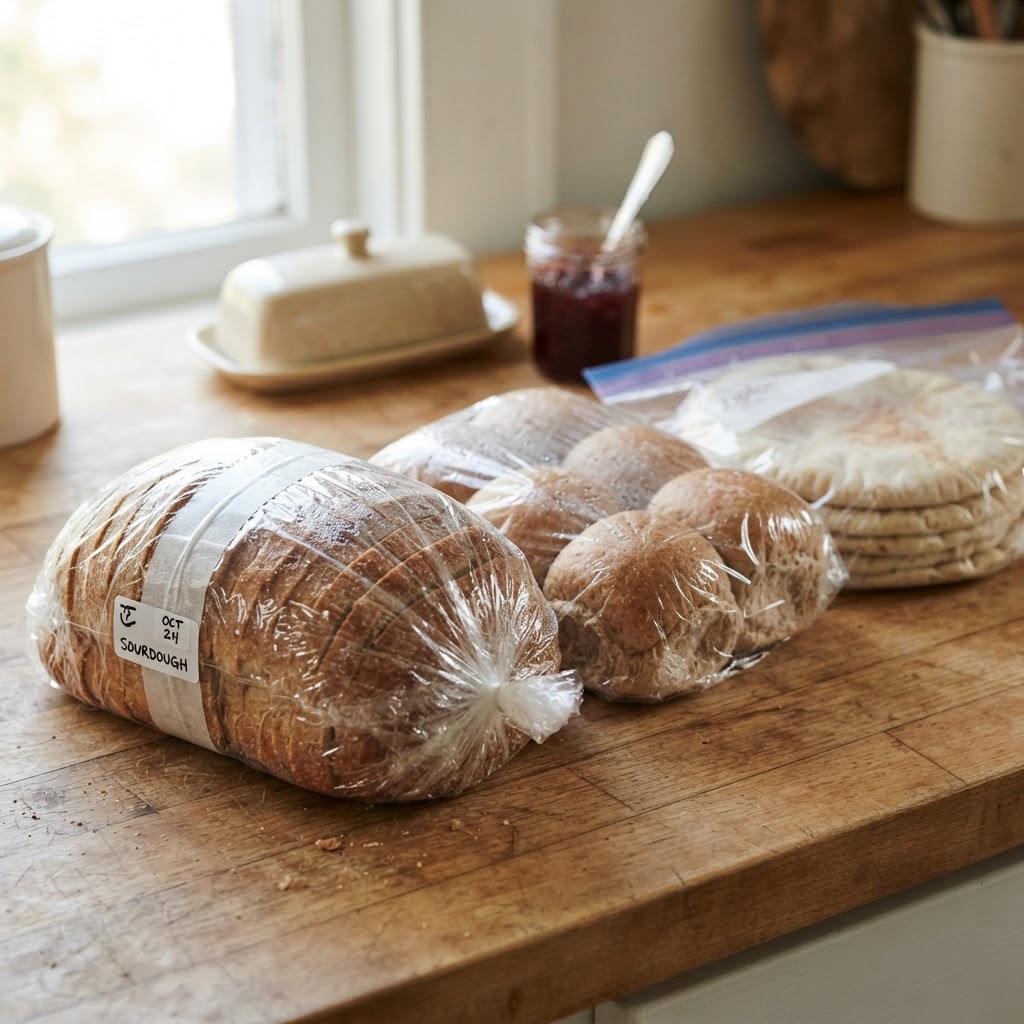
Quick reference
- Sliced loaf: Freeze 1–2 months Separate slices before wrapping
- Whole loaf: Freeze 1–2 months Best for later slicing
- Rolls: Freeze 1–2 months Wrap individually or in a group
- Flatbreads: Freeze 1–2 months Stack with parchment between pieces
Cool, slice, and portion first
Freeze bread when it is fresh and completely cool. Slicing a loaf before freezing makes it easy to remove only what you need, while a whole loaf keeps better for serving at once. Split rolls if you plan to fill them later. Stack flatbreads with small sheets of parchment between them so they separate without tearing.
- Use a serrated knife for clean slices.
- Portion larger quantities into meal-size packs.
- Do not freeze warm bread; trapped steam creates sogginess.
Wrap out air and moisture
Wrap each portion snugly in plastic wrap, foil, or reusable freezer wrap, then place it in a freezer bag or airtight container. Press out excess air before sealing and label the package with the date. Double wrapping helps prevent freezer burn and protects delicate crusts. For flatbreads, a tight stack inside a freezer bag works well after the parchment layers are added.
- Seal rolls individually for quick breakfasts.
- Keep strongly scented foods away from uncovered bread.
- Use frozen bread within about 1–2 months for the best texture.
Thaw without a damp crust
For sliced bread and rolls, remove only the amount needed and thaw them while still wrapped at room temperature. The wrapper catches condensation instead of letting it settle on the surface. Unwrap once the bread is flexible and no longer cold in the center. Flatbreads can thaw in their sealed bag for a short time, then separate them before filling or cooking.
- Avoid leaving bread uncovered while it thaws.
- Do not refreeze bread that has become wet or stale.
- Use slices straight from the freezer for toast.
Reheat for fresh texture
To restore a soft interior and lightly crisp exterior, warm thawed bread in a moderate oven until heated through. Rolls can be wrapped loosely in foil first, then uncovered briefly to refresh the crust. Toast frozen slices directly. Flatbreads usually need only a quick turn in a dry skillet, toaster oven, or oven; excessive heat can make them brittle.
- Start with a short heating time and add more as needed.
- Mist a firm roll lightly with water before oven reheating.
- Warm filled flatbreads gently so the filling does not dry out.
Choose the right method for each bake
A loaf intended for sandwiches is easiest to freeze in slices, while crusty loaves are often better frozen whole and refreshed in the oven. Soft rolls benefit from individual wrapping, and thin flatbreads need protection from sticking and cracking. Once thawed, use bread promptly; freezing pauses staling but does not restore bread that was already past its best.
- Pair thawed slices with QuickDinner sandwich recipes.
- Use refreshed rolls for QuickDinner bread recipes.
- Turn warmed flatbreads into QuickDinner flatbread recipes.