How to Fix a Broken Cream Sauce
Fix a broken cream sauce by lowering the heat, whisking in warm liquid gradually, and adding cheese off heat instead of boiling.
Quick reference
- What you see: Likely problem First move
- Grainy or lumpy: Curdled dairy Lower heat; whisk
- Oily puddles: Separated fat Add warm liquid slowly
- Thin but smooth: Not broken Reduce gently or use starch
- Cheese turns stringy: Too much heat Remove from heat
Identify the break
A cream sauce can fail in two different ways. If the sauce looks grainy, lumpy, or cottage-cheese-like, the dairy has curdled from excessive heat or acidity. If it looks smooth but has a shiny layer of butter or oil floating on top, the emulsion has separated. A thin sauce is not necessarily broken; it may simply need gentle reduction or thickening.
Lower the heat immediately
Move the pan to a low burner or take it off the heat. Do not let the sauce boil while you repair it: bubbling drives off moisture and can make dairy curdle further. Whisk steadily, scraping the bottom and edges. If the sauce is hot enough to simmer aggressively, give it a minute off the burner before adding anything.
- Stop boiling.
- Whisk continuously.
- Use a clean pan if the bottom has scorched.
Rebuild the emulsion gradually
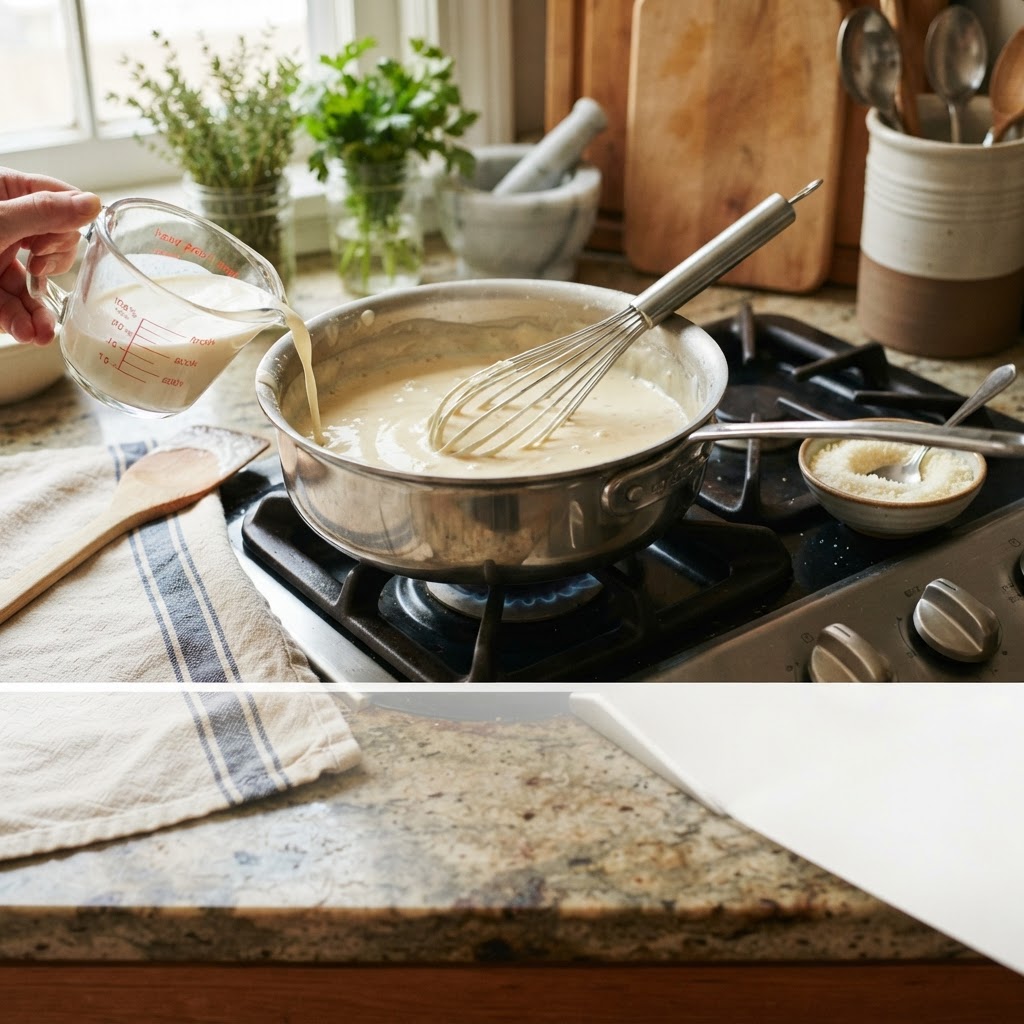
Warm a small amount of liquid separately—cream, milk, stock, or reserved pasta water. Add it to the broken sauce one tablespoon at a time while whisking briskly. Wait for each addition to blend before adding more. Once the sauce becomes glossy and cohesive, continue with slightly larger splashes until the texture is right. This gradual method helps bring separated fat and liquid back together.
Add cheese off heat
For a cheese cream sauce, remove the pan from the burner before adding grated cheese. Add a small handful at a time, whisking until smooth before adding more. Finely grated cheese melts more evenly than large pieces. If the sauce tightens, loosen it with warm liquid. Avoid returning it to high heat, which can make the cheese grainy, stringy, or oily.
When starch helps
Starch is useful when the sauce is loose or needs help holding together. Whisk in a little starchy pasta water gradually, or make a smooth slurry with a small amount of cold water and cornstarch before adding it to the warm sauce. Use only a little at first; too much can make the sauce pasty. Starch will not fully disguise badly curdled dairy, but it can stabilize a mildly separated sauce.
- Use pasta water for a light correction.
- Use a cornstarch slurry for stronger thickening.
- Add gradually and reassess.
If it cannot be fully rescued
A mildly separated sauce is usually recoverable with low heat, warm liquid, and patient whisking. Severely curdled sauce may remain grainy even after repair. In that case, strain it if the flavor is still good, then make a fresh small cream base and whisk the strained sauce into it gradually. Taste before adding more salt, cheese, or acid.