How to Cut Butternut Squash Safely
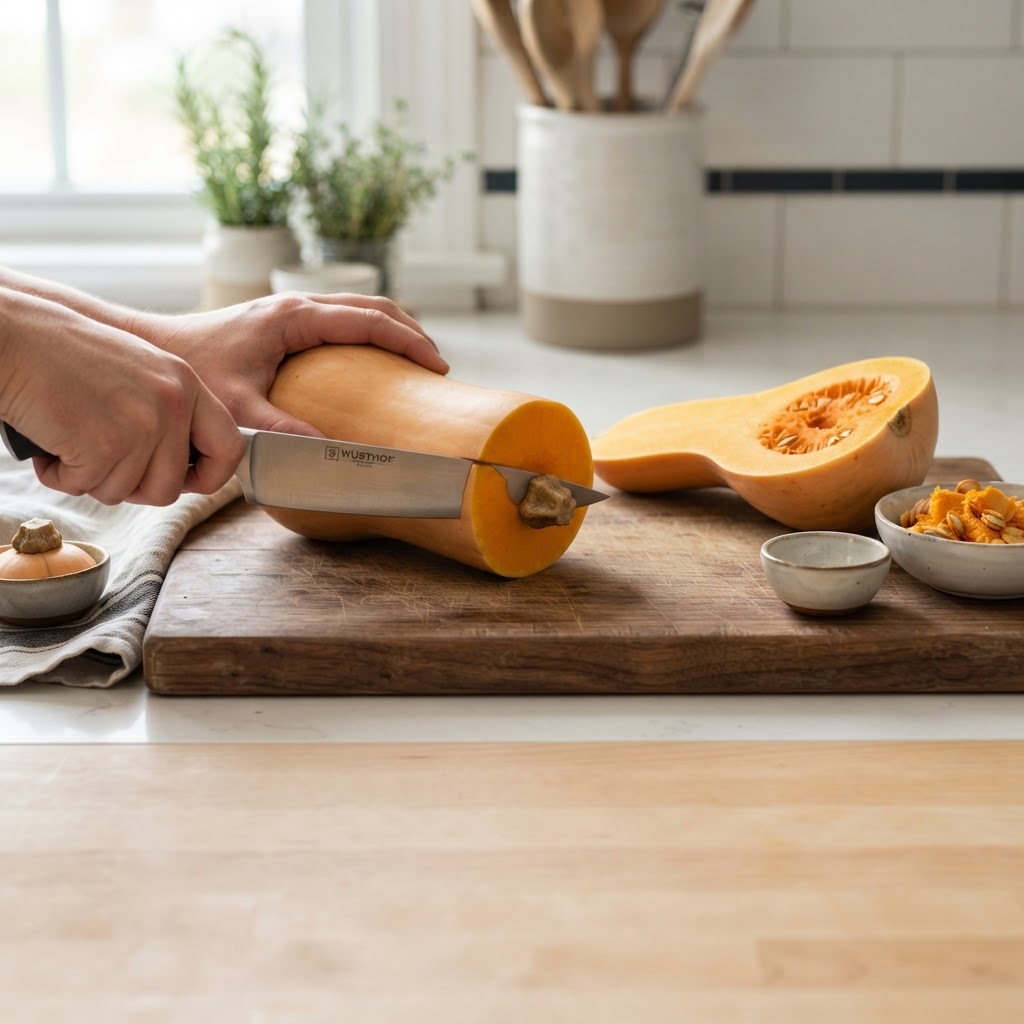
How to cut butternut squash without slipping: stabilize the squash, trim the ends, separate the neck, halve, seed, and peel as needed.
Quick reference
- Tool: Sharp chef’s knife A stable, comfortable grip
- Board: Large, nonslip board Place a damp towel underneath
- First cuts: Trim both ends Creates flat surfaces
- Finish: Halve and scoop Remove seeds before cooking
Set up a stable work surface
Before cutting, clear enough space for the squash to lie flat. Use a large, stable cutting board; if it shifts, set a slightly damp kitchen towel underneath. Choose a sharp chef’s knife rather than a small utility knife, and keep your guiding hand curled with fingertips away from the blade. Wipe the squash dry if it feels slick.
Trim the ends first
Set the squash on its side and slice off the stem end and the rounded bottom, removing only enough to expose flat surfaces. Stand the squash upright on one of those freshly cut ends. If it rocks, lay it down and trim a little more rather than forcing the knife through an unstable squash.
Peel before or after cutting
Peeling is optional and depends on the recipe. For cubes or stovetop cooking, use a sturdy vegetable peeler while the squash is still whole and upright, working in strips from top to bottom. For roasting halves, you can leave the skin on and scoop the cooked flesh away later. If peeling a large squash feels awkward, cut it into sections first.
- Peel in short strokes.
- Keep the squash supported on a flat end.
- Discard tough peel and trimmed ends.
Separate the neck from the bulb
Lay the trimmed squash on its side. Cut across the narrower neck where it meets the wider, seed-filled bulb. You now have two manageable pieces: a solid neck that is easy to slice into rounds or planks, and a bulb that is easier to halve without twisting the knife.
Halve, seed, and portion
Stand the bulb on its flat end and cut it from top to bottom. If the knife stops, withdraw it, reposition the squash, and continue—never rock the blade aggressively or force it sideways. Use a sturdy spoon to scrape out the seeds and stringy center. Halve the neck lengthwise if you want matching pieces, then slice or cube everything to the size your recipe requires.
- Cut away from your guiding hand.
- Use a spoon for the seed cavity.
- Keep pieces similar in size for even cooking.
Optional softening method
If the squash is exceptionally hard, pierce the skin several times with a fork and microwave it briefly—about 2 to 3 minutes for a medium squash, depending on your appliance. Let it stand until cool enough to handle, then dry the surface and use the same trimming and separation steps. This only softens the exterior slightly; it should not cook the squash through.