How to Cook Zucchini Without Making It Soggy
Cook zucchini not soggy with high heat, a dry surface, thick cuts, and smart timing for skillet or oven cooking.
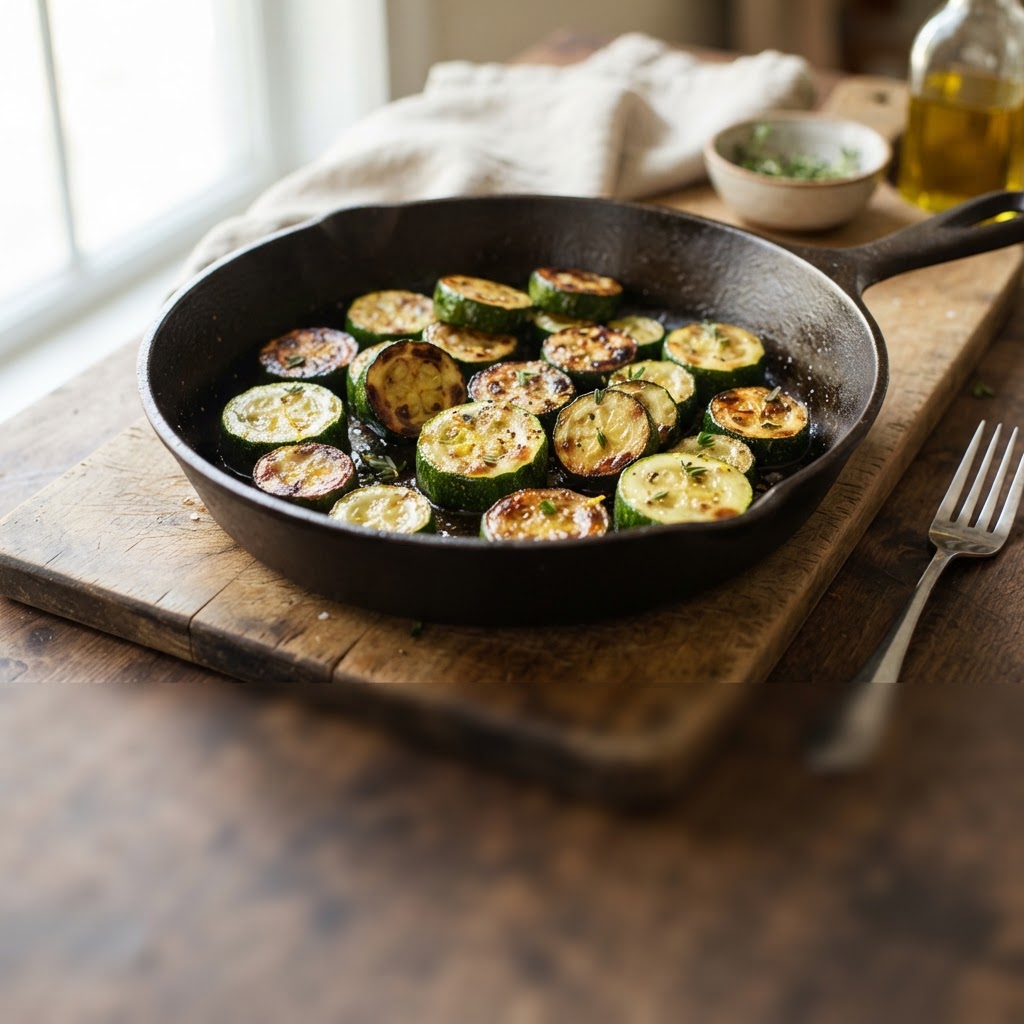
Quick reference
- Cut: ½- to ¾-inch pieces Thicker pieces hold their shape
- Skillet: High heat, 5-8 minutes Turn occasionally
- Oven: 425-450°F Use a single layer
- Finish: Just tender Remove before it softens too far
The key to firm zucchini
To learn how to cook zucchini not soggy, control moisture from the start. Choose firm zucchini, trim the ends, and cut it into thick half-moons, planks, or wedges rather than thin slices. Pat the cut surfaces dry with a clean towel. Use high heat and leave space between pieces so moisture can escape instead of steaming the zucchini.
- Use a dry pan, tray, and zucchini surface.
- Cut pieces evenly so they finish together.
- Cook in batches if needed.
Salt at the right time
Salt draws moisture toward the surface, so avoid salting zucchini long before cooking. For the driest, best-browned result, season just before it goes into a hot skillet or oven, or add salt immediately after cooking. Pepper, garlic, herbs, lemon zest, and grated cheese can be added near the end without delaying browning.
- Do not let salted zucchini sit in a bowl.
- Pat away any moisture that appears.
- Add delicate herbs after cooking.
Skillet method
Heat a wide skillet over medium-high to high heat, then add a thin film of oil. When the oil is hot, add dry zucchini in one layer. It should sizzle immediately. Cook without constant stirring, turning the pieces every couple of minutes so their cut sides brown. Depending on thickness and pan heat, cooking usually takes 5 to 8 minutes. Stop while the centers are just tender, then transfer the zucchini out of the hot pan.
- Avoid crowding; work in batches.
- Do not cover the skillet.
- Finish with salt and acid off the heat.
Oven method
For oven-roasted zucchini, heat the oven to 425–450°F, depending on how quickly your oven browns. Toss thick-cut zucchini with a small amount of oil and seasoning, then spread it on a dry, rimmed sheet pan with space around each piece. Roast until browned at the edges and just tender, turning once if needed. The exact timing varies with cut size and oven performance, so check early rather than waiting for very soft centers.
- Preheat the pan for stronger browning, if desired.
- Use one layer, never a piled-up mound.
- Broil briefly only while watching closely.
Know when to stop
Zucchini continues to soften from residual heat, especially in a hot skillet or crowded serving dish. Remove it as soon as a knife meets slight resistance but passes through the center. Let excess oil drain briefly, then serve promptly. If adding zucchini to pasta, grain bowls, or a sauce, cook it slightly less than your final texture because it will soften again when combined.
- Aim for browned edges and a firm-tender center.
- Do not hold it covered for long.
- Reheat briefly rather than steaming it.