How to Cook With Pears: Ripeness, Savory Uses, and Baking
Choose firm pears for poaching and roasting, ripe pears for salads and cheese, and dependable baking varieties for cakes, crisps, and tarts.
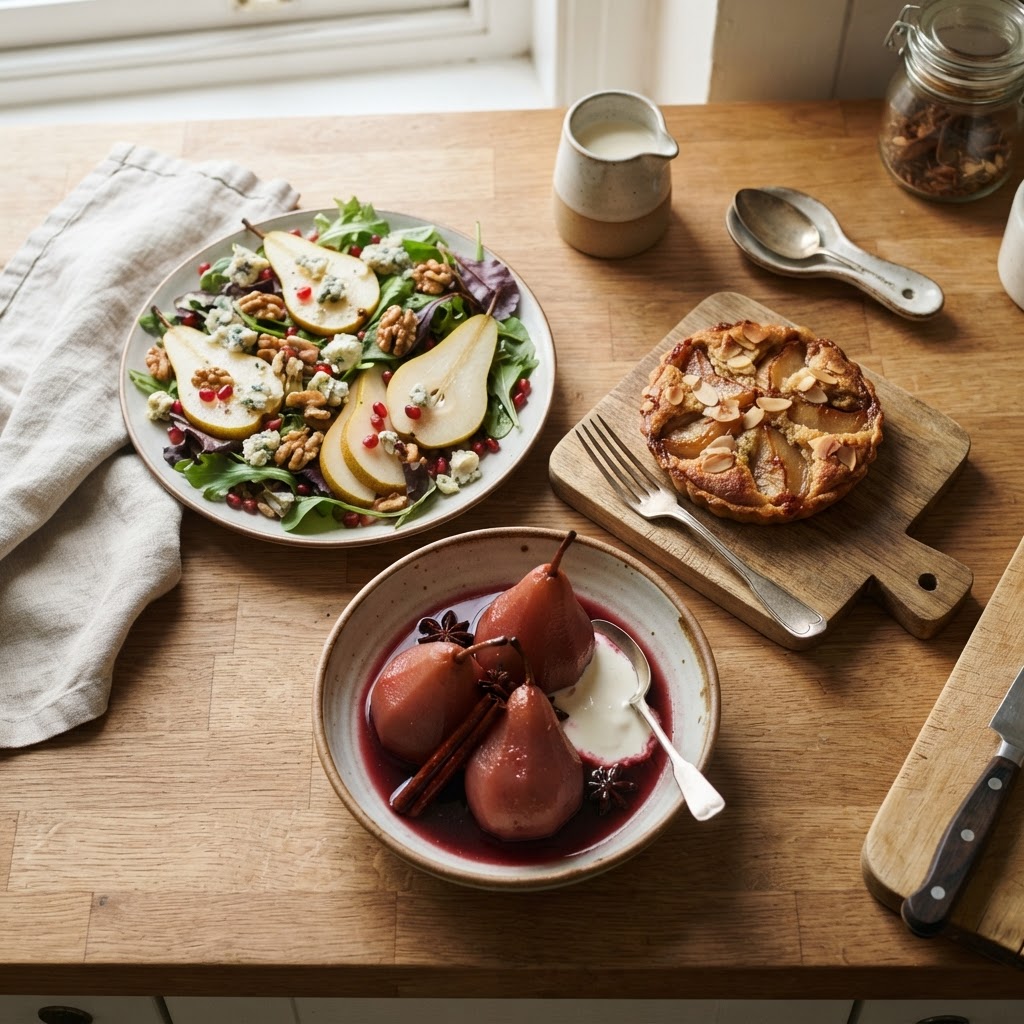
Quick reference
- Firm, underripe: Poach, roast, sauté Holds its shape
- Ripe but firm: Salads, pork, cheese Juicy with a clean slice
- Very ripe: Sauces, purées, quick breads Soft and fragrant
- Baking varieties: Tarts, crisps, cakes Choose pears that stay intact
Choose the right ripeness
A pear is ready when the flesh near the stem yields slightly to gentle pressure. Avoid squeezing the middle, which bruises easily. For slicing into salads or serving with cheese, choose ripe but firm fruit. Firm pears are better for poaching, roasting, and sautéing because they keep their shape. Very soft pears are ideal for blending into sauce, folding into quick bread, or baking into a tender crumble.
- Ripen pears at room temperature; refrigerate them once they reach the texture you want.
- Cut away bruised spots, then slice just before serving to limit browning.
Varieties in practical terms
Anjou pears are versatile, mildly sweet, and useful in both salads and cooked dishes. Bartlett pears become especially fragrant and soft as they ripen, making them good for sauces, desserts, and gentle poaching. Bosc pears are firmer and hold their shape well in roasting, poaching, and tarts. Comice pears are lush and sweet, best eaten fresh or paired with a sharp, salty cheese. Asian pears stay crisp and work well raw in slaws and salads.
When pears meet heat
For baking, choose pears that are ripe enough to taste sweet but still firm enough to slice cleanly. Bosc and firm Anjou are dependable in tarts, galettes, cakes, and crisps. Toss cut fruit with a little lemon juice if it will sit before baking, then use the recipe’s flour or starch to manage excess juice. For poaching, keep the liquid at a gentle simmer rather than a hard boil; cooking time varies with size and ripeness.
- Roast halved pears with butter, honey, or warm spices until tender.
- Fold diced ripe pears into muffins or quick breads, where softer fruit is an advantage.
Build savory pear combinations
Pears add sweetness and acidity to savory food without needing a complicated sauce. Pair them with pork, especially in a pan sauce with mustard, cider, or shallot. Add thin slices to a salad with bitter greens, toasted walnuts, blue cheese, goat cheese, or aged cheddar. Firm pears can be sautéed briefly until golden, while raw pears bring more crunch. Balance sweet fruit with salt, acid, pepper, or a pungent cheese.
- Try pear, arugula, walnuts, and blue cheese with a sharp vinaigrette.
- Use diced pear in a grain salad with herbs, roasted squash, and toasted hazelnuts.
Prep, store, and choose a recipe
Wash pears under cool running water, then leave the skin on when it is tender and attractive or peel for a smoother purée and refined tart. Store unripe pears at room temperature and move ripe fruit to the refrigerator; use it within several days for the best texture. For an easy starting point, browse QuickDinner’s pear desserts for baked ideas, then explore its fall recipes for pork, roasted vegetables, and seasonal salads.