How to Cook With High Heat Without Smoking Up the Kitchen
Control high-heat cooking by choosing the right oil, drying ingredients, clearing residue, and using ventilation before the pan starts to smoke.
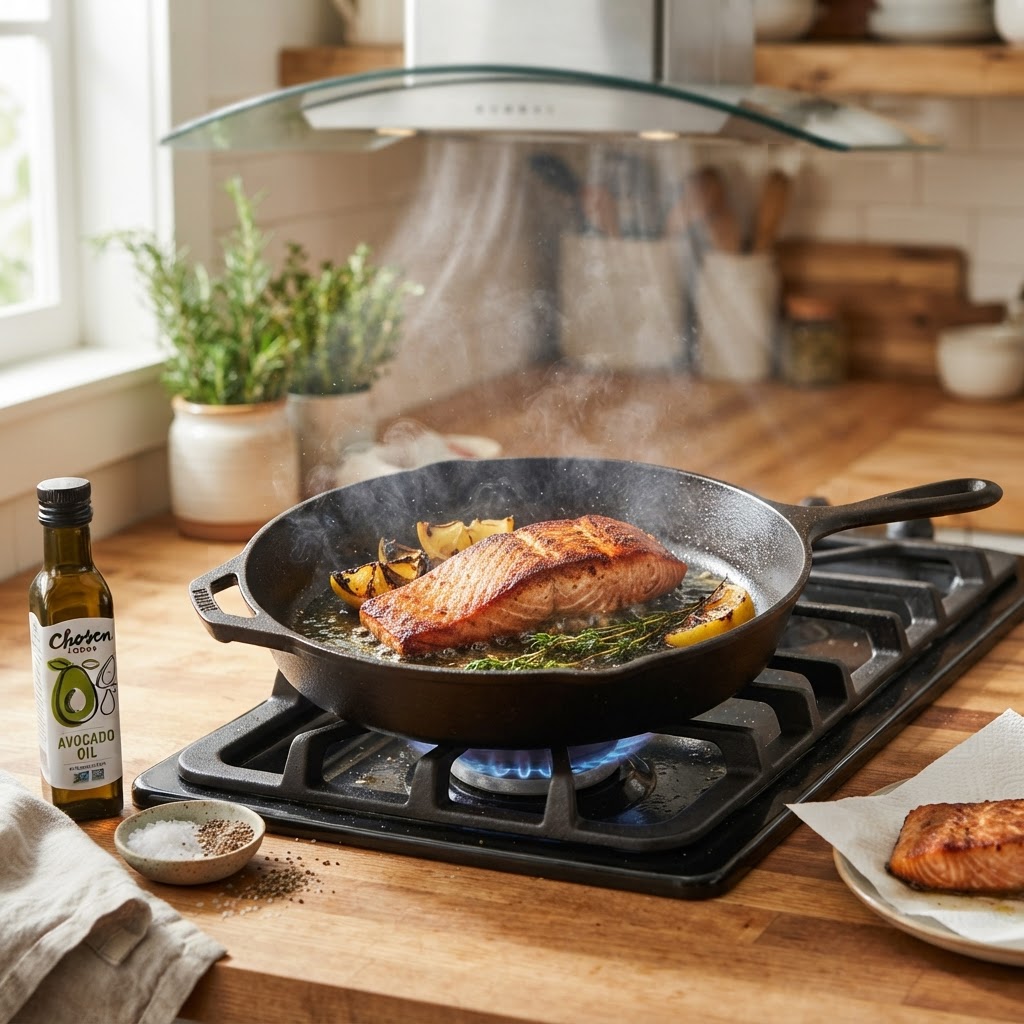
Quick reference
- Oil choice: Use a suitable high-heat oil Smoke points vary by type and refinement.
- Pan setup: Clean and fully dry Water and residue create sputtering and smoke.
- Heat control: Preheat, then adjust High heat is not always maximum heat.
- Ventilation: Start the hood early Open a window if practical.
Start with the right oil and pan
High-heat cooking works best when the oil, pan, and food are prepared before the burner goes up. Choose an oil labeled for high-heat cooking, but treat smoke points as practical guides rather than exact guarantees: they vary with refinement, age, impurities, and the pan’s surface temperature. Use only a thin film—enough to coat the cooking surface. A heavy puddle of oil heats unevenly and produces more smoke once it passes its limit.
- Use a clean, dry pan.
- Measure oil before heating.
- Keep a lid nearby for flare-ups, but do not cover a smoking pan to hide the problem.
Dry food before it hits the pan
Moisture is one of the fastest ways to turn searing into steaming and sputtering. Pat meat, tofu, vegetables, or seafood dry with paper towels, and drain wet marinades before cooking. If using a sauce, add it later rather than flooding a hot pan at the start. Dry ingredients make better contact with the surface, brown more efficiently, and reduce the bursts of steam that can carry oil around the kitchen.
- Pat wet ingredients dry.
- Shake off excess marinade.
- Add watery sauces after browning.
Use high heat strategically
Preheat the pan until the oil shimmers, not until it smokes. Add food in a single layer and leave space between pieces; overcrowding drops the temperature and encourages moisture to collect. Once the food is browned, lower the heat if it needs more time. For stir-frying, prepare every ingredient first because the cooking moves quickly. If the oil begins smoking steadily, move the pan off the burner briefly and reduce the heat before continuing.
- Cook in batches when needed.
- Turn down heat after browning.
- Do not wait for visible smoke before adjusting.
Remove burnt residue before the next batch
Dark scraps left in the pan burn quickly and are a common source of unnecessary smoke. Between batches, carefully wipe out loose crumbs and excess oil with a folded paper towel held by tongs, or transfer the pan off heat and let it cool slightly before cleaning. Do not splash water into a very hot pan; it can create a violent burst of steam and spread hot oil. A clean surface gives the next batch a fresh start.
- Wipe out scorched bits between batches.
- Use a separate pan if residue is deeply burnt.
- Clean the stovetop and hood filter regularly.
Ventilate before you need it
Turn on the range hood a few minutes before heating the pan, and use its highest effective setting once cooking begins. If safe and practical, open a nearby window or door to improve airflow. Some smoke is unavoidable when searing, charring, or cooking fatty ingredients, so the goal is to limit it and move it outdoors—not to promise a completely smoke-free kitchen. For reliable practice, compare these steps with QuickDinner’s [searing recipes] and [stir-fry recipes].
- Start ventilation before preheating.
- Keep the hood running briefly after cooking.
- Move the pan off heat if smoke becomes continuous.