How to Cook With Gochujang Without Making Everything Too Sweet
Balance gochujang’s sweetness with stock, soy sauce, garlic, and acid so its fermented depth and chile heat stay clear in Korean-inspired and fusion dishes.
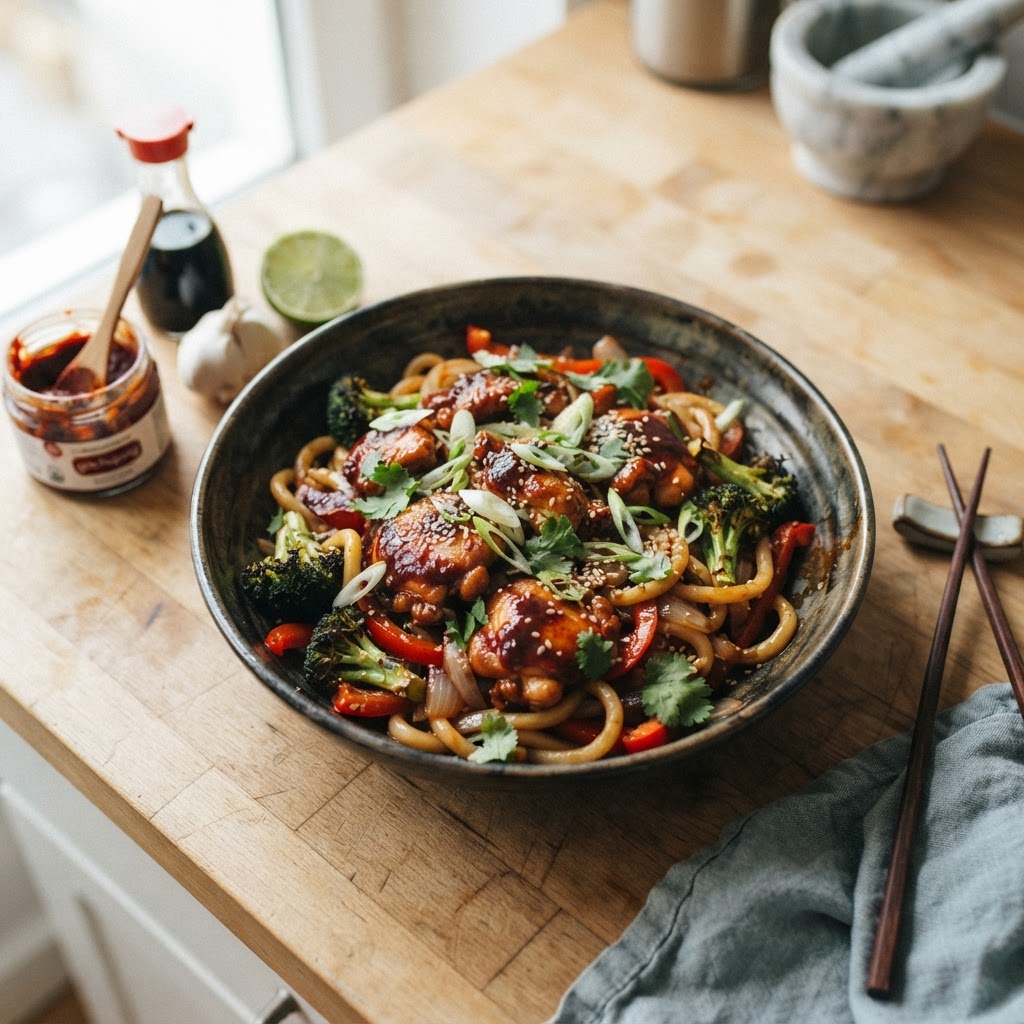
Quick reference
- Too sweet: Add acid or stock Rice vinegar, lime, or unsalted broth
- Too hot: Dilute with fat or liquid Sesame oil, yogurt, coconut milk, or stock
- Too salty: Increase unsalted volume Vegetables, noodles, rice, or broth
- Too flat: Add savory aromatics Garlic, ginger, soy, or toasted sesame
Start with less, then dilute
Gochujang is concentrated: chile heat, fermented savoriness, salt, and sweetness arrive together. For a sauce, begin with 1 tablespoon gochujang per 1 cup of other ingredients, then adjust after it is mixed and warmed. Loosen it with unsalted stock, water, crushed tomatoes, coconut milk, or a little oil. This spreads the flavor through the dish instead of adding more sweetener to chase the heat.
- Taste after dilution, not straight from the tub.
- Reserve some paste to adjust at the end.
- Add liquid gradually so the sauce does not become thin.
Use acid to sharpen, not sweeten
Acid keeps gochujang from tasting heavy. Rice vinegar is the most natural match for Korean-inspired sauces, while lime, lemon, or a splash of cider vinegar works in tacos, grain bowls, roasted vegetables, and noodles. Add a small amount at a time after dilution. Acid should make the chile and fermentation feel clearer; too much can make the sauce harsh.
- Rice vinegar: clean and subtle.
- Lime: bright with seafood or chicken.
- Cider vinegar: fuller in bean or pork dishes.
Build savory depth around it
Gochujang tastes more balanced when paired with ingredients that reinforce its fermented character. Garlic, ginger, scallions, toasted sesame oil, soy sauce, miso, mushrooms, and unsalted stock are useful choices. Because gochujang is already salty, add soy sauce cautiously and taste before adding any extra salt. A little sesame oil at the finish can round the sauce without adding sugar.
- For stir-fries, bloom garlic and ginger before adding the sauce.
- For marinades, thin gochujang with oil, acid, and aromatics.
- For soups, whisk it into stock rather than dropping it in whole.
Know when sugar is unnecessary
Many recipes add honey, brown sugar, or maple syrup automatically, but gochujang often supplies enough sweetness on its own. Skip added sugar when the dish includes naturally sweet vegetables such as onions, carrots, squash, or sweet potatoes, or when the sauce is being reduced. Add sweetener only if a final taste is genuinely too sharp or the recipe needs a sticky glaze.
- Taste after cooking vegetables and reducing the sauce.
- Use fruit, such as pear or apple, for a gentler marinade sweetness.
- Do not use sugar to mask excessive heat; dilute first.
Keep the flavor distinct in fusion dishes
Gochujang is more than a generic hot sauce, so give it a supporting role that lets its fermented depth show. Stir it into mayonnaise for sandwiches, combine it with tomato and stock for pasta, or balance it with lime and herbs for a rice bowl. Match the intensity of the rest of the dish: mild ingredients need less paste, while beans, mushrooms, pork, and roasted vegetables can carry more.
- Finish with scallions, sesame, or fresh herbs for contrast.
- Add the paste early for integrated flavor; reserve a little for brightness.
- Taste the complete dish before adjusting salt, acid, or sweetness.