How to Cook With a Wok on a Home Stove
Yes—a wok works on an ordinary burner when you preheat well, cook in small batches, and keep ingredients dry and moving.
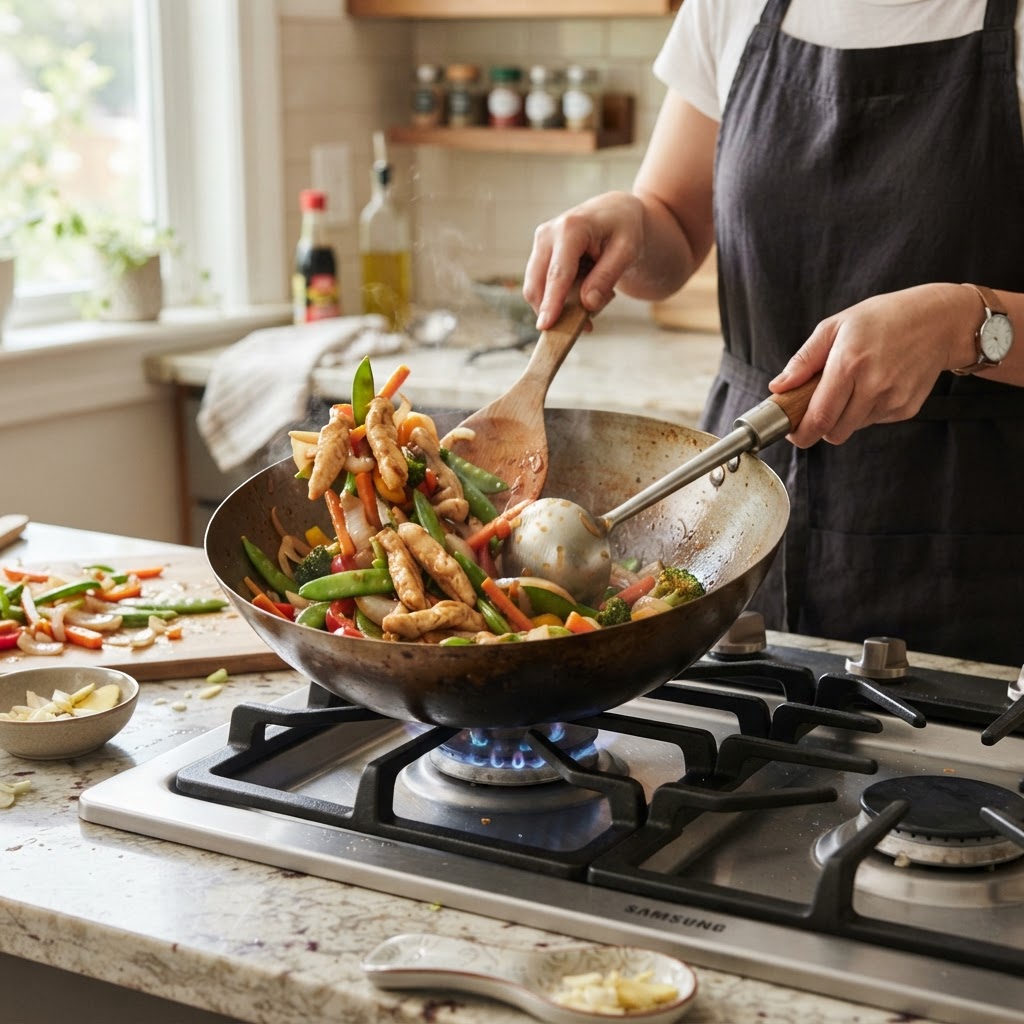
Quick reference
- Wok shape: Flat-bottom Best for most electric and gas stoves
- Preheat: 1–2 minutes Heat until a water drop skitters and evaporates
- Batch size: One loose layer Crowding causes steaming
- High-heat timing: Short bursts Cook quickly, then remove food
Yes—adapt the method, not the meal
A wok can work very well on a home stove, even without restaurant-level heat. The key is to treat the burner as a limited heat source: preheat the pan, use small batches, and return cooked ingredients only at the end. You may get less smoky wok aroma than a commercial kitchen, but you can still produce browned beef, loose fried rice, crisp vegetables, and well-coated noodles.
Choose and preheat the right wok
A flat-bottom carbon-steel wok is the most practical choice for an ordinary gas, electric, or induction setup. Its base makes better contact with the burner than a round-bottom wok, which may need a ring. Heat the empty wok for about 1–2 minutes, depending on the stove and pan. Add oil only when the surface is hot; if the oil smokes heavily immediately, lower the heat briefly and start again.
- Use a 12–14-inch wok if possible; oversized pans are harder to heat evenly.
- Keep the handle and nearby surfaces clear before cooking.
- Preheat the wok again between batches if it has cooled noticeably.
Control batch size and moisture
Home burners lose heat when a crowded wok releases liquid. Cook meat, noodles, rice, and vegetables in separate batches, keeping each addition in a loose layer across the hottest part of the pan. Pat meat and vegetables dry, drain soaked noodles thoroughly, and use only enough sauce to coat. Add watery sauces near the end, after the ingredients have browned.
- For sliced beef or chicken, cook until nearly done, then remove.
- For vegetables, start with dense pieces and finish with tender leaves.
- Spread cold cooked rice briefly in the wok rather than piling it high.
Follow a deliberate ingredient order
Have every ingredient cut and measured before the burner goes on. Start with oil, then aromatics such as garlic, ginger, or scallions for a brief sizzle. Add the ingredient needing the longest cooking time, followed by quicker-cooking items. Cook protein and vegetables separately when necessary, then return them with noodles, rice, and sauce for a final toss. This order keeps delicate ingredients from burning while harder pieces catch up.
Keep the stir-fry moving—but not constantly
Use a hot center and the cooler sloped sides as separate zones. Let food sit for a few seconds to sear, then toss or stir; nonstop movement can prevent browning. On an electric stove, lift and toss less aggressively because the burner responds slowly. On induction, adjust heat promptly. If the wok starts filling with liquid, remove the food, let the pan recover, and continue in a smaller batch.
- Use a metal or wooden wok spatula to scrape the curved surface.
- Add sauce around the hot side of the wok, not all at once over cold food.
- Finish with fresh herbs, scallions, or toasted toppings off the heat.
A reliable home-stove rhythm
For noodles, fried rice, beef, chicken, or vegetables, the same rhythm works: dry ingredients, preheat wok, sear in batches, remove, refresh the pan, then combine briefly with sauce. Aim for short cooking bursts rather than trying to recreate restaurant flames. A flat-bottom wok, disciplined batch sizes, and controlled moisture matter more than extreme heat—and make weeknight stir-fries faster and more consistent.