How to Cook Frozen Vegetables Without Making Them Watery
Cook frozen vegetables in a hot, uncrowded pan, oven, or air fryer for browned edges and better texture—thaw only when the recipe benefits.
Quick reference
- Method: Best use Texture tip
- Roast: Large batches Use a hot sheet pan
- Sauté: Fast side dishes Cook in a single layer
- Steam: Tender vegetables Drain before seasoning
- Air-fry: Crisp edges Avoid overcrowding
The main rule: keep the heat high
Frozen vegetables become watery when their released moisture has nowhere to go. Use strong heat, leave space around the pieces, and avoid adding salt or sauce until the vegetables have dried and browned. Cook straight from frozen for most methods; the surface moisture can evaporate during cooking without soaking the vegetables. Patting them dry is usually unnecessary, but shake off loose ice first.
- Use a wide pan or rimmed sheet pan.
- Do not pile vegetables deeply.
- Season near the end if they are releasing lots of water.
Roasting: best for browned edges
Heat the oven to 425°F–450°F, with the sheet pan inside if convenient. Toss frozen vegetables with a small amount of oil, spread them in one layer, and roast until hot with browned edges, usually about 20–35 minutes depending on the vegetable and piece size. Turn once if needed. Dense vegetables may need more time; delicate vegetables may finish sooner.
- Preheat the pan for faster browning.
- Use less oil than you would for fresh vegetables.
- Add garlic, cheese, or sauce after roasting.
Sautéing: fast, but give steam room
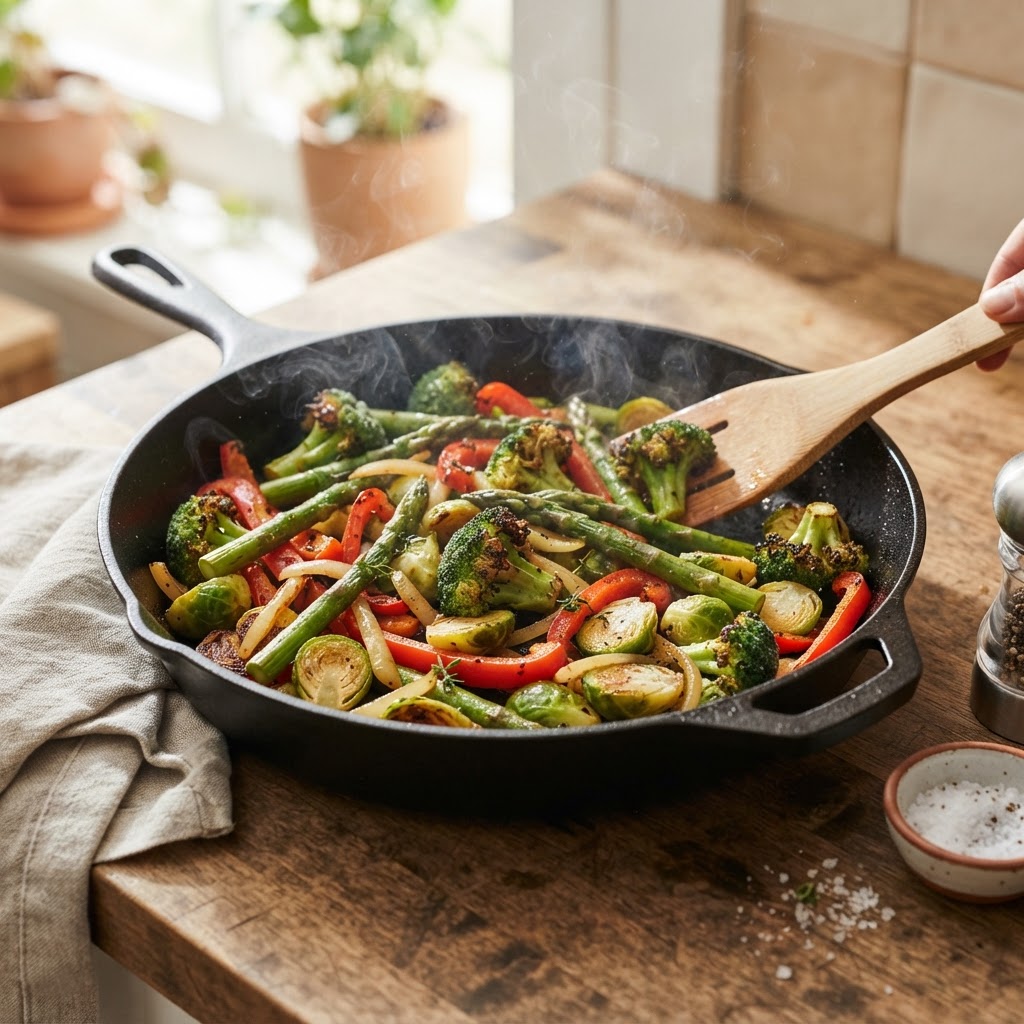
For a quick side dish, heat a large skillet over medium-high to high heat, add a little oil, then add the vegetables in a shallow layer. Cook uncovered, stirring occasionally, until excess moisture evaporates and the pieces begin to brown. If the pan fills with liquid, keep cooking uncovered or transfer half to another pan. A lid speeds tenderness but traps steam and encourages softness.
- Sauté in batches when necessary.
- Add butter after the water has cooked off.
- Finish with lemon, herbs, or a crisp topping.
Steaming: tender rather than crisp
Steaming is useful when you want soft, evenly cooked vegetables, but it will not produce browned or crispy frozen vegetables. Steam only until just tender, then drain thoroughly and let the vegetables stand uncovered for a minute. Season afterward. For a firmer finish, move steamed vegetables to a hot skillet for one to two minutes to evaporate surface moisture.
- Use a short steaming time and test early.
- Drain well before adding sauce.
- Choose steaming for broccoli, peas, and mixed vegetables when tenderness matters most.
Air-frying: the easiest crisp finish
Air-frying works especially well for small florets, green beans, Brussels sprouts, and mixed vegetables. Toss the vegetables with a light coating of oil, preheat if your appliance recommends it, and cook at about 400°F, shaking once or twice. Timing varies by appliance and load, but many vegetables take roughly 10–18 minutes. Keep the basket loose; a crowded basket steams instead of browning.
- Cook in batches for the best texture.
- Shake off loose ice before oiling.
- Add delicate sauces after cooking.
When thawing helps—and when it hurts
Thaw frozen vegetables only when the recipe needs evenly sized, flexible pieces, such as a casserole, stir-fry with a very short cooking time, or baked filling. Thaw them in the refrigerator or use the microwave, then drain and blot well. For roasting, sautéing, and air-frying, thawing often makes texture worse because the vegetables release more water into the pan before they can brown. Cook them from frozen instead, and adjust the time rather than adding extra liquid.
- Thaw for mixing; stay frozen for browning.
- Drain thawed vegetables thoroughly.
- Add sauces after the vegetables have dried and cooked.