How to Cook Frozen Fish Without Ruining the Texture
Yes—cook many frozen fish fillets straight from the freezer, using gentle heat, a dry surface, and a thermometer to protect texture.
Quick reference
- Thin fillets: Oven, 425°F About 18–25 minutes
- Thick fillets: Oven, 400°F About 25–35 minutes
- Cod or other lean fish: Bake covered, then uncover Prevents drying
- Salmon: Bake skin-side down Finish uncovered
- Small portions: Air fryer, 400°F Check early
Yes, you can cook fish from frozen
Frozen fish can cook well without fully thawing first, especially individually frozen fillets. The key is managing surface moisture and using moderate heat so the outside does not dry before the center is done. Remove ice glaze under cold water, pat the fish very dry, and season just before cooking. Avoid stacking portions; separate fillets cook more evenly and brown better.
- Best candidates: cod, haddock, pollock, salmon, and other firm fillets.
- Skip pieces with heavy frost, freezer burn, or a damaged package.
- Cook extra-thick fillets at a lower temperature for more even results.
The most reliable method: bake it
Heat the oven to 400–425°F, depending on thickness. Set the dry fillets on a lightly oiled sheet pan, leaving space around each piece. Thin white-fish fillets usually take about 18–25 minutes; thicker portions may need 25–35 minutes. For lean fish such as cod, loosely cover the pan for the first part of cooking, then uncover to let excess moisture evaporate. Salmon generally benefits from baking uncovered, skin-side down.
- Brush with oil rather than adding a wet sauce at the start.
- Add lemon, herbs, or a glaze during the final few minutes.
- Times vary with thickness, packaging, and oven performance.
Stovetop and air-fryer options
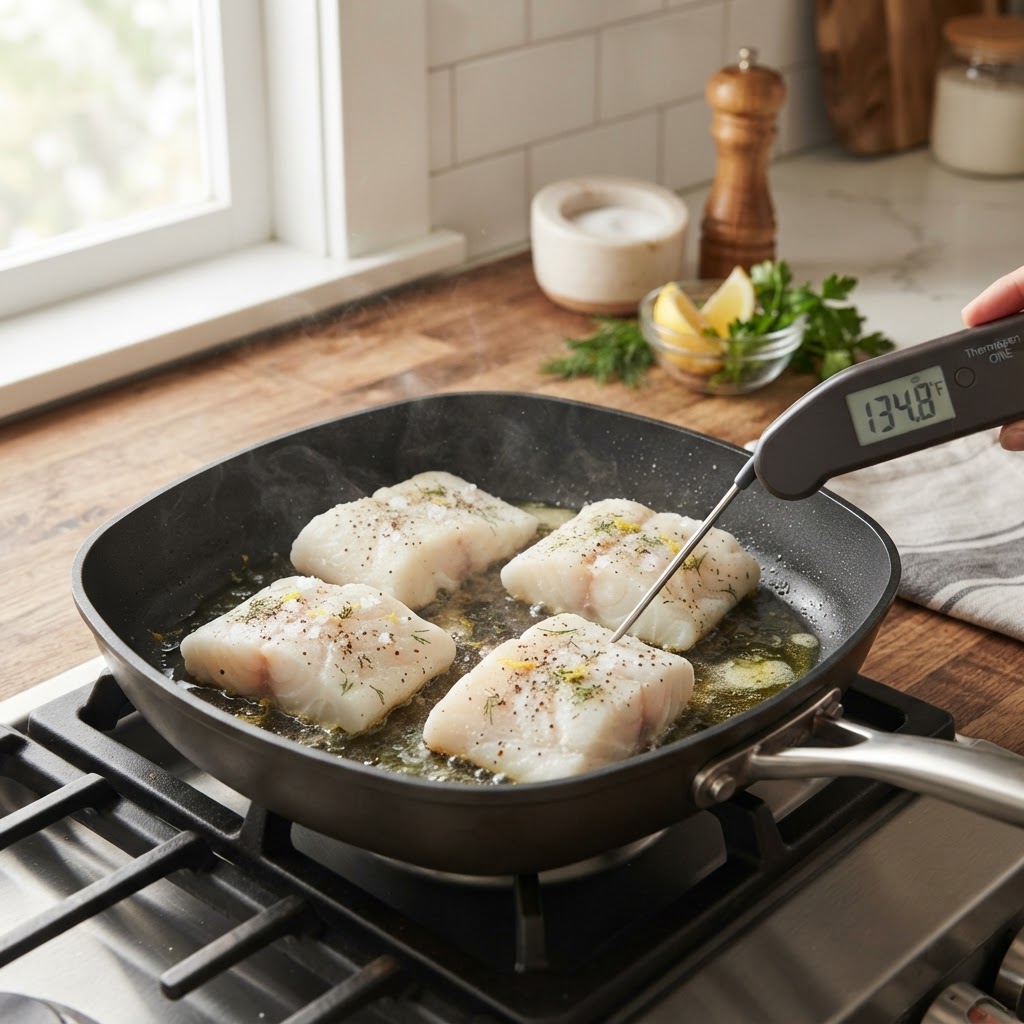
For the stovetop, place frozen fillets in a lightly oiled nonstick skillet over medium-low heat. Add a tablespoon or two of water, cover, and steam gently until the center loosens; uncover and continue cooking to drive off moisture and lightly brown the surface. An air fryer works well for small portions: use about 400°F, oil the basket and fish lightly, and begin checking after 12–15 minutes. Very thick pieces may cook unevenly in either method.
- Turn delicate fillets only once, after they release from the pan.
- Do not crowd an air-fryer basket.
- Avoid high heat, which can leave a dry exterior and cold center.
Check doneness by temperature and texture
The safest check is the thickest part of the fish: it should reach 145°F / 63°C. The flesh should look opaque and separate into moist flakes when pressed gently with a fork. A thermometer is especially useful for frozen fish because the surface can appear finished before the middle is cooked. If the center is not ready, return the fish to gentle heat in short intervals rather than increasing the temperature sharply.
- Insert the thermometer from the side into the thickest section.
- Let the fish stand for a minute or two before serving.
- Discard any watery pan liquid before adding a crisp topping or sauce.
Keep the texture moist, not soggy
A dry surface is the main texture advantage you can create before cooking. Pat away melted ice, use a thin film of oil, and choose a rimmed pan that catches liquid without letting the fish sit in it. Serve lean fish with sauce after cooking; fatty salmon can handle a simple herb or mustard coating. For more ideas, browse QuickDinner’s white-fish recipes, cod recipes, salmon recipes, and seafood recipes.
- Use parchment for easy cleanup, but leave space between portions.
- Rest cooked fish briefly; do not cover tightly, which traps steam.
- If the fish is vacuum-sealed, remove it from the package before thawing or cooking.